Introduction
There is nothing quite as annoying as the screeching sound of a garage door opening early in the morning or late at night. Beyond the noise, a dry garage door system can lead to premature wear, expensive repairs, and even safety hazards. If you are wondering what type of lubricant to use on garage doors, you are not alone; this is one of the most common maintenance questions for homeowners. Choosing the wrong product can attract dirt, gum up the works, or damage sensitive components. In this guide, we will break down exactly which lubricants work best, how to apply them correctly, and what products you should strictly avoid to keep your door running smoothly for years.
Why Lubrication Matters for Your Garage Door
Your garage door is likely the largest moving object in your home. It operates under significant tension and friction, relying on a complex system of springs, rollers, hinges, and tracks. Without proper lubrication, metal-on-metal contact creates heat and friction. This leads to three major issues:
- Increased Wear and Tear: Friction grinds down metal parts, leading to broken rollers or snapped cables.
- Motor Strain: A stiff door forces the opener motor to work harder, shortening its lifespan and increasing electricity usage.
- Safety Risks: A jerky or stuck door can malfunction, potentially causing injury or property damage.
According to industry experts, regular lubrication can extend the life of your garage door system by up to 50%. It is a small investment of time and money that yields significant returns in reliability and peace of mind.
What Type of Lubricant To Use On Garage Doors: The Top Contenders
When standing in the hardware store aisle, the choices can be overwhelming. However, for garage doors, only two types of lubricants are widely recommended by professionals: Silicone-Based Spray and Lithium-Based Grease.
1. Silicone-Based Spray Lubricant
Silicone spray is often considered the gold standard for general garage door maintenance. It is lightweight, penetrates deep into tight spaces, and does not attract dust or dirt.
- Best For: Rollers, hinges, locks, and weather stripping.
- Pros:
- Non-sticky formula repels dust.
- Safe for rubber and plastic components (won’t degrade weather seals).
- Works well in extreme temperatures (both hot and cold).
- Cons:
- Can run off if over-applied.
- May need reapplication more frequently than heavy grease.
2. Lithium-Based Grease (White Lithium)
Lithium grease is thicker and heavier. It is designed to stay in place under high pressure and heavy loads.
- Best For: Metal-to-metal contact points like hinge pins, spring coils, and latch assemblies.
- Pros:
- Long-lasting protection.
- Excellent for high-friction areas.
- Resists washing away from rain or humidity.
- Cons:
- Can attract dirt if applied excessively.
- Not suitable for rubber or plastic parts.
- Messier to apply than spray.
Comparison Table: Silicone vs. Lithium
| Feature | Silicone Spray | Lithium Grease |
|---|---|---|
| Consistency | Thin, liquid spray | Thick, white paste |
| Best Application | Rollers, Tracks, Rubber Seals | Hinges, Springs, Latches |
| Dirt Attraction | Low | Moderate (if over-applied) |
| Temperature Range | Excellent (-40°F to 400°F) | Good (-20°F to 300°F) |
| Ease of Use | Very Easy | Moderate |
Pro Tip: For the best results, many professionals recommend using both. Use silicone spray for the rollers and tracks, and lithium grease for the hinges and springs.
What NOT to Use on Your Garage Door
Knowing what to avoid is just as important as knowing what to use. Using the wrong lubricant can cause more harm than good.
❌ WD-40 (Standard Formula)
This is the most common mistake homeowners make. Standard WD-40 is a solvent and water displacer, not a long-term lubricant. It may silence the squeak temporarily, but it evaporates quickly, leaving your parts drier than before. It can also strip away existing grease, accelerating wear. Note: WD-40 does make a specialized “Specialist Silicone” and “White Lithium” line, which ARE safe to use. Just avoid the classic blue-and-yellow can.
❌ Graphite Powder
While graphite was popular in the past, it is messy and can clump together when mixed with humidity. It stains concrete floors and clothing permanently and is generally difficult to clean up.
❌ Vegetable Oil or Cooking Spray
Never use household oils. They go rancid, attract pests (like ants and rodents), and become gummy over time, clogging your mechanism.
Step-by-Step Guide: How to Lubricate Your Garage Door
Now that you know what type of lubricant to use on garage doors, let’s look at how to apply it properly. Follow these steps every 6–12 months.
Tools Needed:
- Silicone spray lubricant
- White lithium grease (tube or spray)
- Clean rag or microfiber cloth
- Step ladder
- Safety glasses
Step 1: Clean the Components
Before applying new lubricant, wipe down the rollers, hinges, and tracks with a clean rag. Remove any old, gummy grease, dirt, or spider webs. Lubricating over dirt creates an abrasive paste that damages parts.
Step 2: Lubricate the Rollers
Focus on the bearings inside the rollers. If you have nylon rollers, use silicone spray only. If you have steel rollers, you can use either silicone or a light lithium spray.
- Action: Spray each roller bearing briefly while rotating the wheel by hand to ensure penetration.
Step 3: Lubricate the Hinges
The hinges connect the door sections and undergo significant stress.
- Action: Apply a small amount of lithium grease to the pivot points of each hinge. Wipe away any excess drip to prevent staining the door panels.
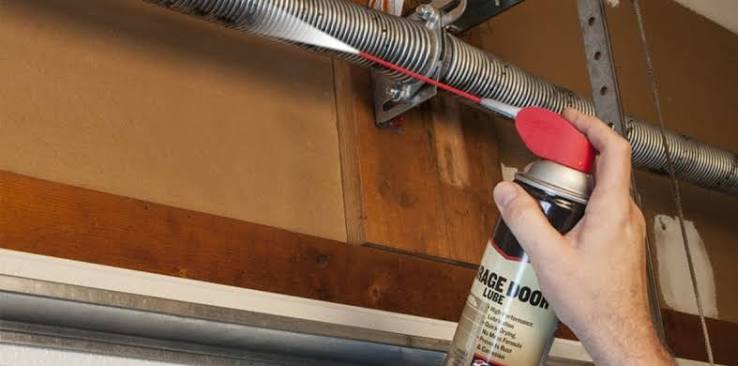
Step 4: Lubricate the Springs
Caution: Garage door springs are under extreme tension. Do not attempt to adjust or repair them. Only lubricate them.
- Action: Lightly coat the coils of the torsion spring (above the door) or extension springs (on the sides) with lithium grease or silicone spray. This prevents rust and reduces friction between coils.
Step 5: Lubricate the Lock and Latch
If your door has a manual lock or latch assembly, apply a drop of silicone spray to ensure it slides easily. This is crucial for security and ease of use.
Step 6: Check the Tracks
Contrary to popular belief, you generally do not need to lubricate the inside of the metal tracks where the rollers ride. Lubricant here can attract dirt and cause the rollers to slip. However, if you live in a very humid area, a very light mist of silicone on the track edges can prevent surface rust. For more detailed technical standards on track alignment and maintenance, you can refer to general mechanical principles outlined on Wikipedia’s page on Lubrication.
Step 7: Operate the Door
Open and close the door 3–4 times to distribute the lubricant evenly. Listen for any remaining squeaks. If you hear noise, identify the specific spot and apply a tiny bit more lubricant.
FAQ: Common Questions About Garage Door Lubrication
Q1: How often should I lubricate my garage door?
A: Ideally, you should lubricate your garage door once or twice a year. A good rule of thumb is to do it during spring and fall maintenance checks. If you live in a coastal area with high salt content in the air, or in a region with extreme temperature swings, consider doing it every 6 months.
Q2: Can I use silicone spray on nylon rollers?
A: Yes, absolutely. In fact, silicone spray is the preferred choice for nylon or plastic rollers. Petroleum-based products or heavy greases can sometimes degrade certain plastics over time, but silicone is chemically inert and safe for all roller materials.
Q3: Why is my garage door still noisy after lubrication?
A: If the noise persists, the issue might not be friction. It could be:
- Loose hardware (tighten bolts and screws).
- Worn-out rollers (replace if cracked or chipped).
- Misaligned tracks (requires professional adjustment).
- A failing opener motor or gear.
Q4: Is it safe to lubricate the garage door opener chain or screw drive?
A: Yes, but use the right product. For chain drives, use a dedicated chain lubricant or light machine oil. For screw drives, use a specific Teflon-based or lithium-based grease recommended by the manufacturer. Avoid standard silicone spray on opener gears as it may be too thin.
Q5: Can I mix different types of lubricants?
A: It is best to avoid mixing. If you are switching from a petroleum-based grease to silicone, try to clean off the old residue first. Mixing incompatible chemicals can reduce effectiveness or create a sludge.
Q6: Does cold weather affect which lubricant I should use?
A: Yes. In freezing temperatures, some thick greases can harden and cause resistance. Silicone spray performs exceptionally well in cold climates because it remains fluid at low temperatures. If you use lithium grease in winter, ensure it is rated for low-temperature use.
Conclusion
Maintaining your garage door doesn’t require a degree in engineering, just the right tools and knowledge. By understanding what type of lubricant to use on garage doors—specifically silicone spray for rollers and lithium grease for hinges—you can eliminate annoying squeaks and prevent costly breakdowns. Remember to avoid standard WD-40 and cooking oils, and stick to a bi-annual maintenance schedule.
A well-lubricated door is a quiet, safe, and long-lasting door. Take 15 minutes this weekend to give your garage door the care it deserves. Your ears (and your wallet) will thank you!
Did you find this guide helpful? Share it with your neighbors on Facebook or Pinterest to help them silence their squeaky doors too!
Leave a Reply