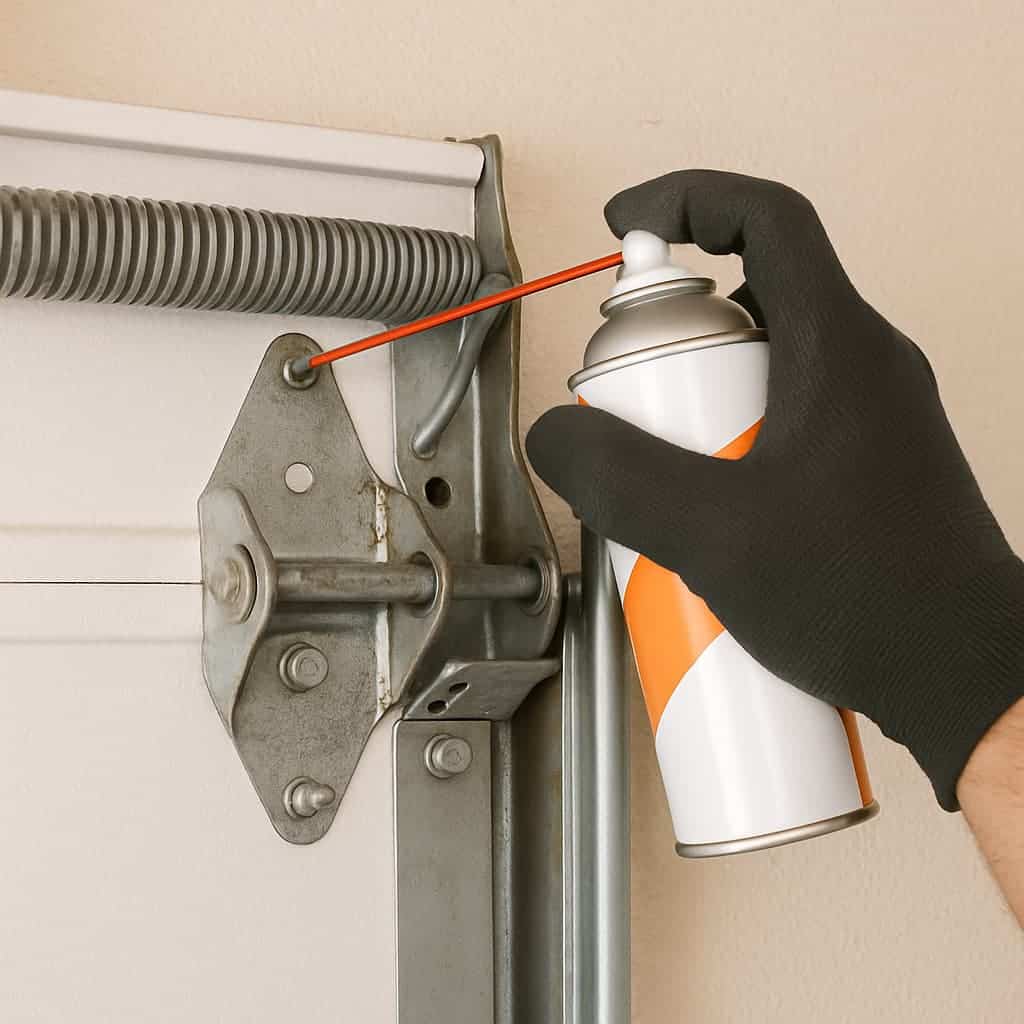
Dealing with a squeaky garage door can be incredibly frustrating, especially when it wakes up the entire neighborhood early in the morning. If you are constantly wondering what should I use to lubricate my garage door, you are in the right place to find a quick, effective, and long-lasting solution.
What Should I Use To Lubricate My Garage Door? (The Best Options)
When it comes to maintaining your home, choosing the right product is half the battle. Not all lubricants are created equal, and using the wrong one can actually attract dirt and ruin your door’s components.
Here are the two industry-recommended options for your maintenance toolkit:
1. Silicone Spray Lubricant
This is the most popular choice for homeowners. It is lightweight, dries quickly, and does not attract excessive dust.
- Best for: Nylon rollers, hinges, and locks.
- Pros: Easy to apply, mess-free, and works perfectly in extreme temperatures.
2. White Lithium Grease
This is a heavy-duty, grease-based lubricant that comes in an aerosol can. It provides a thick coating that withstands high pressure.
- Best for: Metal rollers, steel springs, and heavy-duty hinges.
- Pros: Long-lasting, prevents rust, and handles heavy friction perfectly.
What NOT to Use
- Standard WD-40: It is a solvent, not a true lubricant. It will strip away existing grease and leave your door drier than before.
- Motor Oil or Heavy Grease: These are incredibly messy and will attract dirt, grime, and debris, creating a thick sludge that jams your tracks.
Quick Comparison Guide
| Lubricant Type | Best Application | Longevity | Mess Level |
|---|---|---|---|
| Silicone Spray | Nylon parts, locks, hinges | Medium (3-6 months) | Low |
| White Lithium | Metal springs, steel rollers | High (6-12 months) | Medium |
| Standard WD-40 | Avoid completely | N/A | High |
Why Is My Garage Door Squeaking in the First Place?
Before we fix the problem, it helps to understand why it is happening. Your garage door is the largest moving object in your home, consisting of hundreds of moving parts.
Over time, the metal components experience constant friction. When metal rubs against metal without proper lubrication, it creates that annoying squeaking sound.
Furthermore, seasonal temperature changes cause metal to expand and contract. This natural process can wear away old lubricants much faster than you might expect. Often, the squeak originates from the roller brackets. These are the metal pieces that hold the rollers in place. When the pivot points inside these brackets dry out, they create a high-pitched squeal every time the door moves.
According to general mechanical principles, applying the right lubricant reduces friction, prevents wear, and significantly extends the operational lifespan of your garage door system.
How Do I Properly Lubricate My Garage Door? (Step-by-Step)
Knowing the right product is great, but applying it correctly is what truly matters. Follow this concrete, step-by-step tutorial to get the best results.
Step 0: Safety First Before you begin, ensure your hands are clear of pinch points. If you have an automatic opener, pull the emergency release cord to operate the door manually while testing.
Step 1: Clean the Tracks and Rollers Before applying any new lubricant, you must remove old grime. Mix 1 cup (240 ml) of warm water at a temperature of 100°F (38°C) with a few drops of dish soap. Use a damp microfiber cloth to wipe down the metal tracks and rollers. Let it dry completely for about 10 to 15 minutes.
Step 2: Lubricate the Torsion Springs The springs bear the heaviest load. Take your can of white lithium grease and spray a light, even coat over the entire length of the spring. Use about 2 to 3 sprays per section of the spring. Do not over-saturate it.
Step 3: Lubricate the Hinges and Bearings Move to the hinges that connect the door sections. Apply 1 to 2 drops of silicone spray directly into the pivot points. If you have metal rollers with bearings, spray the bearings at the top of each roller.
Step 4: Test the Door Once you have lubricated all moving parts, grab your garage door remote. Run the door through 2 full open-and-close cycles. This helps distribute the lubricant evenly across all the internal components. Listen closely—if the squeaking is gone, you did a fantastic job!
How Often Should You Lubricate a Garage Door?
Many homeowners make the mistake of only fixing their doors when they break. Proactive maintenance is the key to avoiding expensive repairs.
Experts from the International Door Association recommend lubricating your garage door every 3 to 6 months. However, if you live in an area with extreme weather conditions—like harsh winters or highly humid summers—you should increase this frequency to every 3 months.
For optimal drying and absorption, try to apply the lubricant when the ambient temperature is between 50°F and 80°F (10°C–26°C).
A recent case study by a home maintenance firm in Chicago showed that homeowners who lubricated their doors bi-annually extended the lifespan of their torsion springs by an average of 4 years compared to those who neglected maintenance.
Frequently Asked Questions (FAQ)
Can I use regular WD-40 on my garage door?
No, you should avoid using standard WD-40. It is primarily a solvent and water-displacer, not a long-term lubricant. While it might temporarily stop the squeak, it will eventually dry out the moving parts and cause more friction.
Is silicone spray better than white lithium grease?
Neither is strictly “better”; they just serve different purposes. Silicone spray is ideal for nylon rollers and locks because it dries quickly. White lithium grease is superior for metal-on-metal contact points like heavy steel springs.
Should I lubricate the garage door tracks?
You should clean the tracks, but you generally should not lubricate them. The rollers are designed to roll smoothly along the clean metal track. Adding lubricant to the track can actually cause the rollers to slip and lose traction.
What happens if I never lubricate my garage door?
Without proper lubrication, the metal parts will grind against each other. This leads to premature wear and tear, broken springs, burnt-out garage door openers, and ultimately, a complete system failure that costs hundreds of dollars to fix.
What is the best lubricant for garage door rollers?
The best lubricant depends on the roller material. If you have nylon rollers, use a silicone spray to prevent chemical degradation. For steel rollers, white lithium grease provides the heavy-duty protection needed for metal-on-metal friction.
Conclusion
Maintaining your garage door does not have to be a complicated or expensive chore. By knowing exactly what should I use to lubricate my garage door—specifically silicone spray and white lithium grease—you can keep your system running smoothly for years to come.
Regular maintenance not only eliminates annoying noises but also saves you from costly emergency repairs down the road. It is a small investment of your time that yields massive peace of mind.
If you found this guide helpful, please share it on your social media to help your friends and family keep their homes running quietly and smoothly!
Leave a Reply