Is your garage door slamming shut violently or feeling unusually heavy when you try to lift it? If you are wondering how to adjust the spring tension on a garage door, you are definitely not alone in dealing with this frustrating and potentially dangerous problem. Let us walk you through the process together so you can get your door balanced, safe, and working perfectly again.
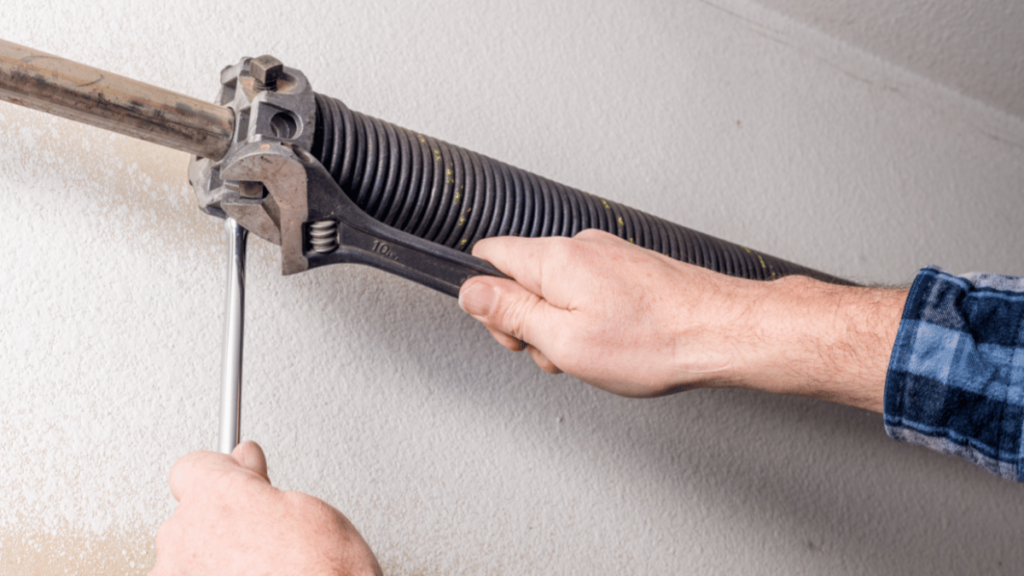
How To Adjust The Spring Tension On A Garage Door Safely
Before we grab any tools, we need to have a serious talk about safety. Garage door springs are under extreme mechanical tension. In fact, a standard torsion spring stores enough kinetic energy to lift hundreds of pounds of steel and wood.
Because a garage door is the largest moving object in your home, mishandling the springs can lead to severe injuries. Always wear safety glasses, keep your face away from the spring winding cone, and never use makeshift tools.
Taking a few extra minutes to prepare will ensure you complete this task without any accidents. Let us dive into the specifics of your spring system.
Torsion vs. Extension Springs: Which System Do You Have?
To fix the problem, you first need to know what type of springs you are dealing with. Most residential homes use one of two systems.
Here is a quick comparison to help you identify your setup:
| Feature | Torsion Springs | Extension Springs |
|---|---|---|
| Location | Mounted on a metal shaft above the closed door. | Mounted parallel to the horizontal tracks on both sides. |
| Mechanism | Twists (torque) to store energy and lift the door. | Stretches and expands to lift the door. |
| Safety Level | Higher (when using proper winding bars). | Lower (must have a safety cable running through them). |
| Lifespan | 15,000 to 20,000 cycles (open/close). | 10,000 to 15,000 cycles. |
If your springs are mounted horizontally above the door, you have torsion springs. If they are stretching out alongside the tracks, you have extension springs.
Signs Your Spring Tension Needs Adjustment
How do you know if the tension is actually the culprit? Here are the most common symptoms of improper spring tension:
- The door is too heavy: You have to strain or use both hands to lift it manually.
- The door slams shut: It drops rapidly when you try to close it.
- The door won’t stay open: It falls back down when lifted halfway.
- The door reverses unexpectedly: It hits the floor and immediately goes back up when using the automatic opener.
If you notice any of these signs, it is time to make an adjustment.
Essential Tools for the Job
Using the right equipment is non-negotiable for this job. Do not try to improvise. Here is what you will need:
- Two 18-inch hardened steel winding bars (Strictly for torsion springs. Never use screwdrivers!)
- Vice grips or locking pliers
- A 7/16-inch socket wrench with a ratchet
- A sturdy stepladder
- Safety glasses and work gloves
- A tape measure
Step-by-Step: Adjusting Torsion Spring Tension
This is the most common system in modern homes. Follow these concrete steps carefully.
Step 1: Disconnect the Opener and Secure the Door Pull the red emergency release cord on your garage door opener to disconnect it. Then, close the door completely. Clamp your vice grips tightly onto the metal tracks just below the bottom rollers on both sides. This prevents the door from shooting up while you work.
Step 2: Locate the Winding Cone Climb your stepladder and locate the winding cone at the end of the spring. You will see several holes around the cone. These are where your winding bars will go.
Step 3: Loosen the Set Screws Take your 7/16-inch socket wrench and loosen the two set screws on the winding cone. Do not remove them completely; just loosen them enough so the cone can turn when you apply pressure with the winding bars.
Step 4: Adjust the Tension Insert your first steel winding bar into the bottom hole of the winding cone. Push up or pull down to take the pressure off the set screws, then tighten them slightly to hold the bar in place.
- To increase tension (if the door is too heavy): Wind the spring up.
- To decrease tension (if the door is too light or won’t stay closed): Let the spring down.
Move the bar exactly one-quarter turn (90 degrees) at a time. Remove the bottom bar, insert it into the next hole, and turn another quarter turn. Always keep one bar securely in the hole while moving the other.
Step 5: Test the Balance Once you have adjusted both springs equally (if you have a dual-spring system), remove the winding bars completely. Tighten the set screws firmly. Remove the vice grips from the tracks. Lift the door halfway up and let go. It should hover in place. If it does, your tension is perfect!
Step-by-Step: Adjusting Extension Spring Tension
If you have extension springs, the process is a bit different and generally less dangerous, but still requires caution.
Step 1: Secure the Door Close the garage door completely and disconnect the automatic opener.
Step 2: Check the Pulley System Look at the extension spring parallel to the track. It connects to a pulley and a cable. The other end of the spring is attached to an S-hook, which connects to a horizontal track hanger.
Step 3: Adjust the S-Hook The horizontal track hanger usually has a series of pre-drilled holes.
- To increase tension: Move the S-hook to a hole that is further away from the spring.
- To decrease tension: Move the S-hook to a hole closer to the spring.
Use a pair of pliers to carefully unhook the S-hook and reattach it to the new hole. Warning: Always ensure your extension springs have a steel safety cable running through the center of the spring to prevent it from whipping if it breaks.
Step 4: Test the Door Reconnect the opener and test the door’s travel limits. Adjust the tension one hole at a time until the door balances perfectly.
DIY Adjustment: Pros and Cons
Before you proceed, let us weigh the benefits and drawbacks of doing this yourself.
Pros:
- Cost Savings: You avoid paying a professional service call fee, which typically ranges from $150 to $300.
- Immediate Fix: You solve the problem on your own schedule without waiting for an appointment.
- Skill Building: You learn valuable home maintenance skills.
Cons:
- High Risk: Incorrect handling of torsion springs can cause severe physical injury.
- Tool Requirement: You must purchase specific tools like hardened steel winding bars.
- Time-Consuming: For a beginner, it can take 1 to 2 hours to complete safely.
When to Call a Professional
While knowing how to adjust the spring tension on a garage door is a great skill, it is not always the right choice. According to industry safety data, garage door spring failures and improper adjustments account for thousands of emergency room visits annually.
You should immediately call a certified technician if:
- You see a visible gap in the torsion spring (this means it is broken and must be replaced, not adjusted).
- The springs are heavily rusted or look worn out.
- You do not feel 100% confident using steel winding bars.
- Your extension springs do not have a safety cable running through them.
Your safety is always more important than saving a few dollars on a repair bill.
Frequently Asked Questions
1. How many quarter-turns should a garage door spring have? Generally, a standard 7-foot tall garage door requires about 7.5 to 8 full turns on a torsion spring. This translates to 30 to 32 quarter-turns. However, this can vary based on the exact weight and height of your specific door. Always adjust in small quarter-turn increments and test the balance.
2. How do I know if my garage door spring is too tight? If the spring tension is too high, the garage door will feel very light when you lift it, but it will struggle to close. You might also notice that the door reverses automatically before it even touches the floor when you try to close it with the opener.
3. Can I use a standard screwdriver instead of winding bars? Absolutely not. This is the most common and dangerous mistake homeowners make. A standard screwdriver is not made to handle the immense torque of a wound spring. It can easily slip out of the hole, causing the winding cone to spin violently and potentially breaking your fingers or causing severe facial injuries. Always use hardened steel winding bars.
4. How often should I adjust my garage door spring tension? You rarely need to adjust the tension. Springs are calibrated at the factory to match the weight of the door. You should only adjust them if you notice the door becoming unbalanced, or if you have painted the door with heavy paint, adding extra weight. Otherwise, just perform routine lubrication every six months.
Conclusion
Learning how to adjust the spring tension on a garage door empowers you to maintain a smooth, quiet, and safe operating system right in your own home. By identifying your spring type, using the correct tools, and making precise quarter-turn adjustments, you can easily fix a heavy or slamming door. Always prioritize safety, test the balance frequently, and know when to call in the experts.
Found this guide helpful and saved yourself a trip to the hardware store? Please share this article on your Facebook, Pinterest, or X (Twitter) to help a friend fix their heavy garage door today!
Leave a Reply