Have you ever been woken up by a screeching, grinding noise every time you open or close your garage door? It is not just annoying; it is a sign that your system is crying out for help. If you are asking yourself, “What should I use to lubricate garage door tracks,” you have come to the right place. Proper lubrication is the single most effective way to extend the life of your garage door and ensure silent, smooth operation.
In this guide, we will break down exactly which products work best, which ones to avoid at all costs, and how to apply them like a pro. Let’s silence that squeak for good.
Why Lubricating Your Garage Door Tracks Matters
Before we dive into the specific products, it is crucial to understand why this maintenance task is non-negotiable. Your garage door is likely the largest moving object in your home. It undergoes thousands of cycles per year, facing friction, weather changes, and dust accumulation.
Without proper lubrication, metal-on-metal contact creates heat and wear. This leads to:
- Premature part failure: Rollers, hinges, and springs wear out faster.
- Strained opener motor: The motor has to work harder, shortening its lifespan.
- Safety risks: A stuck or jerky door can be dangerous for children and pets.
According to industry experts, regular lubrication can extend the life of your garage door components by up to 50%. It is a small investment of time and money that saves you hundreds in repair costs later.
What Should I Use To Lubricate Garage Door Tracks? The Top Contenders
Not all lubricants are created equal. In fact, using the wrong type can attract dirt, gum up the works, and cause more harm than good. Here are the top three recommendations from professional technicians.
1. Silicone-Based Spray Lubricant (The Gold Standard)
For most homeowners, a silicone-based spray is the best overall choice for garage door tracks and rollers.
- Why it works: Silicone is non-sticky, meaning it does not attract dust or dirt. It penetrates deep into the moving parts and provides a long-lasting protective layer.
- Best for: Nylon rollers, metal tracks, and hinges.
- Temperature resistance: It performs well in both extreme heat and freezing cold, making it ideal for varied climates across the US.
2. White Lithium Grease
If you prefer a thicker lubricant, white lithium grease is an excellent alternative, particularly for metal-on-metal contact points.
- Why it works: It is heavy-duty and stays in place longer than sprays. It is highly resistant to water and corrosion.
- Best for: Metal rollers, hinge pins, and spring coils.
- Note: It can be messier to apply than silicone spray, so use it sparingly.
3. Teflon (PTFE) Dry Lubricant
Teflon-based lubricants are gaining popularity because they leave a dry, slippery film after application.
- Why it works: Since it dries completely, there is zero chance of attracting grime. It is incredibly clean and efficient.
- Best for: Environments with high dust or sand exposure.
| Feature | Silicone Spray | White Lithium Grease | Teflon Dry Lube |
|---|---|---|---|
| Cleanliness | High | Medium (can drip) | Very High |
| Dust Attraction | Low | Medium | None |
| Longevity | 6–12 Months | 12+ Months | 6–9 Months |
| Ease of Use | Easy | Moderate | Easy |
| Best For | General Maintenance | Heavy-Duty Metal Parts | Dusty Environments |
What Products Should You Avoid?
This section is critical. Many homeowners make the mistake of grabbing whatever is under the sink. Do not use these products on your garage door:
- WD-40 (Standard Formula): While WD-40 is great for cleaning and displacing moisture, it is not a long-term lubricant. It evaporates quickly and can actually strip away existing grease, leaving your parts drier than before. Note: WD-40 does make a specialized garage door lubricant, but the standard blue-can formula is a no-go.
- Motor Oil or Engine Grease: These are too thick and sticky. They will act like a magnet for dirt, hair, and debris, creating a gritty paste that accelerates wear.
- Vegetable or Cooking Oil: Never use food-based oils. They will go rancid, smell terrible, and attract pests like rodents and insects.
For more detailed information on the chemical properties of lubricants, you can refer to the general overview on Lubricants at Wikipedia.org.
Step-by-Step Guide: How to Lubricate Your Garage Door
Now that you have the right product, let’s walk through the process. This task should take about 15–20 minutes.
Tools Needed:
- Your chosen lubricant (Silicone spray recommended)
- A clean rag or microfiber cloth
- A ladder (if necessary)
- Safety glasses
Step 1: Clean the Tracks
Before applying any new lubricant, you must remove old grime. Wipe down the inside of the metal tracks with a damp rag. If there is heavy buildup, use a mild degreaser. Ensure the tracks are completely dry before proceeding.
Step 2: Lubricate the Rollers
Focus on the bearings of the rollers. If you have nylon rollers, apply a light coat of silicone spray. If you have steel rollers, you can use white lithium grease. Spin each roller by hand to work the lubricant into the bearing.
Step 3: Lubricate the Hinges
Apply a small amount of lubricant to the pivot points of each hinge. Open and close the door manually a few times to distribute the lubricant evenly.
Step 4: Lubricate the Springs
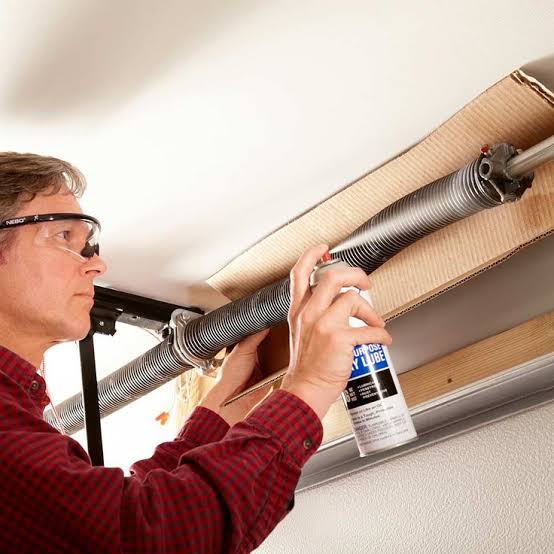
Caution: Garage door springs are under extreme tension. Do not attempt to adjust or repair them. However, you can safely lubricate them. Spray a light coat along the length of the torsion spring (the large spring above the door) or the extension springs (on the sides). This prevents rust and reduces noise.
Step 5: Lubricate the Lock and Latch
Don’t forget the manual lock mechanism if you have one. A quick spray ensures it doesn’t seize up during winter months.
Step 6: Wipe Away Excess
This is the most overlooked step. Use your rag to wipe away any drips or excess lubricant from the tracks and floor. Excess lube attracts dirt, which defeats the purpose.
How Often Should You Lubricate Your Garage Door?
Frequency depends on your usage and climate.
- Standard Recommendation: Twice a year (Spring and Fall).
- High Usage: If you use your garage door multiple times a day, consider lubricating every 3–4 months.
- Harsh Climates: If you live in an area with high humidity, salt air (coastal regions), or extreme temperature swings, increase frequency to every 4 months.
Pro Tip: Listen to your door. If you hear squeaking, grinding, or chattering, it is time to lubricate immediately, regardless of the schedule.
FAQ Section
1. Can I use WD-40 on my garage door tracks?
No, you should not use standard WD-40. It is a solvent and water displacer, not a true lubricant. It will provide temporary relief but will eventually dry out and leave your parts unprotected. Always use a dedicated silicone or lithium-based garage door lubricant.
2. Is it necessary to lubricate the tracks themselves?
Actually, many experts recommend not lubricating the inside of the track rails where the rollers sit, especially if you have nylon rollers. The friction helps the rollers grip. Instead, focus on the rollers’ bearings, hinges, and springs. If you do lubricate the tracks, use a very light amount of silicone spray and wipe off the excess thoroughly.
3. What is the best lubricant for cold weather?
In freezing temperatures, some greases can thicken and become sluggish. Silicone-based sprays are generally the best option for cold climates because they remain fluid at low temperatures and do not freeze up. Look for products labeled as “all-weather” or with a wide temperature range.
4. Why is my garage door still noisy after lubrication?
If the noise persists, the issue might not be lack of lubrication. Check for:
- Loose hardware (tighten bolts and screws).
- Worn-out rollers (replace if cracked or chipped).
- Misaligned tracks (this requires professional adjustment).
- Issues with the opener chain or belt.
5. Can I over-lubricate my garage door?
Yes, you can. Over-lubrication leads to dripping, which attracts dust and dirt. This creates a abrasive sludge that wears down parts faster. Always follow the “less is more” rule. Apply a thin coat, operate the door, and wipe away any excess.
6. Is synthetic grease better than regular grease?
Synthetic greases often offer better performance in extreme temperatures and have longer service lives than petroleum-based greases. For garage doors, a synthetic silicone or lithium grease is a superior choice for long-term protection and consistency.
Conclusion
Knowing what should I use to lubricate garage door tracks is the first step toward a quieter, safer, and longer-lasting garage door system. By choosing a high-quality silicone spray or white lithium grease and avoiding common mistakes like using WD-40, you can keep your door operating smoothly for years.
Remember, maintenance is key. Set a reminder on your phone to check your garage door twice a year. It takes less than 20 minutes and can save you from costly repairs down the road.
Did you find this guide helpful? Share it with your neighbors or on social media to help others silence their squeaky doors! If you have any questions or tips of your own, leave a comment below.
Leave a Reply