Have you ever winced at the screeching sound of your garage door opening early in the morning? Or perhaps you’ve noticed it moving sluggishly, struggling to lift its own weight? These are common signs that your garage door system is crying out for attention. Knowing what is the best lubricant to use on garage doors is the first step toward restoring peace and efficiency to your home’s most used entryway.
Garage doors are complex mechanical systems subjected to extreme weather conditions, dust, and heavy daily use. Without proper maintenance, friction builds up, leading to premature wear on rollers, hinges, and springs. In this guide, we will break down the science behind garage door lubrication, compare top products, and provide a step-by-step tutorial to keep your door running like new.
Why Proper Lubrication Matters for Garage Doors
Before diving into specific products, it is crucial to understand why lubrication is non-negotiable for garage door health. A garage door can weigh hundreds of pounds, and every time it moves, metal parts rub against each other. This friction generates heat and wear.
According to industry experts, regular lubrication can extend the lifespan of your garage door components by up to 50%. It reduces the strain on the opener motor, lowers energy consumption, and prevents costly repairs. More importantly, it eliminates those annoying squeaks that disturb your household and neighbors.
However, not all lubricants are created equal. Using the wrong type can actually attract more dirt, gum up the works, or damage plastic components. This is why choosing the right product is just as important as the act of lubricating itself.
What Is the Best Lubricant to Use on Garage Doors?
When asking what is the best lubricant to use on garage doors, the consensus among professional technicians points to two main categories: Silicone-Based Sprays and Lithium-Based Greases.
1. Silicone-Based Lubricants (The Top Choice)
Silicone spray is widely regarded as the gold standard for garage door maintenance. It is lightweight, penetrates deep into tight spaces, and does not attract dust or dirt.
- Pros:
- Does not collect debris or grime.
- Safe for use on metal, plastic, and rubber parts.
- Works effectively in extreme temperatures (both hot and cold).
- Clean application with minimal mess.
- Cons:
- May need reapplication more frequently than heavy greases (every 6 months).
- Can be slippery if oversprayed on the floor.
2. Lithium-Based Greases
Lithium grease is a heavier option, often used for high-load bearing parts. It is excellent for metal-on-metal contact points but requires careful application.
- Pros:
- Long-lasting protection.
- Excellent for heavy-duty hinges and bearings.
- Resistant to water and corrosion.
- Cons:
- Can attract dust and dirt if applied too generously.
- Difficult to clean up if spilled.
- Not suitable for plastic or rubber components.
Comparison Table: Silicone vs. Lithium
| Feature | Silicone Spray | Lithium Grease |
|---|---|---|
| Best For | Rollers, Hinges, Tracks | Heavy Metal Bearings, Hinges |
| Dirt Attraction | Low | High |
| Temperature Range | Wide (-40°F to 400°F) | Moderate |
| Ease of Application | Easy (Spray) | Moderate (Tube/Gun) |
| Safety on Rubber | Yes | No |
For most homeowners, a high-quality silicone spray is the safest and most effective all-around choice. It provides comprehensive coverage without the risk of gumming up the system with dirt.
What Parts of the Garage Door Need Lubrication?
Knowing what product to use is only half the battle. You must also know where to apply it. Applying lubricant to the wrong areas, such as the tracks, can cause significant operational issues.
Critical Components to Lubricate:
- Rollers: These bear the weight of the door. Focus on the bearings inside the roller wheels.
- Hinges: The pivot points between door sections experience high stress.
- Springs: Both torsion and extension springs benefit from light lubrication to prevent rust and fatigue. Note: Be extremely cautious around springs as they are under high tension.
- Latch Assembly: The locking mechanism should move freely.
- Bearings: If your door has pulley systems, the bearings need attention.
What NOT to Lubricate:
- The Tracks: Never spray lubricant inside the vertical or horizontal tracks. This attracts dirt and causes the rollers to slip rather than roll. Keep tracks clean and dry.
- Plastic Guides: Unless specified by the manufacturer, avoid greasing plastic safety eyes or guides.
Step-by-Step Guide: How to Lubricate Your Garage Door
Follow this simple tutorial to ensure you get the most out of your lubricant.
Tools Needed:
- Silicone-based lubricant spray
- Clean rag or microfiber cloth
- Ladder (if necessary for high springs)
- Safety glasses
Instructions:
- Clean the Components: Before applying any lubricant, wipe down the rollers, hinges, and springs with a clean rag. Remove any old grease, dust, or spiderwebs. Lubricating over dirt creates abrasive paste.
- Secure the Door: Close the garage door completely. This ensures that all parts are in their resting position and easier to access.
- Apply to Rollers: Spray a small amount of silicone lubricant onto the bearings of each roller. You do not need to soak them; a quick burst is sufficient. Rotate the roller by hand to distribute the fluid.
- Lubricate Hinges: Spray each hinge pin thoroughly. Move the door slightly up and down manually to work the lubricant into the joint.
- Treat the Springs: Lightly spray the torsion spring (the large spring above the door) or extension springs (on the sides). Caution: Do not touch or adjust the springs themselves. Only apply lubricant to the surface.
- Wipe Excess: Use your rag to wipe away any dripping lubricant. Excess fluid can drip onto your car or driveway.
- Test the Door: Open and close the door using the opener. Listen for smooth, quiet operation. If you still hear squeaks, identify the specific noisy part and apply a tiny bit more lubricant.
For more detailed information on garage door mechanics and safety standards, you can refer to Wikipedia’s entry on Garage Doors.
Common Mistakes to Avoid
Even with the best intentions, homeowners often make errors that hinder performance.
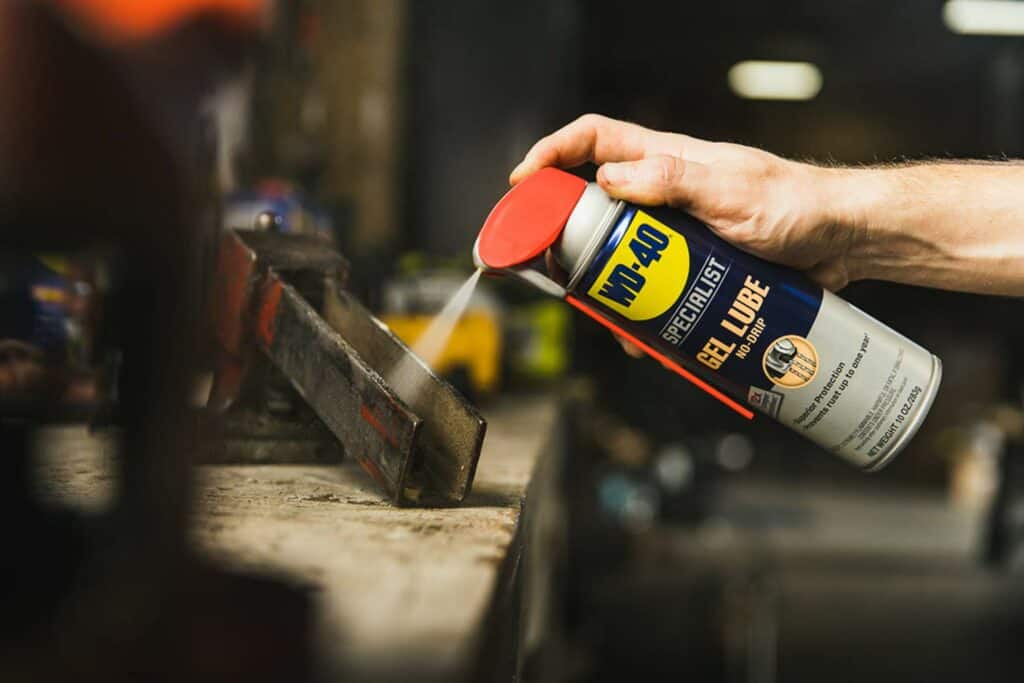
- Using WD-40 as a Lubricant: Standard WD-40 is a solvent and water displacer, not a long-term lubricant. It may silence a squeak temporarily, but it evaporates quickly and can strip away existing grease, leaving parts vulnerable. Note: WD-40 does make a specialized silicone lubricant, so check the label carefully.
- Over-Lubricating: More is not better. Excess lubricant drips onto the floor, creating a slipping hazard and attracting pests.
- Ignoring Weather Conditions: If you live in a dusty area, stick strictly to silicone. If you live in a humid coastal area, ensure your lubricant has corrosion inhibitors.
FAQ Section
1. Can I use WD-40 on my garage door?
Standard WD-40 is not recommended as a primary lubricant because it is designed to clean and displace moisture, not provide long-lasting lubrication. It evaporates quickly and can leave parts dry. However, WD-40 Brand does offer specific silicone and lithium grease products that are suitable for garage doors. Always check the label to ensure it says “Lubricant” and not just “Multi-Use Product.”
2. How often should I lubricate my garage door?
For optimal performance, you should lubricate your garage door twice a year. A good rule of thumb is to do it during the spring and fall seasonal maintenance checks. If you live in an extreme climate (very hot, very cold, or very dusty), you may need to do it every three to four months.
3. Is white lithium grease better than silicone spray?
It depends on the part. White lithium grease is excellent for heavy metal-on-metal contact points like hinge pins because it stays in place longer. However, silicone spray is better for rollers and overall cleanliness because it doesn’t attract dust. For most DIYers, silicone spray is the safer, more versatile choice.
4. Why is my garage door still noisy after lubrication?
If noise persists, the issue might not be lack of lubrication. Check for loose hardware (nuts and bolts), worn-out rollers, or misaligned tracks. Sometimes, the noise comes from the opener chain or screw drive, which may require different maintenance. If the door shakes or binds, consult a professional technician.
5. Can I lubricate the garage door tracks?
No. You should never lubricate the tracks. The rollers are designed to roll along the metal track. Adding lubricant here attracts dirt and grit, which acts like sandpaper, wearing down the rollers and causing the door to slip or operate unevenly. Keep tracks clean and dry.
6. What is the best lubricant for cold climates?
In freezing temperatures, some greases can thicken and become ineffective. Synthetic silicone sprays are ideal for cold climates as they remain fluid at low temperatures and do not freeze. Look for products rated for temperatures below -20°F (-29°C).
Conclusion
Maintaining your garage door doesn’t have to be a daunting task. By understanding what is the best lubricant to use on garage doors, you can save money on repairs and enjoy a quieter, smoother operating system. For most homeowners, a high-quality silicone-based spray offers the best balance of performance, cleanliness, and ease of use.
Remember to focus on the rollers, hinges, and springs, while keeping the tracks clean and dry. A little maintenance twice a year goes a long way in extending the life of your garage door.
Did you find this guide helpful? Share it with your friends and family on social media to help them silence their squeaky doors too! If you have any questions or tips of your own, leave a comment below.
Leave a Reply