Have you ever woken up to the sinking feeling that your car is trapped inside because the garage door won’t budge? It is a frustrating scenario that disrupts your entire day, leaving you wondering about the damage to your wallet as much as the damage to your door. If you are asking yourself, “What is the average cost of garage door repair?” you are not alone; this is one of the most common questions homeowners face when their entryway fails.
In this guide, we will break down the realistic costs you can expect in 2026, help you understand what influences these prices, and provide expert tips to ensure you get fair service without overpaying.
Understanding the National Average Costs
Before diving into specific parts, it is helpful to look at the big picture. The cost of repairing a garage door varies significantly based on the type of repair needed, your location, and the severity of the issue.
Generally, homeowners spend between $150 and $400 for standard repairs. However, minor fixes like sensor alignment might cost as little as $85, while major structural repairs or high-end opener replacements can exceed $600.
Key Factors Influencing Price
- Labor Rates: Technicians typically charge between $75 and $150 per hour. Urban areas with higher living costs often see rates at the upper end of this spectrum.
- Parts Quality: Generic parts are cheaper, but OEM (Original Equipment Manufacturer) parts last longer and often come with better warranties.
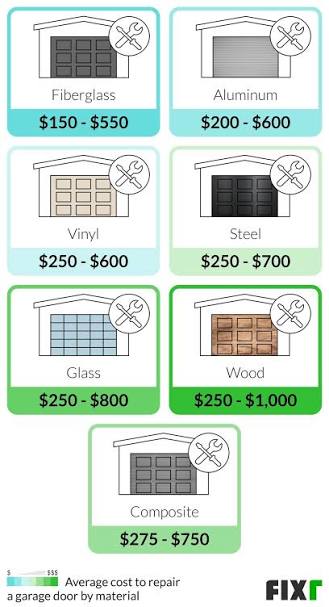
- Door Type: Heavy wooden doors or custom steel doors require more robust (and expensive) hardware than standard aluminum doors.
Common Repairs and Their Specific Costs
To give you a clearer idea of where your money goes, let’s break down the most frequent issues. Knowing these specifics helps you verify if a quote you receive is reasonable.
| Repair Type | Average Cost Range | Complexity Level |
|---|---|---|
| Spring Replacement | $200 – $350 | High (Dangerous) |
| Cable Replacement | $150 – $200 | Medium |
| Roller Replacement | $100 – $150 | Low |
| Opener Repair | $100 – $250 | Medium |
| Panel Replacement | $250 – $500 | Medium |
| Track Alignment | $125 – $175 | Low |
1. Broken Springs: The Most Critical Fix
Garage door springs bear the entire weight of the door. When they snap, the door becomes immovable. There are two types: torsion springs (mounted above the door) and extension springs (on the sides).
Torsion springs are more common in modern homes and typically cost $200 to $350 to replace. This price includes both parts and labor. Note: Never attempt to replace springs yourself. The tension stored in these components is lethal if handled incorrectly. Always hire a certified professional for this task.
2. Garage Door Opener Issues
If your door works manually but the motor fails, the issue lies with the opener. Repairing an existing unit usually costs between $100 and $250. Common fixes include replacing gears, sensors, or circuit boards.
If the opener is older than 10 years, technicians often recommend full replacement rather than repair. A new smart opener with Wi-Fi connectivity and battery backup ranges from $300 to $500 installed. For more technical details on how openers function, you can refer to the general mechanics explained on Wikipedia.
3. Off-Track Doors and Bent Tracks
If your door looks crooked or makes grinding noises, it may have come off its track. This often happens if a vehicle hits the door or if rollers wear out. Realigning the track costs approximately $125 to $175. If the metal track itself is bent, it must be replaced, which can push the cost closer to $200.
DIY vs. Professional Repair: When to Call a Pro
Many homeowners wonder if they can save money by doing the work themselves. While some tasks are DIY-friendly, others pose serious safety risks.
Safe for DIY
- Lubrication: Applying silicone-based lubricant to hinges, rollers, and springs costs less than $10 and should be done every six months.
- Sensor Cleaning: Wiping dust off the safety eyes near the floor can resolve “door won’t close” issues for free.
- Weatherstripping: Replacing the bottom seal to keep out drafts is a simple weekend project.
Call a Professional
- Spring Replacement: As mentioned, this is extremely dangerous due to high tension.
- Cable Repair: Cables work in tandem with springs; if one snaps, the other is under immense stress.
- Electrical Issues: Any wiring problems within the opener or wall console should be handled by a licensed technician to avoid fire hazards.
How to Save Money on Garage Door Repairs
Repair costs can add up, but there are strategic ways to minimize expenses without compromising quality.
- Get Multiple Quotes: Always obtain at least three estimates. Be wary of quotes that are significantly lower than the average, as they may indicate subpar parts or hidden fees.
- Ask About Service Calls: Some companies charge a flat “trip fee” just to show up, while others waive it if you proceed with the repair. Clarify this before scheduling.
- Bundle Services: If you need roller replacement and a tune-up, ask if the technician can do both in one visit. Labor costs are often lower when multiple tasks are combined.
- Maintain Regularly: Prevention is cheaper than cure. An annual inspection costing $75–$100 can identify worn rollers or loose bolts before they cause catastrophic failure.
Signs You Need Immediate Repair
Ignoring minor issues can lead to expensive emergencies. Watch out for these red flags:
- Unusual Noises: Grinding, scraping, or loud banging sounds indicate mechanical failure.
- Slow Response: If the door takes longer than usual to open or close, the motor or springs may be failing.
- Visible Gaps: If you see light coming through the sides when the door is closed, the tracks may be misaligned.
- Door Falls Quickly: A door that drops rapidly when closing has lost tension in its springs and is a safety hazard.
FAQ Section
Q1: Is it cheaper to repair or replace a garage door?
A: In most cases, repair is significantly cheaper. If the repair cost is less than 50% of the price of a new door, repairing is the logical choice. However, if your door is over 15 years old and requires frequent fixes, replacement may offer better long-term value and energy efficiency.
Q2: How long does a typical garage door repair take?
A: Most standard repairs, such as spring or cable replacement, take between 1 to 2 hours. More complex issues involving track realignment or opener installation may take 3 to 4 hours. Technicians usually provide a time window upon appointment scheduling.
Q3: Does homeowners insurance cover garage door repair?
A: Typically, homeowners insurance covers damage caused by sudden events like storms, falling trees, or vandalism. It generally does not cover wear and tear, lack of maintenance, or mechanical failure due to age. Check your policy specifics for deductibles and coverage limits.
Q4: Why is my garage door making a loud noise?
A: Loud noises often stem from lack of lubrication, worn-out rollers, or loose hardware. Metal rollers on metal tracks create more noise than nylon rollers. If the noise is a loud “bang,” it could be a broken spring, which requires immediate professional attention.
Q5: Can I repair a single panel of my garage door?
A: Yes, if the damage is isolated to one section, you can replace just that panel. This costs between $250 and $500, depending on the material and availability. However, matching the color and style of an older door can be challenging, so some homeowners opt for full replacement for aesthetic consistency.
Q6: What is the lifespan of a garage door spring?
A: Standard torsion springs are rated for approximately 10,000 cycles (one cycle = one open and one close). For an average family, this translates to 7–10 years. High-cycle springs can last up to 25,000 cycles but come at a higher initial cost.
Conclusion
Understanding what is the average cost of garage door repair empowers you to make informed decisions and avoid being overcharged. While the national average hovers between $150 and $400, the final price depends on the specific component failing and your local labor rates.
Remember, regular maintenance is your best defense against costly emergency repairs. By keeping an eye on unusual noises and scheduling annual tune-ups, you can extend the life of your garage door system significantly.
Did you find this guide helpful? Share it with your neighbors on social media to help them prepare for unexpected garage door issues too!
Leave a Reply