Introduction
Your garage door opens and closes dozens of times a week, and most of that heavy lifting is done by the springs — until they start to fail. If you’ve noticed strange noises, a sluggish door, or visible gaps in the metal coils, you may be wondering how to tell if your garage door springs are bad. Recognizing the warning signs early can save you from a sudden breakdown, expensive emergency repairs, or even a safety hazard. In this guide, we’ll walk you through the clearest symptoms, simple manual tests, and the smartest next steps — written in plain English so you can feel confident diagnosing the problem.
7 Warning Signs Your Garage Door Springs Are Bad
Spotting a failing spring isn’t always obvious. Some symptoms are loud, others are subtle. Here are the most common indicators you should watch for:
1. The Door Won’t Open at All
A completely dead spring means zero counterbalance. You may hear the opener motor humming, but the door barely moves. This is usually a torsion spring that has snapped cleanly in half.
2. The Door Slams Down Too Fast
Healthy springs slow the descent of your door. If it drops like a stone when you hit the wall button, the spring has lost tension and needs immediate replacement.
3. Loud Bangs or “Gunshot” Noises
A broken spring doesn’t fail quietly. Many homeowners describe the sound as a gunshot or a loud ping echoing from the garage. If you heard this recently, a spring has likely snapped.
4. Visible Gap in the Coil
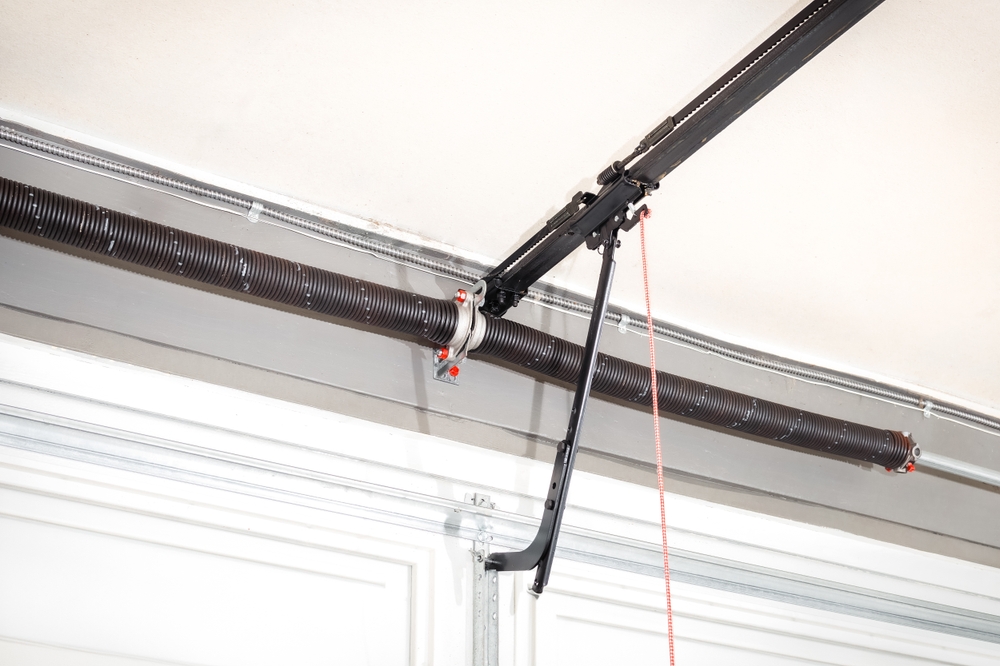
Walk over to the spring mounted above your door (torsion type). If you see a clear gap — usually 2 to 4 inches wide — between two parts of the coil, the spring has broken. This is one of the easiest ways to confirm how to tell if your garage door springs are bad without any tools.
5. The Door Feels Unusually Heavy
Disconnect the opener by pulling the red emergency cord, then try lifting the door by hand. A working system feels light — almost effortless. If the door feels like it weighs 100+ pounds, your springs are doing little to no work.
6. The Door Opens Unevenly
If one side of the door rises faster than the other, or if it visibly twists while moving, you likely have one failed spring or mismatched tension on the two sides.
7. Cables Are Loose or Hanging
Extension springs (the type that stretch along the horizontal tracks) are connected to steel cables. A loose, sagging, or snapped cable almost always means the spring has broken or come off its pulley.
How to Test Your Garage Door Springs Manually (Step-by-Step)
You don’t need to be a pro to check your springs safely. Follow these steps to perform a quick “balance test”:
- Pull the red emergency release cord on your garage door opener. This disconnects the motor so you can lift the door manually.
- Lift the door halfway (about 3 to 4 feet off the ground). Use both hands and keep your body centered.
- Let go gently. A healthy door should stay in place, hovering at the halfway point.
- Watch what happens next:
- If it stays put, your springs are in good shape.
- If it drops down, the springs are weak or broken.
- If it flies up, the springs are over-tensioned — also dangerous.
- Repeat at the 3/4 and fully open positions to confirm consistent behavior.
⚠️ Safety Tip: Never stand directly under a door you’re testing. Keep children and pets out of the garage during the test.
Torsion vs. Extension Springs: Quick Comparison Table
Not all garage doors use the same spring system. Knowing which one you have helps you understand what to look for. According to experts at Wikipedia’s garage door spring page, torsion systems are now the standard on most modern residential doors.
| Feature | Torsion Springs | Extension Springs |
|---|---|---|
| Location | Mounted horizontally above the door | Stretch along horizontal tracks on each side |
| Appearance | Thick steel coil on a metal shaft | Long, thin coil with a safety cable running through |
| Lifespan | 10,000–20,000 cycles (7–12 years) www.garagedoordoctorllc.com | 5,000–10,000 cycles (5–7 years) |
| Repair Cost | $150–$350 per spring qualityoverheaddoor.com | $100–$200 per spring qualityoverheaddoor.com |
| Safety | Safer — breaks stay contained | Riskier — can snap outward if no safety cable |
| Common Signs of Failure | Visible gap in coil | Sagging cable, uneven door |
How Long Do Garage Door Springs Last?
The lifespan of a garage door spring is measured in cycles — one cycle equals a full open-and-close. Most standard residential springs are rated for about 10,000 cycles
agsmartgarage.com. For the average homeowner who uses their garage 3 to 4 times per day, that adds up to roughly 7 to 10 years of service
www.precisiondoor.net.
However, real-world conditions can shorten that number significantly:
- Climate: Extreme heat or cold speeds up metal fatigue.
- Humidity: Coastal areas with salty air corrode springs faster.
- Usage: Busy households (e.g., families with multiple cars) can burn through 10,000 cycles in just 5 years.
- Maintenance: Springs that are never lubricated wear out 15–30% faster.
Pro tip: If you’re unsure of your spring’s age, check for a date stamp on the winding cone or ask the previous homeowner. Most manufacturers mark the installation or production date.
What Happens When Springs Break? (And Why You Shouldn’t Ignore It)
A broken spring doesn’t just inconvenience you — it creates real risks:
- Motor damage: Your garage door opener isn’t built to lift the full weight of the door. A failed spring forces the motor to work overtime, often burning out the gears or motor itself within weeks.
- Safety hazard: A door with broken springs can slam down without warning, injuring pets, children, or damaging cars.
- Property damage: Uneven tension can warp door panels, bend tracks, or snap cables — multiplying the repair bill.
The national average cost for professional spring replacement is $200 to $250
www.yelp.com, and acting quickly usually keeps you in the lower end of that range. Waiting often means paying for both springs and a new opener motor.
Should You Replace Both Springs at the Same Time?
This is one of the most common questions we hear. The answer: yes, almost always.
Here’s why:
- Both springs were installed on the same day, so they have the same cycle count.
- If one breaks, the other is usually within 100–500 cycles of failing too.
- Installing a new spring next to an old one creates uneven tension, which strains cables, rollers, and the opener.
Replacing both at once adds about $80–$120 to your bill but can save you a second service call within six months.
Frequently Asked Questions (FAQ)
Q1: Can I still use my garage door if one spring is broken?
Answer: Technically yes, but we strongly advise against it. The remaining spring and opener motor are under extreme stress, which can lead to further damage or a sudden door failure. Limit use to emergencies only and call a pro within 24–48 hours.
Q2: How much does it cost to replace a garage door spring in 2026?
Answer: Torsion springs typically run between $150 and $350 per spring installed, while extension springs cost $100 to $200 each
qualityoverheaddoor.com. The national average total is around $200 to $250, though prices can climb to $540 for premium or high-cycle springs
www.thisoldhouse.com.
Q3: Is it safe to replace garage door springs myself?
Answer: Torsion springs store a massive amount of tension — enough to cause serious injury or death if they snap during installation. We recommend hiring a certified technician. Extension springs are somewhat safer for skilled DIYers, but only if you have the right winding bars and follow proper safety protocols.
Q4: How often should I lubricate my garage door springs?
Answer: Every 3 to 6 months. Use a silicone-based or lithium grease lubricant (never WD-40, which is a solvent, not a lubricant). Spray a light coat along the full length of the coil and wipe off excess.
Q5: What causes garage door springs to break prematurely?
Answer: The top culprits are lack of lubrication, extreme weather swings, poor installation, rust buildup, and over-cycling the door. Using a door that’s too heavy for its spring rating also causes early failure.
Q6: Can I tell if a spring is bad just by looking?
Answer: Yes — a visible gap between coil segments is a clear sign of a broken torsion spring. For extension springs, look for sagging safety cables, rust, or a coil that’s stretched out unevenly.
Conclusion
Learning how to tell if your garage door springs are bad doesn’t require a toolbox or a contractor’s license. Watch for the seven warning signs we covered — from loud bangs and heavy doors to visible coil gaps — and run the simple manual balance test to confirm your suspicions. Catching a failing spring early saves you money, protects your opener, and keeps your family safe.
If any of the symptoms above sound familiar, don’t wait. Reach out to a trusted local garage door technician for a quick inspection — the average $200–$250 replacement cost is a small price to pay for peace of mind.
Leave a Reply