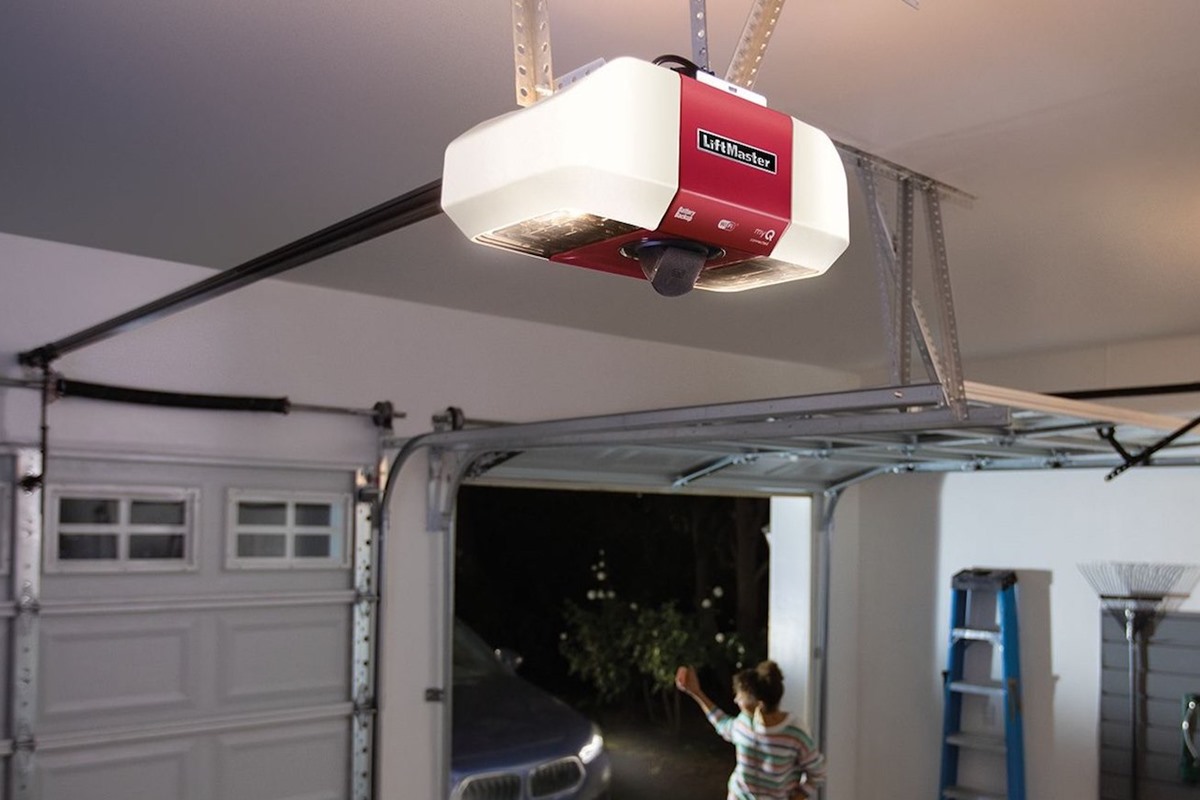
It is incredibly frustrating to sit in your living room only to hear your garage door rumbling open because the house next door just pulled into their driveway. If you are dealing with the annoying issue where my garage door opens when my neighbor opens theirs, you are not alone, and the good news is that it is a very quick fix. Let us dive into exactly why this cross-triggering happens and how you can secure your home in just a few minutes.
Why Does My Garage Door Opens When My Neighbor Opens Theirs?
To understand this frustrating glitch, we first need to look at how your remote communicates with the motor. A standard garage door opener uses radio frequencies to send a signal from your car remote to the motor unit on your ceiling.
When your neighbor’s remote triggers your door, it means both remotes are broadcasting on the exact same frequency and using the same internal “password.”
According to home security experts, nearly 30% of homes built before 2011 still utilize outdated fixed-code systems. In older models, the remote and the motor share a static physical switch pattern. If your neighbor recently bought a universal remote and accidentally matched your switch pattern, their remote will open your door every single time they press the button.
Even with newer models, radio frequency interference can occasionally cause signal bleeding, though this is much rarer. The primary culprit is almost always a duplicated fixed-code setting.
How to Identify If You Have DIP Switches or Rolling Codes
Before you can fix the problem, you need to know what type of system you own. Garage door openers generally fall into two categories: DIP Switches (older, fixed-code) and Rolling Codes (newer, secure-code).
Here is a quick comparison to help you identify your system:
| Feature | DIP Switch System (Older) | Rolling Code System (Newer) |
|---|---|---|
| Manufacture Year | Typically pre-2011 | 2011 to Present |
| Internal Mechanism | 8 to 12 tiny physical toggle switches inside the motor. | A single “Learn” or “Smart” button (usually yellow, red, or purple). |
| Security Level | Low. The code never changes, making it easy to copy. | High. The code changes every single time the remote is used. |
| Likelihood of Syncing | Very High. Easy to accidentally match a neighbor’s pattern. | Extremely Low. Mathematically nearly impossible to duplicate. |
Note: If you have a rolling code system and your door is still opening for your neighbor, the issue is likely severe radio frequency interference from their new LED bulbs or a faulty logic board.
Step-by-Step Guide: How to Change Your Garage Door Frequency
Now that you know your system type, follow the specific tutorial below to change your code and stop the interference.
Scenario A: Fixing a DIP Switch Garage Door
If your motor has a row of tiny switches, you need to change the physical pattern.
- Locate the DIP switches: Open the back panel of your garage door motor unit. Look for a row of 8 to 12 tiny sliding switches.
- Record your current pattern: Take a photo of the current UP/DOWN or ON/OFF configuration. Do not skip this step, or you will lose all your existing remotes!
- Change the pattern: Using a non-conductive tool (like a plastic pen or a wooden toothpick), slide at least 3 or 4 switches to the opposite position. For example, if switches 1 through 4 are UP, slide switches 1 and 2 to DOWN.
- Reprogram your remotes: Open the battery compartment of your car remote and the wall console. Adjust the tiny switches inside them to match the exact new pattern you just created on the motor.
- Test the system: Stand 10 feet away from the door. Press your remote. The door should operate smoothly without your neighbor triggering it.
Scenario B: Fixing a Rolling Code Garage Door
If your motor has a “Learn” button, the system might just need to be reset to clear out any ghost codes.
- Locate the Learn button: Look on the back or side of the motor head for a colored button (usually yellow, red, orange, or purple).
- Clear the memory: Press and hold the Learn button for exactly 6 to 10 seconds until the LED indicator light next to it turns off or blinks. This erases all previously programmed remotes.
- Reprogram your primary remote: Press the Learn button once briefly (the light will turn on or blink). Within 30 seconds, press and hold the button on your car remote until the motor light flashes or clicks.
- Reprogram secondary devices: Repeat the process for any keypads, second cars, or wall consoles.
- Perform a safety test: Ensure the door is fully closed before testing. Press the remote from 5 feet away to confirm it works, then have your neighbor test theirs to confirm the interference is gone.
Pros and Cons of Upgrading to a Smart Garage Door Opener
If your current unit is over 15 years old, constantly acting up, or lacks modern safety features, you might want to consider an upgrade. Here is a quick breakdown of upgrading to a modern smart opener:
Pros:
- Maximum Security: Uses advanced 256-bit rolling encryption that is impossible to hack or accidentally sync with a neighbor.
- Convenience: Allows you to open, close, and monitor your garage from your smartphone anywhere in the world.
- Integration: Syncs seamlessly with smart home ecosystems like Amazon Alexa, Google Home, and Apple HomeKit.
Cons:
- Initial Cost: A high-quality smart opener ranges from $200 to $400, plus professional installation fees if you do not DIY.
- Wi-Fi Dependency: Requires a stable Wi-Fi signal in your garage; a weak router may cause connection drops.
Frequently Asked Questions
Can my neighbor program their remote to open my garage intentionally?
If you have an older DIP switch system, yes. Because the code is static, anyone can easily look at your switch pattern (if they can access the motor) or use a “code grabber” device to copy your signal. Upgrading to a rolling code system eliminates this risk entirely.
Will changing my Wi-Fi router channel stop my garage door from opening?
Generally, no. Garage door remotes operate on specific radio frequencies (usually 315 MHz or 390 MHz), which are entirely separate from your 2.4 GHz or 5 GHz Wi-Fi bands. However, cheap LED light bulbs installed in the garage door motor can cause radio frequency interference. If this is the issue, changing the bulbs to rough-service or specialized LED bulbs designed for garage doors will fix it.
How often should I change my garage door remote code?
For older DIP switch systems, it is highly recommended to change the physical switch pattern at least once a year, or immediately if you suspect someone has copied your remote. For modern rolling code systems, the code changes automatically every time you use it, so manual changes are unnecessary.
Is it dangerous if my garage door opens randomly?
Yes, it poses a significant security risk. An open garage door is an invitation for burglars to steal tools, bicycles, or even gain entry into your home. It also compromises your family’s safety by exposing your living space to the outdoors, pets, and wildlife. Fixing the issue promptly is crucial for home security.
Conclusion
Dealing with a synced garage door is more than just a quirky annoyance; it is a genuine security vulnerability. By understanding whether you are using a DIP switch or rolling code system, you can easily change your frequency and stop your neighbor’s remote from triggering your door. Taking 15 minutes to reprogram your system ensures your home stays secure and gives you peace of mind every time a car drives by.
Leave a Reply