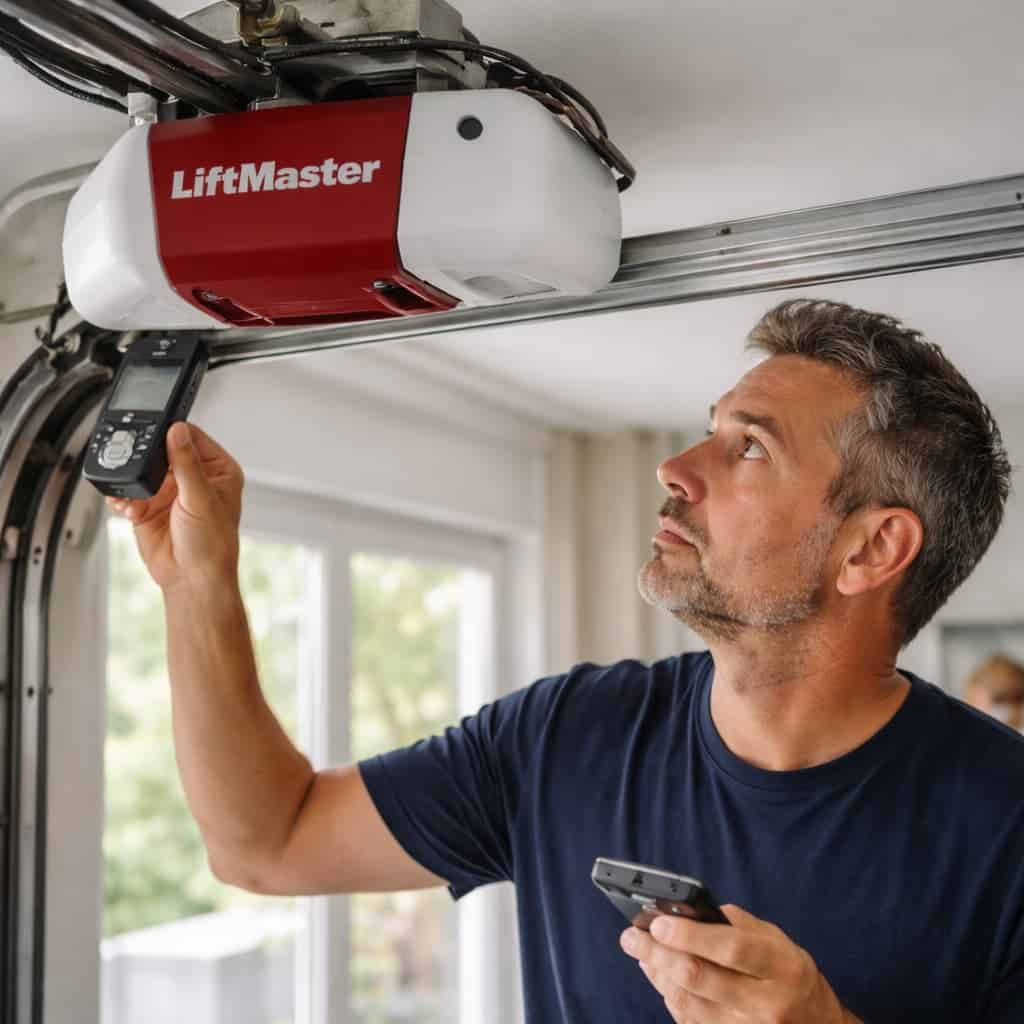
It is incredibly frustrating when you press the remote, only to find your Lift Master Garage Door Not Opening All The Way. We know how disruptive this can be to your daily routine, especially when you are running late for work or school. Fortunately, this common issue is usually easy to diagnose and fix with a few simple adjustments.
Why Is Your Lift Master Garage Door Not Opening All The Way?
When a garage door stops halfway, it is usually trying to protect itself from damage. Modern openers have built-in safety mechanisms that instantly halt the door if they detect unusual resistance.
According to the International Door Association (IDA), nearly 70% of garage door malfunctions are caused by minor issues like misaligned sensors or incorrect limit settings. Before we panic, let’s look at the most common culprits:
- Obstructed tracks: Dirt, ice, or debris blocking the metal rollers.
- Failing springs: Worn-out torsion springs making the door physically too heavy to lift.
- Incorrect limit settings: The opener’s computer simply doesn’t know when to stop.
- Misaligned safety sensors: The invisible infrared beam between the sensors is broken.
🚨 Quick Diagnostic Guide: Listen to Your Motor 🚨
- Humming but not moving: The motor is engaged, but the trolley is stuck or a spring is broken.
- Grinding noise: The plastic gears inside the motor are stripped and need replacement.
- Squeaking: The rollers are dry and the tracks need immediate lubrication.
- Clicking sound: The logic board relay is failing, or the limit switches are physically broken.
How to Adjust the Travel Limits on Your LiftMaster
If the door stops exactly two inches from the ceiling or reverses before touching the ground, your travel limits need adjusting. A limit switch is an electronic component that dictates exactly how far the motor should pull the door.
Follow these concrete steps to fix it safely:
- Locate the adjustment screws: Look at the back or side of your motor unit. You will see two small dials labeled “Up Limit” and “Down Limit”.
- Make micro-adjustments: Use a flathead screwdriver to turn the “Up Limit” dial. Turn it exactly 1/8 of an inch (or one single click) in the direction of the arrow marked “Up”.
- Test the mechanism: Press the wall button to test the door and watch how high it goes.
- Repeat if necessary: If it still stops short, turn the dial another 1/8 inch. Never turn it more than 1/4 inch at a time to avoid the door violently hitting the header bracket.
- Secure the settings: Once it opens fully, tighten the small set screw on the dial to lock your new settings in place.
Are the Safety Sensors Misaligned?
If your door starts to open, stops abruptly, and reverses, check the photo-eye sensors. These are the small black boxes located near the floor on both sides of the metal track.
- Check the LED lights: One sensor should have a steady green light, and the other a steady amber light. If one is blinking, they are misaligned.
- Clean the lenses: Wipe them gently with a dry microfiber cloth to remove spider webs, rain spots, or dust.
- Realign the brackets: Loosen the wing nut on the blinking sensor. Adjust the eye gently until both LED lights glow solidly without flickering.
- Ensure a 6-inch clearance: Make sure no lawnmower handles or storage boxes are blocking the beam, which operates at a height of exactly 6 inches from the ground.
How to Clean and Lubricate Your Garage Door Tracks
Friction is the ultimate enemy of a smooth-operating garage door. If your motor is straining, it might simply be fighting against dirty, dry tracks.
- Inspect the tracks: Look closely for dents or crimps. Use a rubber mallet to gently tap out minor dents.
- Clean the rails: Wipe the inside of the metal tracks with a damp cloth soaked in mild dish soap. You must remove all old, hardened grease.
- Apply the right lubricant: Spray a high-quality white lithium grease or silicone spray along the track. Apply exactly two light coats for optimal performance.
- Avoid these products: Never use heavy motor oil or standard WD-40. They attract dust and create a thick sludge that will eventually block the rollers.
DIY Fixes vs. Professional Repair: Which Should You Choose?
Not every issue requires a professional, but knowing your limits is crucial for safety. Here is a quick comparison to help you decide.
| Issue Type | DIY Difficulty | Estimated Cost | When to Call a Pro |
|---|---|---|---|
| Limit Switch Adjustment | Easy (1/10) | $0 | If the motor burns out or smokes. |
| Sensor Realignment | Easy (2/10) | $0 | If the internal wiring is chewed by pests. |
| Track Lubrication | Easy (1/10) | $10 | If the metal tracks are visibly bent or cracked. |
| Spring Replacement | Hard (9/10) | $150 – $300 | Always. Torsion springs store lethal kinetic energy. |
Expert Insight: “Homeowners should never attempt to replace high-tension torsion springs themselves,” warns certified garage door technician Mark Davidson. “The kinetic energy stored in a wound spring can cause severe, life-altering injury if it snaps during a DIY repair.”
Frequently Asked Questions (FAQ)
1. How do I reset my LiftMaster garage door opener?
To reset your opener, locate the “Learn” or “Smart” button on the motor head. Press and hold it for exactly 6 seconds until the indicator light blinks. This clears all old remote codes. You will then need to reprogram your remotes and keypads from scratch.
2. Why does my garage door close all the way but only open halfway?
This usually indicates a problem with the “Up Force” setting or a broken torsion spring. If the door is physically too heavy, the motor lacks the strength to pull it up completely. Try increasing the “Up Force” dial by a quarter turn, but if it still fails, call a professional to check your springs.
3. How often should I lubricate my garage door tracks?
You should lubricate the rollers, hinges, and track every six months. Use a silicone-based spray or white lithium grease. Avoid standard WD-40, as it attracts dirt and can gum up the moving parts over time, causing more friction.
4. Can extreme weather affect my garage door’s opening distance?
Yes, absolutely. In freezing temperatures, standard grease can thicken, creating immense resistance. If this happens, switch to a cold-weather synthetic lubricant. Additionally, wooden doors can swell in high summer humidity, causing them to stick tightly in the tracks.
Conclusion
Dealing with a Lift Master Garage Door Not Opening All The Way doesn’t have to ruin your entire day. By checking the limit switches, aligning the safety sensors, and keeping the tracks properly lubricated, you can restore smooth operation in just a few minutes. Always remember to prioritize your safety and know exactly when to call an expert for heavy mechanical parts.
Found this guide helpful? Please share it on your social media to help friends and family fix their garage doors today!
Leave a Reply