Introduction
There is nothing quite as frustrating as pulling into your driveway and being greeted by a garage door that looks tired, neglected, and covered in flaking paint. If you are currently searching for how to paint a metal garage door that is peeling, please know that you are not alone; this is one of the most common exterior maintenance issues homeowners face due to weather exposure and oxidation. The good news is that with the right preparation and technique, you can completely transform your home’s curb appeal in a single weekend without hiring expensive contractors. This guide will walk you through every step of the restoration process with empathy and precision, ensuring your hard work lasts for years to come.
Why Is My Metal Garage Door Peeling? Understanding the Root Cause
Before you pick up a brush, it is vital to understand why the failure occurred in the first place. Painting over a failing surface without addressing the root cause is a guaranteed way to waste time and money. According to industry standards referenced in Wikipedia’s article on Corrosion, metal degradation is often an electrochemical reaction accelerated by moisture, salt, and UV radiation.
Common causes include:
- Moisture Intrusion: Water gets trapped behind the paint film, causing adhesion loss.
- Improper Surface Prep: Painting over dirt, grease, or existing rust prevents bonding.
- Thermal Expansion: Metal expands and contracts significantly; rigid paints crack over time.
- UV Degradation: Sunlight breaks down chemical bonds in lower-quality acrylics.
Understanding these factors helps you choose materials that resist future failure rather than just covering up current damage.
What Tools and Materials Do I Need Before Starting?
Preparation accounts for 80% of a successful paint job. Gathering the correct supplies ensures you maintain momentum and achieve professional results.
Essential Material Checklist
| Category | Item | Purpose |
|---|---|---|
| Safety | N95 Mask & Safety Goggles | Protect against lead dust (pre-1978) and chemical splashes |
| Prep | Wire Brush / Cup Wheel | Remove loose paint and surface rust |
| Prep | TSP (Trisodium Phosphate) | Deep clean and degloss surfaces |
| Primer | Rust-Inhibitive Metal Primer | Create a bondable, protective base layer |
| Paint | 100% Acrylic Latex Exterior | Flexible finish that moves with metal |
| Tools | 3/8″ Nap Roller & Angled Sash Brush | Smooth application on textured metal |
Expert Tip: Always check the temperature rating on your primer and paint cans. Most exterior coatings require ambient temperatures between 50°F and 90°F (10°C–32°C) and low humidity (<70%) to cure properly. Applying paint outside this range leads to premature peeling.
Step-by-Step: How To Paint A Metal Garage Door That Is Peeling
This tutorial provides concrete, actionable steps. Do not rush the prep work; patience here dictates longevity.
Step 1: Safety First and Area Protection
Lay down canvas drop cloths (plastic slips easily). Tape off windows, handles, and rubber weather stripping using painter’s tape. If your home was built before 1978, test for lead paint before sanding. Wear your N95 mask and goggles throughout the removal phase.
Step 2: Remove All Loose and Peeling Paint
Use a wire brush attachment on a drill or a manual scraper to remove every flake of failing paint. Feather the edges where bare metal meets existing paint using 120-grit sandpaper. The goal is a smooth transition; if you can feel a ridge with your fingernail, it needs more sanding. Do not paint over loose material.
Step 3: Deep Clean and Degrease
Mix ½ cup of TSP per gallon of warm water. Scrub the entire door with a stiff-bristle nylon brush. This removes chalky oxidation, road grime, and oils that prevent adhesion. Rinse thoroughly with a garden hose and allow the door to dry completely (minimum 4 hours in direct sun, or 24 hours in shade).
Step 4: Treat Bare Metal and Spot Prime
Apply a high-quality rust-inhibitive primer only to bare metal spots and feathered edges. Use an angled sash brush for precision. Allow primer to dry according to manufacturer specs (typically 1–2 hours at 70°F/21°C). This step is non-negotiable for preventing flash rust.
Step 5: Apply the Topcoat
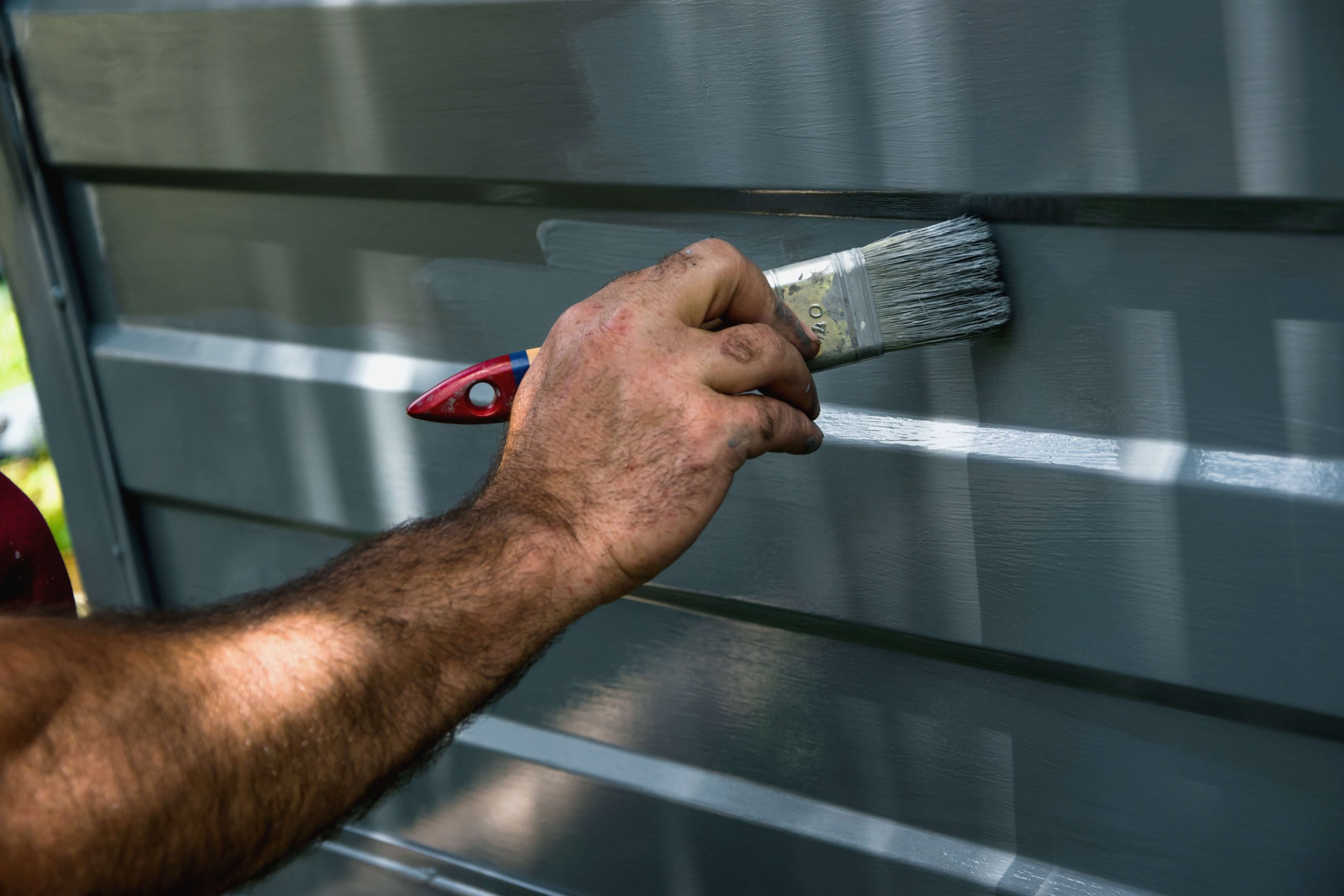
Stir your 100% acrylic latex paint thoroughly. Cut in around edges and panels with your sash brush, then roll flat sections using a 3/8″ nap roller in overlapping W-patterns. Maintain a wet edge to avoid lap marks. Apply two thin coats rather than one thick coat; thin layers cure harder and flex better. Allow 4–6 hours between coats at optimal temperatures.
Step 6: Reassemble and Cure
Remove painter’s tape while the final coat is still slightly tacky (within 1 hour) to prevent tearing. Avoid closing the door or exposing it to rain for at least 24 hours. Full cure takes 30 days; be gentle during this period.
Pros and Cons of DIY vs. Professional Painting
Deciding whether to tackle this project yourself involves weighing cost against convenience and risk.
DIY Approach:
- ✅ Cost Savings: $150–$300 in materials vs. $800–$2,000+ professional quote
- ✅ Scheduling Control: Work on your own timeline
- ❌ Time Investment: 8–12 hours of labor over 2 days
- ❌ Risk Factor: Improper prep leads to rework within 1–2 years
Professional Approach:
- ✅ Warranty Coverage: Most pros offer 2–5 year guarantees
- ✅ Equipment Access: Spray equipment delivers factory-like finish
- ❌ Higher Cost: Significant upfront investment
- ❌ Scheduling Delays: May wait weeks during peak season
For most homeowners learning how to paint a metal garage door that is peeling, DIY is highly rewarding if you commit to thorough preparation.
Frequently Asked Questions (FAQ)
Can I paint over rust on a metal garage door?
No, you should never paint directly over active rust. Rust continues to spread beneath paint, causing rapid failure. You must remove all loose rust with a wire brush, treat the area with a rust converter or inhibitor, and apply a dedicated metal primer before topcoating. Skipping this step guarantees the new paint will peel within months.
What type of paint is best for metal garage doors?
100% acrylic latex exterior paint is the industry gold standard for residential metal garage doors. Unlike oil-based enamels, acrylics remain flexible as metal expands and contracts with temperature changes. They also resist UV fading and yellowing. Look for products specifically labeled “for metal” or “exterior trim & door.”
How long does a painted metal garage door last?
A properly prepared and painted metal garage door typically lasts 8–15 years before requiring repainting. Longevity depends on climate (coastal/salty environments reduce lifespan), paint quality, and maintenance. Annual washing and touch-ups of nicks can extend service life significantly.
Should I use a sprayer or roller for my garage door?
Both methods work, but they serve different skill levels. Rollers are forgiving, require less masking, and push paint into textured surfaces effectively—ideal for DIYers. Sprayers deliver a smoother, factory-like finish but demand extensive masking, ventilation, and practice. For first-timers tackling peeling doors, a roller minimizes risk and cleanup time.
Do I need to prime the entire door or just bare spots?
If the existing paint is in sound condition (no chalking, cracking, or gloss), spot priming bare metal and feathered edges is sufficient. However, if the old paint is heavily chalked or you are making a dramatic color change, applying a full coat of bonding primer improves adhesion and color uniformity. When in doubt, full priming adds insurance against future failure.
How do I prevent lap marks when painting large panels?
Work in manageable sections (one panel at a time) and always maintain a wet edge. Never stop rolling in the middle of a panel; finish at natural break lines like seams or grooves. Reload your roller frequently—a starved roller creates streaks. Painting in cooler morning hours slows drying time, giving you more working window to blend strokes seamlessly.
Conclusion: Restore Your Home’s First Impression Today
Learning how to paint a metal garage door that is peeling is more than a maintenance task—it is an investment in your home’s value, security, and your personal pride of ownership. By understanding the science of adhesion, gathering proper materials, and following meticulous preparation steps, you can achieve results that rival professional work at a fraction of the cost. Remember: success lives in the details of cleaning, priming, and respecting cure times.
Your garage door is often the largest visible surface of your home’s façade. Don’t let peeling paint diminish what lies beneath. Grab your tools, follow this guide, and reclaim your curb appeal this weekend.
Found this guide helpful? Share it with fellow homeowners on Facebook, Pinterest, or Nextdoor who might be struggling with the same peeling door dilemma. Tag us in your before-and-after photos—we’d love to celebrate your transformation! 🎨🏡
Leave a Reply