Introduction
Is your garage door looking faded, chipped, or just outdated? You are not alone, and giving it a fresh coat of paint is one of the most cost-effective ways to instantly boost your home’s curb appeal. If you are wondering, what paint do you use to paint a garage door, this expert guide will walk you through the best choices, material-specific advice, and exact steps for a flawless, long-lasting finish.
What Paint Do You Use To Paint A Garage Door?
When tackling this project, the short answer is that you should use high-quality exterior-grade paint specifically formulated to withstand temperature fluctuations, UV rays, and moisture.
However, the “best” paint depends heavily on two factors: the material of your door and the climate you live in. Generally, the market offers two primary categories of paint suitable for this job: 100% acrylic latex paint and oil-based (alkyd) paint.
According to industry standards, acrylic latex has become the gold standard for most modern residential projects. It offers superior flexibility, which is crucial because garage doors expand and contract with daily temperature changes. Oil-based paints, while incredibly durable and smooth, have become less common due to strict VOC (Volatile Organic Compound) regulations in many US states and their tendency to yellow or chalk over time when exposed to direct sunlight.
Acrylic Latex vs. Oil-Based Paint: Which is Better?
To help you make an informed decision, here is a direct comparison of the two most popular paint types for garage doors.
| Feature | 100% Acrylic Latex Paint | Oil-Based (Alkyd) Paint |
|---|---|---|
| Durability | Excellent; resists cracking and peeling | Very high; hard, protective shell |
| Flexibility | High (moves with temperature changes) | Low (can become brittle over time) |
| Drying Time | Fast (1–2 hours to touch) | Slow (6–8 hours to touch) |
| Cleanup | Easy (soap and warm water) | Requires mineral spirits or paint thinner |
| UV Resistance | Excellent (retains color longer) | Moderate (may yellow or chalk in sun) |
| Eco-Friendliness | High (low VOC options available) | Low (high VOC, strong odor) |
Expert Verdict: For 90% of homeowners, 100% acrylic latex exterior paint is the superior choice. It provides the perfect balance of durability, flexibility, and ease of use.
How to Choose the Right Paint for Your Garage Door Material
Not all garage doors are created equal. Matching the paint to your door’s material is the secret to preventing premature peeling or rust.
1. Steel and Metal Garage Doors
Steel doors are the most common in the US. They require a rust-inhibitive primer if any bare metal is exposed. Follow this with a high-quality acrylic latex exterior paint. Avoid oil-based paints on galvanized steel, as they can react with the zinc coating and peel within months.
2. Wood Garage Doors
Wood is porous and expands significantly with humidity. Use a stain-blocking exterior primer to prevent tannin bleed, followed by a premium acrylic latex paint or a specialized exterior wood stain. Acrylic allows the wood to “breathe” while maintaining a protective, flexible barrier.
3. Aluminum and Fiberglass Doors
These materials are non-porous and smooth, making adhesion tricky. Lightly sand the surface with 220-grit sandpaper, apply a bonding primer (like Stix or similar water-based bonding primers), and finish with 100% acrylic latex paint.
Step-by-Step Guide: How to Paint a Garage Door Like a Pro
A flawless finish is 80% preparation and 20% painting. Follow these concrete, step-by-step instructions to ensure professional results.
Step 1: Clean the Surface Thoroughly
Dirt and grease are the enemies of paint adhesion. Use 2 liters of warm water (temperature 22–28°C) mixed with 30 ml of mild, phosphate-free dish soap. Scrub the entire garage door with a soft-bristle brush or a non-abrasive sponge. Rinse completely with a garden hose and let it dry for at least 2 hours.
Step 2: Inspect and Repair
Check for dents, rust, or peeling paint. For steel doors, sand any rust spots down to bare metal using 120-grit sandpaper, wipe away the dust, and apply a rust-inhibitive primer. Fill minor wood dents with exterior-grade wood filler.
Step 3: Sand and Prime
Lightly sand the entire door with 220-grit sandpaper to create a “tooth” for the new paint to grip. Wipe away all dust with a tack cloth. If you are changing colors drastically, painting bare metal, or using a different paint type than the existing coat, apply one thin coat of high-quality exterior primer. Allow it to dry for 4 hours.
Step 4: Apply the First Coat of Paint
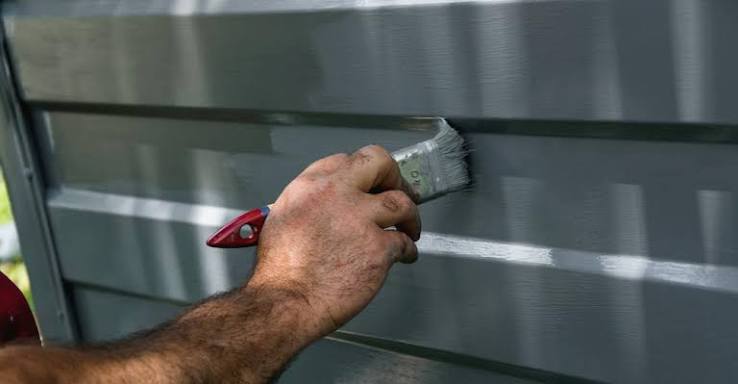
Stir your 100% acrylic latex paint thoroughly (do not shake, to avoid bubbles). Using a high-density foam roller (4 mm nap) for flat panels and a 2-inch angled synthetic brush for recessed panels and edges, apply the first coat. Pro tip: Paint the recessed panels first, then the horizontal borders, and finish with the vertical edges to catch any drips.
Step 5: Apply the Second Coat
Wait exactly 4 to 6 hours (or as specified on the paint can) for the first coat to dry to the touch. Apply a second, thin coat using the same technique. Two thin coats are always superior to one thick coat, which can sag or wrinkle.
Step 6: Curing Time
While the paint may feel dry in a few hours, it takes 24 to 48 hours to fully cure. Avoid closing the door or exposing it to heavy rain during this window to prevent the paint from sticking to the weather stripping.
Expert Tips for a Flawless Garage Door Paint Job
To elevate your DIY project to professional standards, keep these insider tips in mind:
- Mind the Weather: Never paint in direct sunlight or when temperatures exceed 32°C (90°F). The paint will dry too quickly, leading to visible brush strokes and poor adhesion. The ideal painting temperature is between 10°C and 24°C (50°F–75°F) with low humidity.
- The Curb Appeal ROI: According to the National Association of Realtors (NAR), simple exterior improvements, including a fresh paint job on prominent features like a garage door, can yield a 50% to 100% return on investment by dramatically boosting perceived home value.
- Choose the Right Sheen: Opt for a satin or semi-gloss finish. Flat/matte finishes trap dirt and are hard to clean, while high-gloss can highlight every minor imperfection or dent in the metal. Semi-gloss offers the perfect balance of durability, cleanability, and aesthetic appeal.
- Disconnect the Opener: For safety and ease of access, pull the red emergency release cord to disconnect the automatic opener. This allows you to manually move the door to paint the bottom edge without the motor engaging.
Frequently Asked Questions (FAQ)
Q1: Can I use regular exterior house paint on a garage door?
Yes, but with a caveat. Regular exterior house paint works fine if it is 100% acrylic latex. However, garage doors experience more friction, vibration, and extreme temperature shifts than house siding. Using a paint specifically labeled for “doors, trim, and cabinets” or “exterior metal/wood” will provide a harder, more flexible, and longer-lasting finish.
Q2: Do I absolutely need a primer before painting my garage door?
If your door is already painted with a similar color and the existing paint is in good condition (no peeling or chalking), you can skip the primer and use a “paint and primer in one” product. However, if you are painting bare metal, bare wood, covering a dark color with a light one, or repairing rust, a dedicated primer is non-negotiable for proper adhesion.
Q3: How long does it take to paint a standard two-car garage door?
For a DIYer, expect the entire process to take about 6 to 8 hours, spread over two days. Day 1 is for cleaning, sanding, priming, and the first coat. Day 2 is for the second coat and final cleanup. Rushing the drying times is the most common cause of paint failure.
Q4: What is the best sheen (finish) for garage door paint?
Satin or semi-gloss is highly recommended. These sheens are durable, resist moisture, and are easy to wipe clean with a damp cloth. They also reflect light nicely, enhancing the architectural details of raised-panel doors.
Q5: Can I paint my garage door in the winter?
It is not recommended. Most acrylic latex paints require a minimum application temperature of 10°C (50°F) to properly coalesce and form a durable film. Painting in cold weather can result in poor adhesion, cracking, and extended, uneven drying times.
Conclusion
Knowing what paint do you use to paint a garage door is the first step toward transforming the look of your home. By choosing a high-quality 100% acrylic latex paint, matching it to your door’s specific material, and following a meticulous preparation process, you can achieve a showroom-quality finish that lasts for years. Not only will this protect your investment from the elements, but it will also dramatically elevate your home’s curb appeal.
Did you find this guide helpful? Share this article with your friends and family on Facebook, Pinterest, or Twitter who might be planning their next weekend DIY home improvement project! Don’t forget to save this page for your next painting adventure.
Leave a Reply