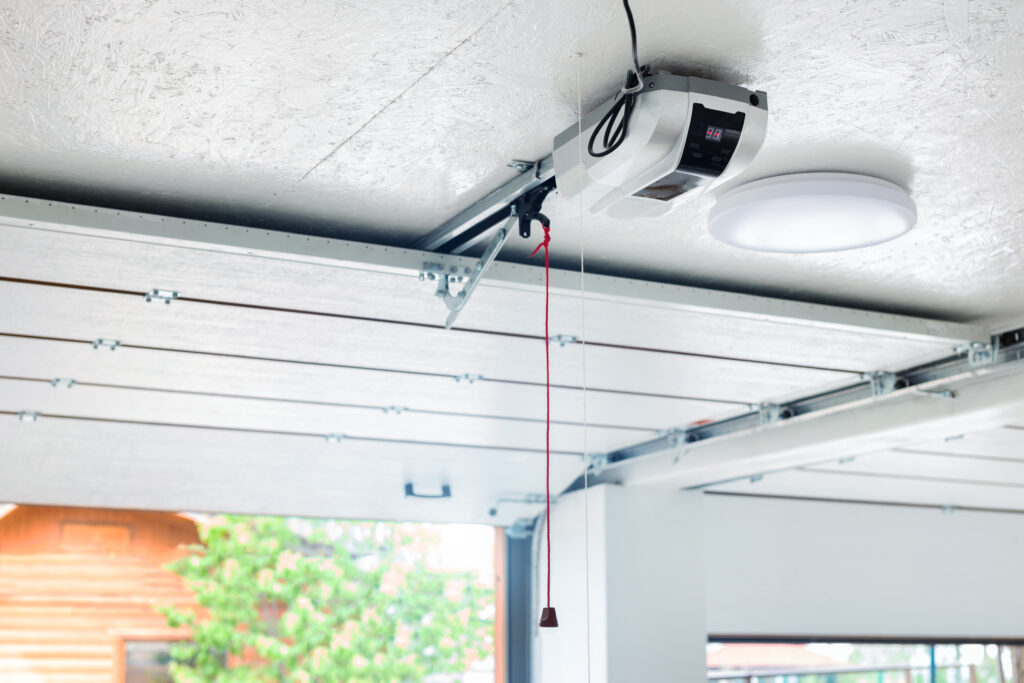
It is incredibly frustrating to find your garage wide open, leaving you wondering why my garage door opens and closes by itself. Do not worry, as this common “phantom” issue is usually caused by simple sensor glitches or signal interference that you can easily fix. Let us explore the exact reasons and how to solve them safely.
Why My Garage Door Opens And Closes By Itself: Top Causes
When your garage door acts like it has a mind of its own, it is usually a “phantom opening.” According to the International Door Association (IDA), over 70% of homeowners use their garage as their main entrance, making this a major security risk.
Here are the most common culprits behind this frustrating problem.
1. Stuck or Faulty Remote Control Buttons
The simplest explanation is often the right one. If a remote control is wedged between your car seats or crushed at the bottom of a bag, the button might be continuously pressed.
This sends a constant signal to your garage door motor. The motor interprets this as a continuous command to open or close, causing the door to cycle repeatedly.
2. Radio Frequency (RF) Interference
Garage door openers rely on radio waves to communicate. If a nearby device transmits on a similar frequency, it can trigger your door.
Common sources of interference include:
- LED light bulbs (especially cheap, unshielded ones)
- Ham radios or nearby transmission towers
- Military or government bases nearby
- Neighbors using similar frequency remotes
If you want to understand the science behind these overlapping signals, you can read more about radio frequency interference on Wikipedia.
3. Misaligned or Dirty Safety Sensors
Modern garage doors have photo-eye sensors located near the floor. They shoot an invisible beam across the doorway. If anything breaks this beam, the door automatically reverses to prevent crushing an object.
If the sensors are slightly misaligned or covered in spiderwebs, the beam breaks. The door will start to close, realize the beam is broken, and immediately open back up. To you, it looks like it opened by itself!
4. Failing Logic Board or Remote Receiver
The logic board is the “brain” of your garage door opener. Over time, power surges or simple wear and tear can cause the internal components to fail.
When the receiver starts malfunctioning, it can randomly interpret background electrical noise as a valid remote signal. “Most phantom openings are traced back to simple RF interference or dirty photo-eye sensors,” says a certified technician from the Door & Access Systems Manufacturers Association (DASMA).
Step-by-Step Guide: How to Fix Misaligned Sensors
Before calling a professional, you can easily fix the most common cause: the safety sensors. Follow these concrete steps to get your door working perfectly.
Step 1: Inspect the LED indicator lights Look at the small plastic sensor eyes located on both sides of the garage door track. One sensor sends the beam, and the other receives it. Check the LED lights. A solid green or amber light means it is aligned. A blinking light means it is misaligned or blocked.
Step 2: Clean the sensor lenses Dust, dirt, and spiderwebs can easily block the infrared beam. Use a clean, dry microfiber cloth to gently wipe the small plastic lenses. Ensure there are no physical objects, like a trash can or a broom, blocking the path between them.
Step 3: Adjust the mounting brackets If the lights are still blinking, the brackets are misaligned. Loosen the wingnut on the sending sensor just enough so the bracket can move. Shift the sensor by exactly 1/8-inch increments up, down, or sideways.
Step 4: Test the alignment Watch the LED light on the receiving sensor. The moment the blinking stops and the light turns solid, stop moving the bracket. Tighten the wingnut securely.
Step 5: Perform a safety test Press your wall button to close the door. As it is closing, wave a rolled-up newspaper in front of the sensors. The door should immediately stop and reverse. If it does, your sensors are perfectly calibrated!
DIY Repair vs. Professional Help
Not sure if you should fix it yourself or call an expert? Use this quick comparison table to decide.
| Feature | DIY Troubleshooting | Professional Repair |
|---|---|---|
| Best For | Dirty sensors, stuck remotes, changing lightbulbs. | Fried logic boards, broken springs, wiring issues. |
| Cost | Free to $20 (for basic tools/cloths). | $150 to $300+ (labor and parts). |
| Time Required | 10 to 15 minutes. | 1 to 2 hours (including scheduling). |
| Safety Level | Very safe (low voltage components). | Moderate risk (high-tension springs and electricity). |
Frequently Asked Questions (FAQ)
Can a neighbor’s remote open my garage door?
Yes, this is highly possible if you both have older garage door openers that use fixed-code DIP switches. If your neighbor’s remote is set to the exact same frequency and code as yours, it will open your door. Modern openers use rolling codes to prevent this exact issue. If you have an older model, consider upgrading to a smart opener with rolling code technology.
Will resetting my garage door opener stop it from opening randomly?
In many cases, yes. Resetting the logic board clears out any corrupted memory or paired remotes that might be causing phantom signals. To reset it, locate the “Learn” or “Smart” button on the motor unit. Press and hold it for about 6 to 10 seconds until the indicator light blinks. This erases all remotes. You will then need to reprogram your remotes and keypads.
How do I know if my garage door logic board is bad?
There are a few telltale signs of a failing logic board. First, the motor unit might click repeatedly without the door moving. Second, the wall control panel might flash or go completely blank. Finally, if you have ruled out stuck remotes and sensor issues, but the door still opens by itself, the internal receiver on the logic board is likely short-circuiting and needs replacement.
Is it dangerous if my garage door opens by itself at night?
Yes, it poses a significant security and safety risk. An open garage is an open invitation for burglars to access your home, tools, and vehicles. Furthermore, if the door reverses unexpectedly while someone is walking underneath, it can cause severe injury. Always address phantom openings immediately to keep your family secure.
Conclusion
Dealing with a garage door that opens and closes by itself is stressful, but it is rarely a disaster. By understanding the root causes—like stuck remote buttons, radio interference, or dirty sensors—you can quickly diagnose and solve the problem. Taking the time to clean your sensors and check for interference will save you money and keep your home secure.
If you found this guide helpful in solving your garage door mystery, please share this article on your social media to help your friends and family secure their homes too!
Leave a Reply