Introduction
There is nothing quite as frustrating as pressing the remote button, watching your garage door start to rise, and then seeing it halt abruptly halfway up. It leaves you stranded, worried about security, and unsure of what to do next. If you are asking yourself, “Why is my garage door stopping on the way up,” you are not alone; this is one of the most common issues homeowners face with their automatic openers.
In this guide, we will walk you through the most likely culprits, from simple sensor misalignments to more complex mechanical failures. We will provide clear, step-by-step solutions that prioritize your safety and help you determine whether this is a quick DIY fix or a job for a professional. Let’s get your garage door back on track.
1. Are the Safety Sensors Misaligned or Blocked?
The most frequent reason a garage door stops mid-ascent is the safety reversal system. Modern garage doors are equipped with photo-eye sensors located near the floor on both sides of the door frame. These sensors create an invisible beam; if the beam is broken, the door assumes an obstacle is present and stops or reverses to prevent injury.
How to Check and Fix Sensor Issues
- Check the Lights: Look at the LED lights on the sensors. Typically, one should be solid green (power) and the other solid amber or red (alignment). If either is blinking or off, there is a problem.
- Clean the Lenses: Dust, spiderwebs, or dirt can block the infrared beam. Wipe them gently with a soft, dry cloth.
- Realign the Brackets: Ensure both sensors are facing each other directly. Even a slight tilt can break the connection. Loosen the wing nuts, adjust the angle until the lights turn solid, and tighten them back.
- Remove Obstructions: Ensure no boxes, bikes, or trash cans are blocking the path between the two sensors.
According to the Consumer Product Safety Commission, garage door sensors are a critical safety feature mandated since 1993. Never bypass them to force the door closed.
2. Is the Travel Limit Setting Incorrect?
Your garage door opener has “travel limits” that tell the motor how far to go up and how far to go down. If the “up” limit is set too short, the motor will stop before the door is fully open. This often happens after power outages or if someone accidentally adjusts the screws on the motor unit.
Adjusting the Travel Limits
Most modern openers have two adjustment screws or dials on the side or back of the motor unit, labeled “Up” and “Down.”
- Locate the adjustment screws on the opener motor.
- Use a flathead screwdriver to turn the “Up” limit screw slightly (usually clockwise increases the travel distance).
- Test the door. Repeat in small increments until the door opens fully without straining the motor.
- Caution: Do not over-adjust, as this can cause the door to hit the header or strain the springs.
3. Are the Tracks Obstructed or Damaged?
The metal tracks on either side of your garage door guide the rollers. If these tracks are bent, dented, or filled with debris, the rollers will jam, causing the door to stop. The opener’s motor detects this resistance and shuts off to prevent damage.
Inspection Checklist
- Visual Inspection: Look for dents, gaps, or bends in the metal rails.
- Debris Removal: Check for hardened grease, nails, screws, or rocks inside the track channel.
- Roller Condition: Inspect the rollers for cracks or wear. Nylon rollers are quieter but can crack; steel rollers are durable but noisy.
If you find a minor bend, you may be able to gently hammer it back into place using a rubber mallet. However, significant damage requires professional track replacement to ensure safe operation.
4. Is There Too Much Friction in the System?
A garage door is a heavy mechanical system. Without proper lubrication, the friction between moving parts increases significantly. The opener motor has a limited amount of torque; if friction is too high, it cannot lift the door all the way and will stop to protect itself from overheating.
Lubrication Best Practices
Not all lubricants are created equal. Avoid WD-40 as it attracts dust and dries out quickly. Instead, use:
- Silicone-based spray: Ideal for rollers and hinges.
- White lithium grease: Best for metal-on-metal contact points like hinges and latches.
Step-by-Step Lubrication:
- Close the door completely.
- Apply lubricant to the roller stems (not the wheels themselves) and hinge pivot points.
- Lubricate the torsion spring (lightly) and the lock assembly.
- Operate the door up and down twice to distribute the lubricant evenly.
5. Are the Springs Broken or Weak?
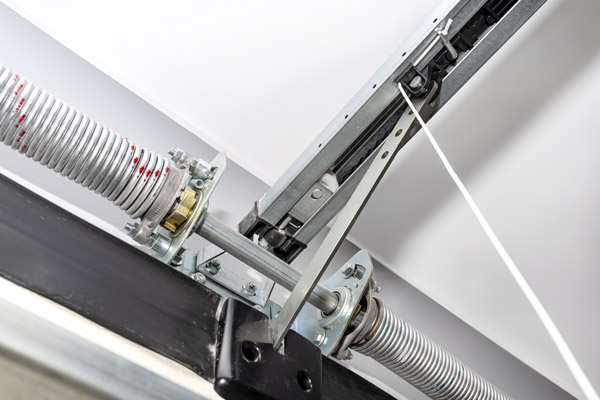
The springs (either torsion springs above the door or extension springs on the sides) do the heavy lifting. The opener merely guides the door. If a spring is broken or has lost its tension due to age, the motor must work much harder. Eventually, it will reach its thermal limit and stop.
Signs of Spring Failure
- Loud Bang: A broken spring often sounds like a gunshot.
- Gap in Torsion Spring: Look at the spring above the door. If there is a visible gap in the coils, it is broken.
- Heavy Door: Try lifting the door manually (with the opener disconnected). If it feels extremely heavy, the springs are likely failing.
Warning: Garage door springs are under extreme tension. Never attempt to repair or replace springs yourself. This is a dangerous job that requires specialized tools and training. Call a licensed technician immediately.
6. Is the Opener Motor Overheating?
If you have been operating the door repeatedly in a short period (e.g., letting kids play with the remote), the motor may have overheated. Most openers have a thermal protection switch that cuts power to the motor until it cools down.
What to Do
- Wait 15–20 minutes for the motor to cool.
- Try operating the door again.
- If the door works after cooling but stops again after a few cycles, the motor may be failing or the gear assembly inside the opener is worn out.
7. Are the Cables Off the Drums?
The lift cables wind around drums at the end of the torsion spring shaft. If a cable slips off the drum, the door will become unbalanced. One side may rise while the other stays low, causing the door to bind in the tracks and stop.
Visual Check
Look at the drums on either side of the header bracket. The cables should be wrapped tightly and evenly. If a cable is loose, frayed, or hanging off the drum, do not operate the door. This is another scenario requiring immediate professional assistance to prevent the door from crashing down.
Comparison: DIY Fixes vs. Professional Help
| Issue | Difficulty Level | Risk Factor | Recommended Action |
|---|---|---|---|
| Sensor Misalignment | Low | Low | DIY |
| Travel Limit Adjustment | Low | Low | DIY |
| Lack of Lubrication | Low | Low | DIY |
| Track Obstruction | Medium | Medium | DIY (if minor) |
| Broken Springs | High | Very High | Professional Only |
| Cable Slippage | High | Very High | Professional Only |
| Motor/Gear Failure | Medium | Medium | Professional |
FAQ Section
Q: Why does my garage door stop and then reverse back down?
A: This is typically a safety feature triggered by the photo-eye sensors. If the beam is blocked or misaligned, the door assumes it hit an object and reverses. It can also happen if the “close” force limit is set too low, causing the door to think it hit an obstacle when it hasn’t.
Q: Can I force my garage door to stay open if it keeps stopping?
A: No, you should not bypass safety features. If the door is stopping, it is detecting a fault. Forcing it can lead to severe injury or property damage. Identify and fix the underlying issue first.
Q: How often should I lubricate my garage door?
A: It is recommended to lubricate the moving parts of your garage door at least once or twice a year. Regular maintenance reduces wear and tear and prevents the motor from overworking.
Q: My garage door stops halfway up only sometimes. What is wrong?
A: Intermittent issues are often related to loose wiring connections, fluctuating voltage, or early-stage gear wear in the opener. Check the wiring connections at the motor head and wall console. If the problem persists, the internal gears may need replacement.
Q: Is it expensive to fix a garage door that stops on the way up?
A: Costs vary widely. Simple fixes like sensor realignment or lubrication cost nothing if done DIY. Professional service calls typically range from $100 to $200. However, spring replacement or motor replacement can cost between $200 and $500+, depending on the door size and type.
Conclusion
Dealing with a garage door that stops on the way up is inconvenient, but understanding the root cause empowers you to take action. In many cases, the solution is as simple as cleaning a sensor or adding some lubrication. By regularly maintaining your system, you can extend the life of your opener and ensure your home remains secure.
However, always prioritize safety. If you suspect spring or cable issues, do not hesitate to call a professional. Your safety is worth far more than the cost of a service call.
Did this guide help you troubleshoot your garage door? Share this article with friends and family on social media to help them avoid similar headaches. If you have further questions, leave a comment below!
Leave a Reply