Have you ever grabbed your garage door handle, pulled up, and felt like you were trying to lift a small car? It is a frustrating and potentially dangerous experience that many homeowners face unexpectedly. If you are asking yourself, “why is my garage door so heavy to lift,” you are not alone, and ignoring it can lead to costly damage or injury.
A properly functioning garage door should feel nearly weightless when operated manually, thanks to a sophisticated counterbalance system. When that balance is lost, the full weight of the door—often between 100 and 400 pounds—falls directly onto your arms. In this guide, we will break down exactly why this happens, how to diagnose the issue, and when to call a professional.
The Counterbalance System: How It Works
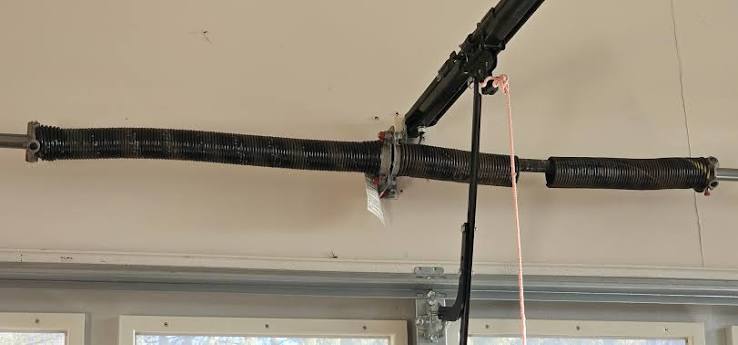
To understand why your door feels heavy, you first need to understand why it shouldn’t. A garage door is not designed to be lifted by human muscle alone. It relies on a counterbalance system consisting of high-tension springs, cables, drums, and pulleys.
There are two main types of systems:
- Torsion Springs: Mounted above the door opening on a metal shaft. These twist (torque) to store energy.
- Extension Springs: Mounted on both sides of the upper horizontal tracks. These stretch out as the door closes.
When the system is calibrated correctly, these springs offset the weight of the door panels. If the door feels heavy, it means this equilibrium has been disrupted. According to basic physics principles detailed in mechanical engineering resources, the force required to lift the door should be minimal if the potential energy stored in the springs matches the gravitational pull on the door Wikipedia.
Top Reasons Why Your Garage Door Is Heavy
If your door suddenly feels like dead weight, one of the following culprits is likely to blame.
1. Broken or Worn-Out Springs
This is the most common reason for a heavy garage door. Springs have a finite lifespan, typically measured in “cycles” (one open and close equals one cycle). Most residential springs are rated for 10,000 to 20,000 cycles.
- Signs of Failure: You might hear a loud bang resembling a gunshot when the spring breaks. Visually, look for a gap in the torsion spring coil or a stretched-out extension spring.
- The Impact: Without the spring’s tension, you are lifting the entire weight of the door unassisted.
2. Misaligned or Damaged Tracks
The metal tracks on either side of the door guide the rollers. If these tracks become bent, dented, or misaligned, the rollers cannot move smoothly.
- Friction Build-up: Instead of rolling effortlessly, the door drags against the metal. This friction creates significant resistance, making the door feel heavier than it actually is.
- Check for Gaps: Look between the roller and the track. If there is inconsistent spacing, the track may be bent.
3. Lack of Lubrication
Over time, dust, dirt, and grime accumulate on the moving parts. If you haven’t lubricated your garage door in over six months, the friction increases dramatically.
- Key Areas: Rollers, hinges, bearings, and the spring itself (if it’s an extension spring) need regular lubrication.
- The Result: Dry metal-on-metal contact requires much more force to overcome, mimicking the sensation of a heavier door.
4. Cable Issues
The lift cables wind around the drum and attach to the bottom brackets of the door. If a cable frays, slips off the drum, or snaps, the door becomes unbalanced.
- Uneven Lifting: One side of the door may feel heavier than the other, or the door may hang crookedly.
- Safety Warning: Never attempt to fix a snapped cable yourself. The tension involved can cause severe injury.
5. Weather Stripping and Seal Friction
Sometimes the issue isn’t mechanical but environmental. If the weather stripping along the sides or top of the door has hardened, swollen, or become misaligned, it can create a vacuum seal or excessive drag against the frame.
- Seasonal Changes: In humid summers, wood doors may swell. In winters, ice can form on the bottom seal, freezing the door to the driveway.
DIY Diagnosis: Step-by-Step Check
Before calling a technician, you can perform a safe visual inspection. Never attempt to adjust spring tension yourself.
- Disconnect the Opener: Pull the red emergency release cord to disengage the automatic opener. This allows you to test the door manually.
- The Halfway Test: Lift the door manually to about halfway open. Let go.
- If it stays in place: The springs are likely balanced. The issue may be friction or track alignment.
- If it slams down: The springs are under-tensioned or broken.
- If it flies up: The springs are over-tensioned.
- Visual Inspection: Look at the springs for gaps. Check the cables for fraying. Inspect the tracks for dents.
- Listen and Feel: As you lift, listen for grinding noises. Feel for sticky spots where the door catches.
Comparison: Torsion vs. Extension Springs
Understanding your spring type helps in diagnosing the problem.
| Feature | Torsion Springs | Extension Springs |
|---|---|---|
| Location | Above the door header | Alongside the horizontal tracks |
| Lifespan | Longer (15,000–20,000 cycles) | Shorter (10,000 cycles) |
| Safety | Safer (contained in tube/shaft) | Higher risk (can snap violently) |
| Failure Sign | Gap in coils | Stretched out or snapped in half |
| Cost | More expensive to replace | Cheaper to replace |
When to Call a Professional
While lubrication and visual checks are safe DIY tasks, spring replacement and cable repair are not. Garage door springs are under extreme tension—enough to lift hundreds of pounds. If they release unexpectedly, they can cause catastrophic injury or property damage.
You should call a certified garage door technician if:
- You see a visible break in the spring.
- The cables are frayed or off the drum.
- The door is crooked or uneven.
- You hear grinding or popping noises during operation.
- The door falls rapidly when partially open.
Professional technicians have the specialized tools (such as winding bars) and training to safely release and reset tension.
FAQ Section
Q: Can I lift my garage door manually if the spring is broken?
A: Technically, yes, but it is extremely difficult and dangerous. A standard double-car garage door can weigh over 300 pounds. Lifting it without counterbalance assistance puts immense strain on your back and shoulders. Furthermore, the door is unstable and could fall unexpectedly. It is best to leave it closed and call a professional.
Q: How often should I lubricate my garage door?
A: You should lubricate the moving parts of your garage door at least twice a year, ideally in the spring and fall. Use a silicone-based lubricant or lithium grease for metal parts. Avoid WD-40 as it is a degreaser, not a long-term lubricant, and can attract more dirt over time.
Q: Why does my garage door feel heavier in the winter?
A: Cold temperatures can cause metal components to contract slightly, increasing friction. Additionally, ice can build up on the bottom weather seal, sticking the door to the concrete. Lubricating the rollers and checking the seals before winter can help mitigate this issue.
Q: Is it normal for a garage door to make noise when lifting?
A: Some noise is normal, especially with older openers. However, loud grinding, squeaking, or popping sounds are not. Squeaking usually indicates a need for lubrication, while grinding may suggest worn gears in the opener or damaged rollers. Popping sounds often indicate a spring issue.
Q: How long do garage door springs last?
A: On average, garage door springs last between 7 to 9 years with normal use (about 3–4 cycles per day). However, this varies based on the quality of the spring, the weight of the door, and climate conditions. High-cycle springs can last longer, while cheap replacements may fail sooner.
Conclusion
Dealing with a garage door that feels impossibly heavy is more than just an inconvenience; it is a sign that your home’s largest moving object is out of balance. Whether it is a simple lack of lubrication or a critical spring failure, addressing the issue promptly ensures your safety and prevents further damage to the door mechanism.
Remember, while you can handle basic maintenance like cleaning and lubricating, spring and cable repairs require professional expertise. Don’t risk your safety to save a few dollars.
If you found this guide helpful in understanding why is my garage door so heavy to lift, please share it with friends or neighbors who might be struggling with the same issue. A well-maintained garage door is a safe garage door!
Leave a Reply