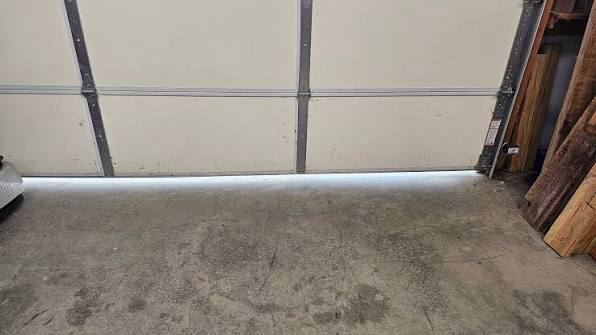
It is incredibly frustrating when you are in a rush, but your garage door refuses to budge past a few inches. If you are wondering, “Why is my garage door only opening a foot?“, you are not alone, and the good news is that this common issue is usually an easy fix.
Why Is My Garage Door Only Opening A Foot? (Top Causes)
When your garage door stops prematurely, it usually points to a specific mechanical or electrical glitch. The average garage door is opened and closed about 1,500 times a year, making it the largest moving object in your home. Because of this heavy usage, components naturally shift or wear out over time.
Understanding the root cause is the first step toward a smooth-operating garage. Let us break down the most common culprits so you can get back to your day.
1. Incorrect Travel Limit Settings
The travel limit switch tells your garage door opener exactly when to stop opening and closing. If these settings are accidentally bumped or drift over time, the motor will think it has reached the fully open position when it is actually only a foot off the ground.
According to the International Door Association (IDA), over 60% of garage door service calls are related to simple adjustments rather than broken parts. As certified technicians often note, “A garage door stopping prematurely is rarely a dead motor; it is almost always a miscommunication between the motor and its limit switches.”
2. Worn or Broken Torsion Springs
Your garage door springs do the heavy lifting, counterbalancing the massive weight of the door panels. A standard torsion spring is rated for about 10,000 cycles (roughly 7 to 10 years of daily use).
If a spring snaps or loses its tension, the opener motor suddenly has to lift the entire dead weight of the door. The motor’s internal safety mechanism will sense this extreme strain and halt the door after just a few inches to prevent the motor from burning out.
3. Dirty or Misaligned Safety Sensors
Modern garage doors feature photo-eye sensors located near the floor on both sides of the track. These sensors shoot an invisible beam across the doorway. If the beam is broken, the door will not close.
However, if the sensors are severely misaligned, dirty, or exposed to direct, blinding sunlight, they can send erratic signals to the logic board. This confusion can sometimes cause the door to stop or reverse immediately after starting.
4. Track Obstructions and Lack of Lubrication
Friction is the enemy of any mechanical system. If the metal tracks are dented, or if the rollers are dry and grinding, the door faces immense physical resistance. The opener’s force settings will detect this physical blockage and stop the door to protect the gears.
Quick Diagnostic Guide: Symptoms vs. Likely Causes
| Symptom | Most Likely Cause | Difficulty Level |
|---|---|---|
| Door stops at the exact same height every time | Travel Limit Switch | Easy (DIY) |
| Door struggles, motor hums loudly, then stops | Broken Spring or Low Lubrication | Medium to Hard |
| Door stops, pauses, and immediately reverses | Misaligned Safety Sensors | Easy (DIY) |
| Door opens fine but slams shut violently | Down Force Setting Too High | Medium (DIY) |
Step-by-Step: How to Adjust the Travel Limit Settings
If your door consistently stops at the exact same height, adjusting the limit switch is the most logical first step. This process takes less than 10 minutes.
Tools Needed:
- A sturdy step ladder
- A flathead or Phillips screwdriver (depending on your opener model)
- A smartphone timer
Step 1: Locate the Limit Screws Climb your ladder and look at the back or side of the garage door motor head. You will see two distinct adjustment screws. They are usually labeled “Up” (or “Open”) and “Down” (or “Close”). Sometimes they are marked with arrows.
Step 2: Identify the “Up” Screw Since your issue is that the door is not opening far enough, you need to adjust the “Up” limit screw.
Step 3: Make Micro-Adjustments Insert your screwdriver into the “Up” screw. Turn the screw clockwise by exactly one-quarter turn (1/4″) or one full rotation. Note: Turning it clockwise usually increases the open distance, while counter-clockwise decreases it.
Step 4: Test the Door Press your wall button to close the door completely. Wait 10 seconds for the logic board to reset, then press the button to open it.
Step 5: Repeat if Necessary If the door still stops short, repeat Step 3. Turn the screw another 1/4 turn clockwise and test again. Warning: Never turn the adjustment screw more than one full turn at a time. If you over-adjust, the door may smash into the header bracket, causing severe damage.
Frequently Asked Questions (FAQ)
How do I know if my garage door limit switch is physically broken?
If you adjust the limit screws and the door’s behavior does not change at all, the internal plastic gear or the limit switch mechanism itself might be stripped. In modern openers, this often requires replacing the logic board or the entire opener unit.
Can extreme weather affect my garage door’s opening height?
Yes! Extreme cold can cause the metal tracks to contract and the lubricant to thicken, increasing friction. Additionally, heavy snow can physically block the door’s path. If this happens, clear the area and apply a silicone-based garage door lubricant to the rollers and hinges.
How much does it cost to fix a garage door that won’t open all the way?
If it is a simple limit switch adjustment, a professional might charge a standard trip fee of $75 to $150. However, if a torsion spring is broken, expect to pay between $200 and $350 for parts and labor, as spring replacement is highly dangerous and requires specialized tools.
Is it safe to adjust the force settings myself?
You should be extremely cautious with the “Force” adjustment screws. While limit switches dictate where the door stops, force settings dictate how hard the motor pushes. If you increase the force too much to overcome a physical blockage, the door could crush a car, a pet, or a person. Always fix physical track issues before tweaking the force settings.
Why does my garage door close fine but won’t open all the way?
This specific symptom almost always points to the “Up” travel limit switch needing adjustment, or a broken torsion spring. The motor has enough force to pull the door down (using gravity), but lacks the power to push it up against the unbalanced weight.
Conclusion
Dealing with a stubborn garage door does not have to ruin your morning. By understanding the mechanics behind your opener, you can quickly diagnose whether you are dealing with a simple limit switch drift or a more serious spring issue. Always prioritize safety, make small adjustments, and test your door frequently.
If you found this guide helpful and managed to get your door working perfectly again, please share this article on your social media to help out a friend who might be struggling with their own garage door today!
Leave a Reply