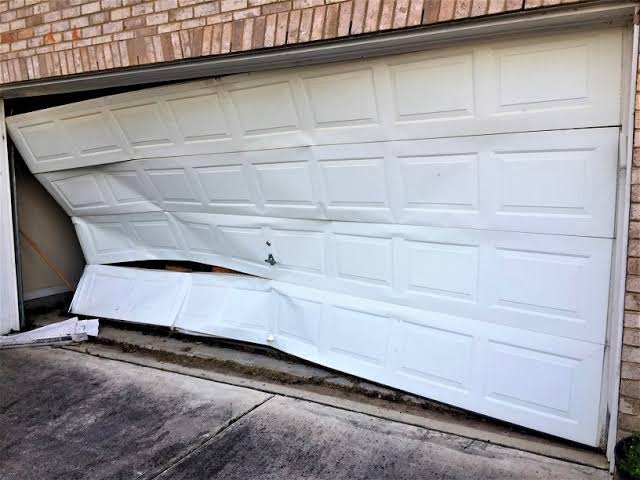
Have you ever walked out to your car in the morning, hit the opener button, and watched in horror as your garage door groaned and visibly warped? It is a unsettling sight that immediately raises questions about safety and cost. If you are asking yourself, “why is my garage door bending in the middle,” you are not alone. This issue is more common than you might think, but it requires immediate attention to prevent total failure or injury.
In this guide, we will break down exactly what causes this structural failure, how to assess the damage, and whether you can fix it yourself or need to call a professional. Let’s get your garage back on track.
Understanding the Mechanics: Why Doors Warp
To understand why a garage door bends, you first need to understand how it is built. Most residential garage doors are made of thin steel skins stretched over a frame of horizontal struts (supports). These struts are designed to keep the door rigid as it moves up and down the tracks.
When the center of the door begins to bow or bend, it usually means the structural integrity of these supports has been compromised. According to basic engineering principles, a long, thin panel without adequate support will naturally deflect under pressure. In the context of a garage door, that pressure comes from wind, weight, or mechanical force.
For a deeper understanding of structural load distribution in building materials, you can refer to general engineering concepts on Wikipedia. However, for your specific door, the issue is rarely about complex physics and more often about wear, tear, or impact.
Top 5 Reasons Your Garage Door Is Bending
If you are wondering why is my garage door bending in the middle, here are the most likely culprits. Identifying the root cause is the first step toward a solution.
1. Lack of Horizontal Struts (Reinforcement)
Many standard garage doors come with minimal reinforcement. If you have a wide door (16 feet or wider) and only one or two horizontal struts, the center span is vulnerable. Over time, the constant tension from opening and closing can cause the metal skin to pull away from the frame, creating a “belly” in the middle.
- The Fix: Install additional horizontal reinforcement struts. These are affordable metal bars that bolt across the interior of the door panels to provide rigidity.
2. Wind Load and Weather Pressure
Living in an area prone to high winds? Wind pressure is a silent killer of garage doors. When strong winds hit the flat surface of your door, they exert immense pressure. If the door isn’t reinforced, it will bow inward or outward depending on the wind direction.
- Statistic: The American Society of Civil Engineers notes that garage doors are often the weakest point in a home’s envelope during storms. A bent door may indicate it failed under recent weather stress.
3. Accidental Impact
Did you back into the door? Did a child kick a ball against it? Even a minor dent can weaken the structural integrity of a panel. Once a panel is dented, it loses its ability to distribute weight evenly. Over time, the surrounding areas begin to warp as the door continues to move.
4. Broken or Worn Cables and Springs
Your garage door weighs hundreds of pounds. The torsion springs and lift cables do the heavy lifting. If one cable snaps or a spring loses tension, the door becomes unbalanced. One side may lift faster than the other, causing the door to twist and bend in the middle as it fights against the tracks.
- Warning Sign: Listen for loud banging noises when operating the door. This often indicates a broken spring or cable.
5. Poor Installation or Track Misalignment
If the vertical tracks on either side of the door are not perfectly parallel, the door will bind as it moves. This friction forces the door to flex unnaturally. Over months or years, this repeated stress causes permanent bending in the center panels.
Can You Fix a Bent Garage Door Yourself?
This is the million-dollar question. The answer depends on the severity of the bend and the material of your door.
When DIY Might Work
- Minor Dents: If the bend is small and localized to one panel, you might be able to pop it out using a plunger or a hairdryer-and-compressed-air method (similar to fixing car dents).
- Loose Hardware: Sometimes, the “bend” is actually just loose hinges or brackets. Tightening all bolts and screws on the interior struts can sometimes straighten the appearance.
When to Call a Professional
- Severe Warping: If the entire center section is bowed, no amount of hammering will fix it. The metal has been stretched beyond its yield point.
- Spring Issues: Never attempt to repair torsion springs yourself. They are under extreme tension and can cause severe injury or death if handled incorrectly.
- Structural Cracks: If you see cracks in the metal or the frame, the door is compromised and needs replacement.
Step-by-Step: How to Reinforce a Sagging Door
If your door is slightly bending but still functional, adding reinforcement can prevent further damage. Here is how to do it safely.
- Disconnect the Opener: Pull the red emergency release cord to disconnect the door from the automatic opener. This ensures the door doesn’t move unexpectedly.
- Close the Door Fully: Lower the door completely so it rests on the ground. This relieves tension from the springs.
- Measure the Width: Measure the interior width of the door. Buy a horizontal reinforcement strut kit that matches this width.
- Position the Strut: Place the strut across the center of the door (or where the bending is most visible). Most kits come with L-brackets.
- Mark and Drill: Mark the screw holes on the door panels. Pre-drill holes to prevent the metal from cracking.
- Secure the Strut: Bolt the strut firmly to the door panels. Ensure it is level.
- Test Manually: Lift the door by hand to ensure it moves smoothly and the new strut doesn’t interfere with the rollers or tracks.
- Reconnect the Opener: Pull the release handle toward the motor to re-engage the opener. Test the automatic cycle.
Cost Comparison: Repair vs. Replace
Making the right financial decision is crucial. Here is a breakdown of typical costs in the US market.
| Service | Estimated Cost | Best For |
|---|---|---|
| Horizontal Strut Kit | $50 – $150 | Minor sagging, preventive maintenance |
| Single Panel Replacement | $250 – $500 | Localized damage from impact |
| Professional Realignment | $150 – $300 | Track issues, minor bending |
| Full Door Replacement | $800 – $2,500+ | Severe warping, old doors, multiple broken panels |
Note: Prices vary by region and door material (steel, wood, aluminum).
Safety First: Risks of Ignoring a Bent Door
Ignoring the question “why is my garage door bending in the middle” can lead to dangerous consequences.
- Door Collapse: A severely bent door can derail from its tracks and fall. This poses a serious risk to pets, children, and vehicles.
- Opener Failure: A warped door puts extra strain on the garage door opener motor. This can burn out the motor prematurely, leading to a costly replacement.
- Security Breach: A bent door may not seal properly, leaving gaps that allow pests, water, and even intruders easy access to your home.
Frequently Asked Questions (FAQ)
Q1: Will a bent garage door still open and close?
A: It might, but it will likely be noisy and jerky. Operating a bent door accelerates wear on the rollers, tracks, and opener. It is best to stop using it until inspected.
Q2: Can weather stripping fix a bent door?
A: No. Weather stripping seals gaps but provides no structural support. It will not straighten a bent panel.
Q3: How do I know if my garage door springs are broken?
A: If the door feels extremely heavy when lifting manually, or if there is a visible gap in the torsion spring above the door, the spring is likely broken. Do not attempt to operate the door.
Q4: Is it better to repair or replace a bent steel door?
A: If the bend is minor and the door is relatively new, repair with struts is cost-effective. If the door is old, rusted, or severely warped, replacement is safer and adds value to your home.
Q5: Can humidity cause a garage door to bend?
A: Humidity primarily affects wooden garage doors, causing them to swell and warp. Steel doors are less affected by humidity but can rust if the paint is chipped, weakening the structure over time.
Q6: How often should I inspect my garage door for bending?
A: Perform a visual inspection every six months. Look for gaps between panels, uneven lines, or signs of stress on the horizontal struts.
Conclusion
So, why is my garage door bending in the middle? Usually, it is a combination of insufficient reinforcement, weather stress, or mechanical imbalance. While a slight bend might be manageable with a DIY strut kit, severe warping is a safety hazard that demands professional intervention.
Don’t wait until the door collapses. Take action today to assess the damage. If you found this guide helpful, please share it with your neighbors on social media. A safe garage is a happy garage!
Leave a Reply