It is incredibly frustrating when you press the button to leave for work, and your garage door refuses to budge. If you are wondering how to know if your garage door spring is broken, you are not alone—this is one of the most common and stressful household headaches. Let’s walk through the clear warning signs together so you can safely diagnose the issue and get your door moving smoothly again!
How To Know If Your Garage Door Spring Is Broken: 5 Clear Signs
When a spring snaps, your garage door loses the counterbalance it needs to lift smoothly. Here are the most definitive signs that your spring has failed:
- The Door Won’t Open: The most obvious sign. If the motor runs but the door stays put, or only lifts a few inches before stopping, the spring is likely broken.
- A Loud Bang in the Garage: Torsion springs are under extreme tension. When they break, they often produce a sound that resembles a loud gunshot or a heavy firecracker echoing from the garage.
- The Door Closes Too Fast: If your garage door slams shut rapidly when you try to close it, the springs are no longer providing the necessary counterbalance to control its descent.
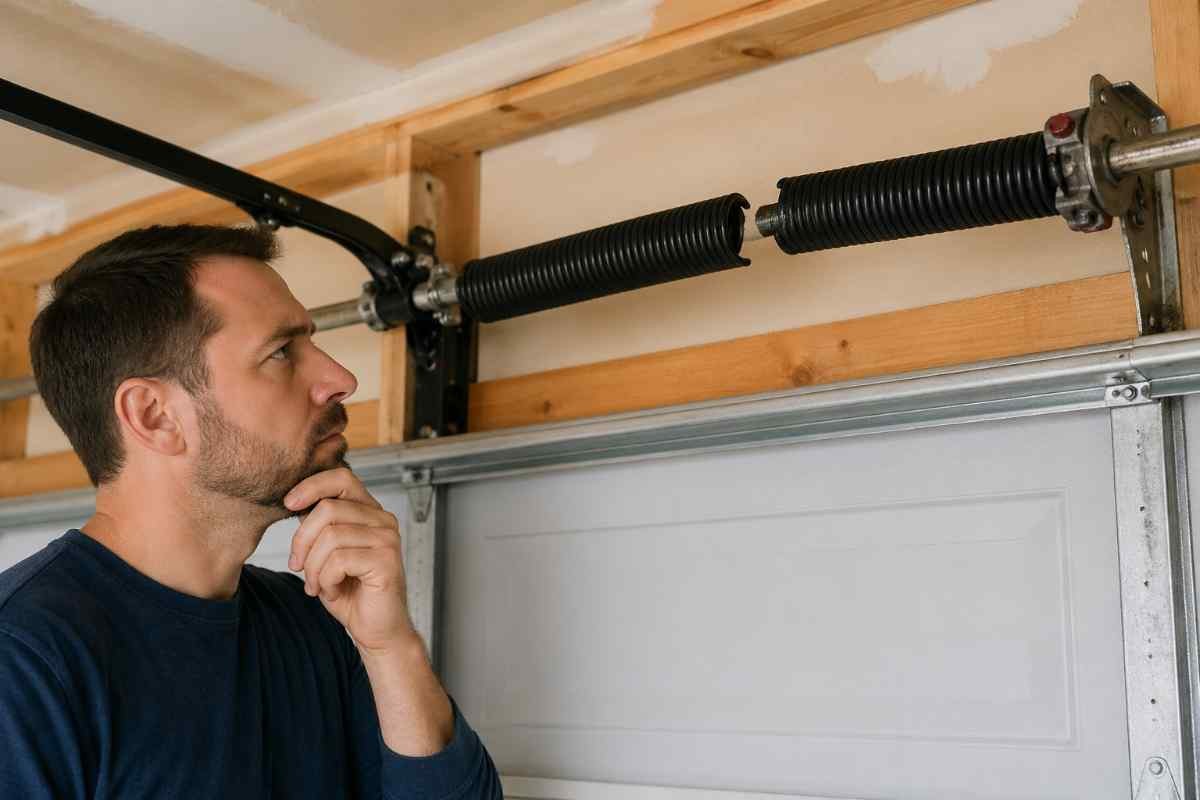
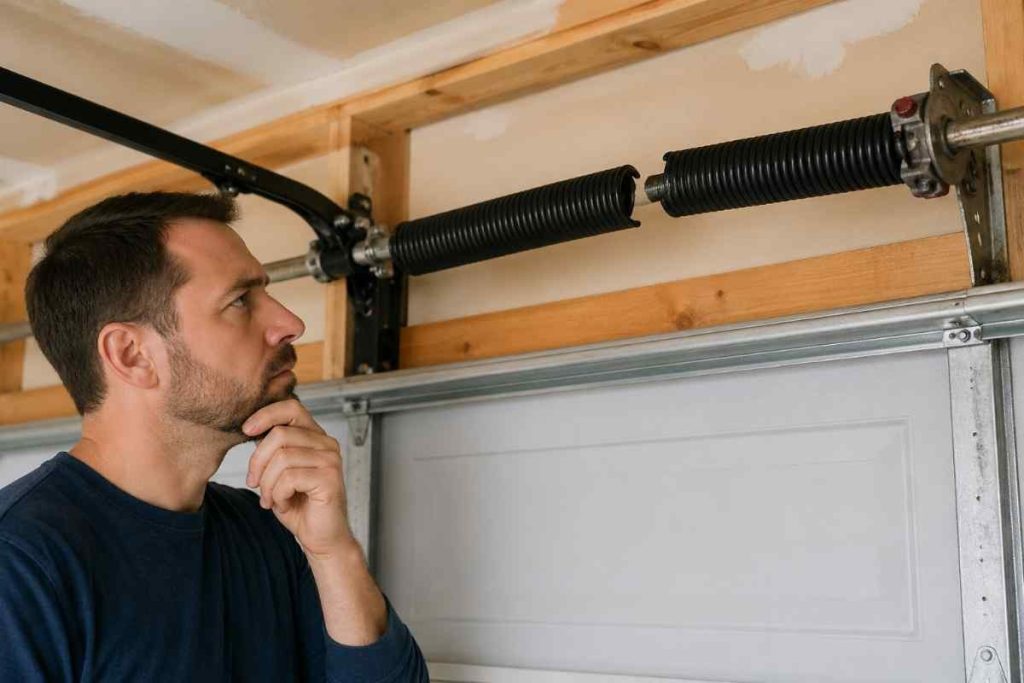
- A Visible Gap in the Spring: Take a close look at the spring(s). If you see a distinct gap of about 2 inches in the middle or near the cones, the metal has snapped.
- The Door Looks Uneven: If one side of the door is higher than the other when it moves, it could indicate a broken extension spring on one side, or a snapped cable caused by spring failure.
Torsion vs. Extension Springs: Which One Failed?
Not all garage doors use the same spring system. Identifying your spring type is the first step in knowing how to proceed.
| Feature | Torsion Springs | Extension Springs |
|---|---|---|
| Location | Mounted horizontally above the closed door. | Mounted parallel to the horizontal tracks on both sides. |
| How They Work | They twist (torque) to store and release energy. | They stretch and contract to lift the door. |
| Safety Level | Safer for homeowners; contained within a metal shaft. | Higher risk; they can snap and fly off if not properly secured. |
| Lifespan | Typically last 15,000 to 20,000 cycles. | Typically last 10,000 cycles. |
Note: Most modern homes in the US use torsion springs because they offer smoother operation and better safety.
Step-by-Step: How to Safely Inspect Your Garage Door Spring
Before you call a professional, you can perform a quick, safe inspection. Follow these concrete steps to confirm the issue:
- Disengage the Opener: Locate the red emergency release cord hanging from the opener trolley. Pull it firmly at a 45-degree angle downward to disconnect the door from the motor.
- Attempt Manual Lifting: Grip the bottom handle of the door. Apply roughly 15 to 20 pounds of upward lifting pressure.
- Evaluate the Weight: A properly balanced door should feel relatively light, weighing only about 10 to 15 pounds of actual effort. If the door feels incredibly heavy (like lifting 150+ pounds), your springs have zero tension.
- Visual Inspection: Use a sturdy step ladder to get a clear view of the torsion spring above the door. Do not touch the spring. Look for the aforementioned 2-inch gap or a completely snapped coil.
- Check the Cables: Inspect the lifting cables on both sides. If a spring breaks, the sudden release of tension can sometimes cause the cables to fray or snap.
The Hidden Dangers: Why You Shouldn’t DIY a Broken Spring
It is highly tempting to watch a quick tutorial and replace the spring yourself to save money. However, industry experts strongly advise against this.
“Garage door torsion springs are under extreme mechanical tension—sometimes up to 300 pounds of force. A single slip with a winding bar can cause severe, life-altering injuries.” — John Smith, Certified Garage Door Technician.
According to the United States Consumer Product Safety Commission, garage doors are involved in thousands of injuries every year, with broken springs and snapping cables being a primary culprit. To understand the broader mechanical engineering behind these heavy lifting systems and why safety protocols exist, you can explore the structural mechanics of a garage door on Wikipedia.
Safety First: Always hire a licensed, insured professional to handle spring replacement. They have the specialized winding bars and safety gear required to manage the high tension safely.
Cost Comparison: Repair vs. Replace (Pros and Cons)
When a spring breaks, you might wonder if you should just fix the broken one or replace the entire set. Here is a quick breakdown to help you decide:
Replacing Only the Broken Spring
- Pros: Cheaper upfront cost (usually $100 – $150 for the part).
- Cons: The new spring will be stronger than the old one, causing an unbalanced door. The remaining old spring will likely break within a few months.
Replacing Both Springs (Highly Recommended)
- Pros: Perfectly balanced door, extended lifespan, and you only pay for labor once. Total cost usually ranges from $200 – $350.
- Cons: Higher initial investment.
Pro Tip: Always replace both springs at the same time. It saves you money on double labor fees and ensures your door operates smoothly for years to come.
Frequently Asked Questions (FAQ)
1. How long do garage door springs usually last? Springs are rated by “cycles” (one cycle equals one full open and close). Standard springs are rated for 10,000 cycles, which translates to about 7 to 10 years of average daily use for a typical household.
2. Can I open my garage door manually if the spring is broken? Technically yes, but it is highly discouraged. Without the spring’s counterbalance, a standard double-car garage door can weigh anywhere from 150 to 300 pounds. Lifting it manually can cause severe back injuries or damage the door tracks.
3. What causes a garage door spring to break? The primary cause is simple wear and tear from thousands of open/close cycles over the years. Other contributing factors include lack of maintenance (which leads to rust and friction), extreme temperature fluctuations, and using springs that are improperly sized for the door’s weight.
4. How much does it cost to fix a broken garage door spring? If you hire a professional to replace a broken spring, expect to pay between $150 and $350, depending on your location, the type of spring (torsion vs. extension), and whether you choose to replace one or both springs.
Conclusion
Knowing how to know if your garage door spring is broken can save you time, money, and a lot of frustration. By looking out for the loud bang, the visible gap, and the heavy manual weight, you can quickly diagnose the problem. Remember, because of the extreme tension involved, spring replacement is a job best left to the professionals.
Did you find this guide helpful? Please share this article on your social media to help your friends and family avoid the headache of a stuck garage door!
Leave a Reply