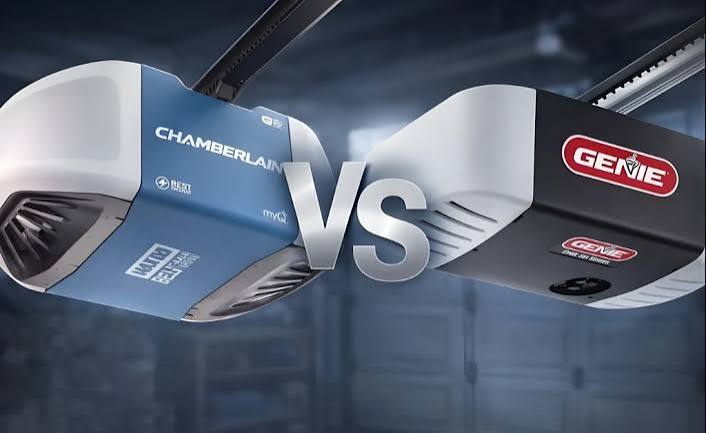
Choosing the right garage door opener can feel overwhelming when two industry giants dominate the market. You want a system that is quiet, reliable, and secure, but deciding which garage door opener is better Genie or Chamberlain often leads to conflicting advice from neighbors and online forums. This guide breaks down the technical differences, real-world performance, and value propositions of both brands to help you make an informed decision for your home.
Understanding the Core Differences: Genie vs. Chamberlain
Before diving into specific models, it is essential to understand the philosophy behind each brand. Both Genie and Chamberlain have been in the business for decades, but they approach garage door automation differently.
Chamberlain is arguably the most recognized name in the industry. As the parent company of LiftMaster (the professional installer brand) and MyQ (the leading smart home platform), Chamberlain focuses heavily on connectivity and user-friendly technology. Their openers are widely available in big-box stores and are known for their robust belt-drive systems.
Genie, on the other hand, has built its reputation on durability and innovative drive mechanisms. Genie was the pioneer of the screw-drive opener, which offers a unique balance of speed and low maintenance. They often emphasize heavy-duty construction and straightforward mechanical reliability over complex smart features, although they have recently caught up in the smart home arena.
According to industry data, these two brands collectively hold a significant majority of the residential garage door opener market share in the United States. For a deeper historical context on how these companies evolved, you can refer to their entries on Wikipedia.
Which Brand Offers Quieter Operation?
Noise level is one of the most critical factors for homeowners, especially if your garage is attached to your living space or located beneath a bedroom.
Chamberlain’s Belt-Drive Advantage
Chamberlain is widely regarded as the leader in quiet operation. Their premium models utilize a steel-reinforced belt drive system. Unlike chain drives, which use metal links that can rattle, belt drives use a rubber-like material that glides smoothly over the gears.
- Noise Level: Typically under 60 decibels (comparable to a normal conversation).
- Best For: Homes with bedrooms above the garage or sensitive noise environments.
Genie’s Screw-Drive Efficiency
Genie’s signature technology is the screw drive. This system uses a threaded steel rod to move the trolley. While traditionally louder than belt drives, Genie has engineered modern screw drives to be surprisingly quiet. However, they still produce a distinct mechanical hum that is slightly more audible than Chamberlain’s belt systems.
- Noise Level: Approximately 65–70 decibels.
- Best For: Detached garages or homeowners who prioritize speed over absolute silence.
Verdict: If silence is your top priority, Chamberlain wins this category.
Comparing Smart Home Integration and Connectivity
In 2026, a garage door opener is rarely just a motor; it is a hub for home security and convenience. Both brands offer Wi-Fi connectivity, but their ecosystems differ significantly.
Chamberlain MyQ Ecosystem
Chamberlain’s MyQ platform is the gold standard for smart garage integration. It works seamlessly with Amazon Key, Google Assistant, Apple HomeKit (via select partners), and IFTTT. The MyQ app is intuitive, allowing you to monitor door status, set schedules, and grant temporary access to delivery drivers.
- Pros: Wide compatibility, reliable app performance, extensive third-party integrations.
- Cons: Some advanced features require a subscription plan.
Genie Aladdin Connect
Genie uses the Aladdin Connect platform for its smart features. While functional, it has historically lagged behind MyQ in terms of user interface polish and third-party partnerships. However, Genie has improved its integration with major smart home hubs, and many users find it sufficient for basic remote access and alerts.
- Pros: No mandatory subscription for basic features, solid security protocols.
- Cons: Fewer integrations compared to MyQ, app updates can be slower.
Verdict: For tech-savvy users deeply integrated into the smart home ecosystem, Chamberlain offers a superior experience.
Durability and Maintenance Requirements
How long will the opener last, and what will you need to do to keep it running?
Genie’s Low-Maintenance Design
Genie screw-drive openers have fewer moving parts than chain or belt drives. There are no chains to stretch or belts to wear out. The primary maintenance task is lubricating the screw shaft once or twice a year. This simplicity translates to long-term reliability, particularly in extreme temperatures where rubber belts might become brittle.
Chamberlain’s Robust Construction
Chamberlain openers are built to last, but belt drives may require replacement after 10–15 years of heavy use. Chain-drive models (their budget option) require regular tension adjustments and lubrication. However, Chamberlain’s motor housings are highly resistant to corrosion, and their warranty support is generally rated highly by consumers.
| Feature | Genie (Screw Drive) | Chamberlain (Belt Drive) |
|---|---|---|
| Moving Parts | Fewer | More |
| Maintenance | Low (Lubrication only) | Moderate (Tension checks) |
| Temperature Resilience | High | Moderate |
| Expected Lifespan | 15–20 years | 10–15 years |
Price Point and Value for Money
Budget plays a crucial role in the decision-making process. Here is how the costs typically break down:
- Entry-Level: Chamberlain’s chain-drive models are often the most affordable options on the market, starting around $150–$200. Genie’s entry-level screw drives are slightly more expensive, usually starting at $200–$250.
- Mid-Range: In the $300–$400 range, both brands offer excellent belt-drive (Chamberlain) and advanced screw-drive (Genie) models with Wi-Fi capabilities.
- Premium: High-end models with battery backups and advanced security features from both brands can reach $500–$700. Chamberlain tends to have a wider variety of premium features, while Genie focuses on heavy-duty lifting capacity.
Value Pick: If you want the most features for the lowest price, Chamberlain often provides better value in the mid-range segment. If you want a “set it and forget it” machine, Genie offers better long-term value due to lower maintenance.
Installation Ease for DIY Homeowners
Both brands design their openers with DIY installation in mind, but there are nuances.
Chamberlain provides some of the best instructional videos and customer support in the industry. Their rail systems are modular, meaning you can adjust the length easily to fit different garage heights. The MyQ app also guides you through the setup process step-by-step.
Genie openers are known for being compact and lightweight, which makes them easier to handle alone during installation. The screw-drive mechanism eliminates the need to assemble a long chain or belt, reducing installation time by approximately 30% compared to traditional models.
FAQ Section
1. Is Genie or Chamberlain more reliable in cold weather?
Genie screw-drive openers generally perform better in extreme cold. Rubber belts used in Chamberlain models can stiffen in freezing temperatures, potentially causing slippage or increased wear. Genie’s steel screw mechanism is less affected by temperature fluctuations.
2. Can I use Genie remotes with a Chamberlain opener?
No, Genie and Chamberlain use different radio frequencies and coding protocols. You must use remotes specifically designed for your brand. However, universal remotes are available that can be programmed to work with either brand.
3. Which brand has better customer service?
Consumer reports generally rate Chamberlain’s customer service higher due to their larger support infrastructure and extensive online resources. Genie’s support is adequate but can be harder to reach during peak times.
4. Do I need a battery backup for my garage door opener?
If you live in an area prone to power outages, a battery backup is highly recommended. Both brands offer models with integrated battery backups or compatible add-on kits. Chamberlain’s MyQ system allows you to monitor battery health via the app, giving it a slight edge in convenience.
5. Are Chamberlain and LiftMaster the same?
Yes, Chamberlain Group owns LiftMaster. LiftMaster is typically sold through professional dealers and installers, while Chamberlain is sold in retail stores. The internal components are often identical, but LiftMaster models may come with longer warranties and professional installation support.
Conclusion
So, which garage door opener is better Genie or Chamberlain? The answer depends on your specific needs.
Choose Chamberlain if you prioritize:
- Ultra-quiet operation.
- Advanced smart home integration (MyQ).
- Wide availability of parts and accessories.
- Budget-friendly entry-level options.
Choose Genie if you prioritize:
- Low maintenance and durability.
- Performance in extreme temperatures.
- Faster opening speeds.
- A simpler, mechanical-focused design.
Both brands are industry leaders that will serve your home well for years. Assess your garage’s location, your tech preferences, and your budget to make the final call.
Found this comparison helpful? Share it with your friends on Facebook or Twitter to help them choose the right garage door opener too!
Leave a Reply