Planning a home renovation or building a new space can feel overwhelming, especially when you aren’t sure about standard measurements. If you are asking yourself, “What’s the average size of a garage door?”, you are definitely not alone! We are here to break down the exact dimensions so you can confidently plan your project and protect your vehicles.
What’s The Average Size Of A Garage Door? The Quick Answer
When determining what’s the average size of a garage door, the most common answer depends entirely on how many cars you need to park inside.
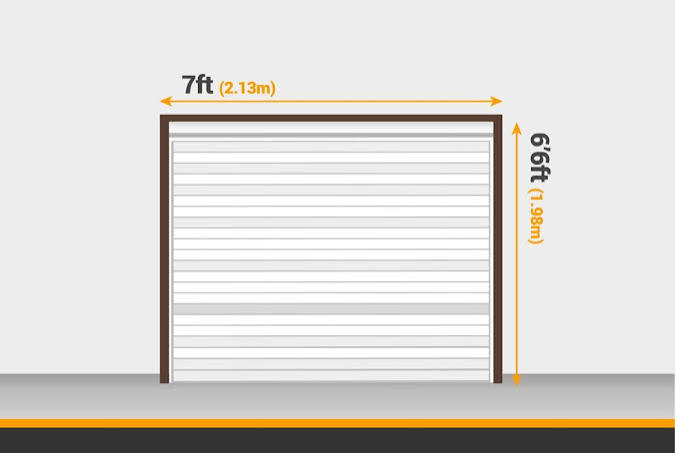
- Single garage doors typically measure 8 feet wide by 7 feet tall.
- Double garage doors usually measure 16 feet wide by 7 feet tall.
However, the definition of “standard” is rapidly changing. As modern vehicles like full-size SUVs and heavy-duty trucks grow larger, standard garage door dimensions are shifting to accommodate them.
Many new residential builds now feature 9-foot wide or 8-foot tall doors to prevent scratched roofs and squeezed mirrors. Understanding these baseline measurements is the first step to ensuring a smooth home improvement project.
Standard Single Car Garage Door Dimensions
For a traditional one-car space, the most universally accepted single car garage door size is 8 feet wide and 7 feet high.
This size works beautifully for compact cars, sedans, and smaller hatchbacks. It provides just enough clearance for daily driving and basic storage.
However, if you drive a mid-size SUV or a minivan, an 8×7 door might feel a bit tight. You may find yourself folding in your side mirrors just to pull into the driveway safely.
For homes with slightly larger vehicles, a 9-foot wide by 7-foot tall door is becoming the new standard. This extra foot of width provides a much more forgiving buffer for daily parking.
- 8×7 Feet: Best for compact cars, motorcycles, and small sedans.
- 9×7 Feet: Ideal for mid-size SUVs, crossovers, and standard pickup trucks.
- 10×7 Feet: Excellent for larger workshops or oversized single-vehicle storage.
Standard Double Car Garage Door Dimensions
When you look at most suburban homes, you will almost always see a double car garage door measuring 16 feet wide by 7 feet tall.
This 16-foot span essentially acts as two 8-foot doors combined, minus the central pillar. It allows two standard vehicles to park side-by-side comfortably.
But what if you own a large truck or a van with a roof rack? A 7-foot height can quickly become a major obstacle.
According to the United States Environmental Protection Agency (EPA), the average footprint of passenger vehicles has grown significantly over the last three decades. To adapt, many contractors now recommend upgrading to a 16×8 foot door.
“A standard 7-foot door works for sedans, but if you drive a modern full-size SUV with a roof rack, you need at least 8 feet of vertical clearance to avoid costly damage,” notes Mike Henderson, a certified garage door installer with over 15 years of field experience.
RV and Oversized Garage Door Sizes
Not everyone is just parking a daily commuter car. If you own a recreational vehicle, a boat, or a large camper, you will need to look at specific RV garage door size options.
When planning your space, it helps to understand the architectural history of these structures. As detailed on Wikipedia, the evolution of the garage shifted from detached carriage houses to the attached, integrated spaces we use today, heavily influencing modern oversized door dimensions.
For an RV or a large boat, standard residential doors simply will not work. You must look into custom garage doors built specifically for high-clearance vehicles.
- 10×8 Feet: Great for camper vans and small travel trailers.
- 12×10 Feet: Perfect for Class C motorhomes and medium-sized boats.
- 14×12 Feet: Required for large Class A motorhomes and heavy-duty commercial equipment.
Real-World Case Study: A homeowner in Texas recently purchased a Class A motorhome and realized their standard 7-foot door was entirely too low. By retrofitting their exterior wall to accommodate a 14-foot by 12-foot RV door, they saved over $3,000 annually in off-site outdoor storage fees.
How to Measure Your Garage Door Opening (Step-by-Step)
If you are replacing an existing door, guessing the dimensions is a recipe for disaster. Follow these exact steps to measure your rough opening with precision.
1. Measure the Width Use a heavy-duty steel measuring tape. Measure the width of the rough opening at the top, middle, and bottom. Record the smallest measurement to the nearest 1/8th of an inch.
2. Measure the Height Measure the height from the concrete floor to the bottom of the header on the left side, center, and right side. Again, record the shortest distance.
3. Check the Headroom and Sideroom Measure the distance from the top of the door opening to the ceiling (headroom). Standard torsion spring systems require at least 12 inches of clearance. Next, measure the space from the edge of the opening to the adjacent wall (sideroom) to ensure the tracks will fit.
4. Measure the Backroom Finally, measure from the garage door opening to the back wall of the garage. You will need a minimum of 18 inches of depth plus the height of your door to accommodate the horizontal tracks and the automatic opener motor.
Comparison Table: Standard vs. Custom Garage Doors
Still unsure which route to take? Here is a quick breakdown to help you weigh your options based on budget and vehicle needs.
| Feature | Standard Garage Door Sizes | Custom Garage Doors |
|---|---|---|
| Cost | Highly affordable and mass-produced. | Significantly higher due to bespoke manufacturing. |
| Lead Time | Usually available for immediate delivery. | Can take 4 to 8 weeks to manufacture and ship. |
| Aesthetics | Limited to standard panel designs and colors. | Fully customizable materials, glass inserts, and colors. |
| Best For | Sedans, standard SUVs, and basic storage. | RVs, lifted trucks, boats, and architectural matching. |
| Resale Value | Appeals to the average homebuyer. | Appeals to niche buyers with specific vehicle hobbies. |
Frequently Asked Questions (FAQ)
What is the standard height of a modern garage door?
The traditional standard height is 7 feet. However, 8 feet is rapidly becoming the preferred standard in new construction to accommodate taller SUVs, pickup trucks, and roof-mounted cargo boxes.
Can I make my existing garage door taller?
Yes, but it requires significant structural work. You cannot simply install a taller door on an existing frame. A contractor will need to remove the existing header, raise the structural framing, and potentially reroute electrical wiring or plumbing before installing the new, taller door.
What size garage door do I need for a full-size pickup truck?
Most modern full-size pickup trucks (like the Ford F-150 or Chevy Silverado) will fit through a standard 8-foot wide door. However, if your truck has a leveling kit, oversized tires, or a roof rack, you should aim for a 9-foot wide by 8-foot tall opening for comfortable clearance.
Are commercial garage doors different sizes?
Absolutely. Commercial and industrial garage doors are built to accommodate loading docks, freight trucks, and heavy machinery. Standard commercial widths often start at 10 feet and can go up to 20 feet or more, with heights frequently reaching 14 feet or higher.
Does the thickness of the door matter?
Yes, thickness impacts both insulation and durability. Standard residential doors are usually 1.5 to 2 inches thick. If you live in a region with extreme temperature fluctuations, investing in a thicker, multi-layered polyurethane-insulated door will drastically improve your home’s energy efficiency.
Conclusion
Finding the perfect fit for your home doesn’t have to be a guessing game. By understanding exactly what’s the average size of a garage door, you can ensure your vehicles stay protected from the elements while boosting your home’s curb appeal. Whether you need a standard 16×7 double door for your daily commute or a massive 14×12 custom door for your weekend RV adventures, getting the measurements right is the ultimate key to success.
Did you find this guide helpful? Share this article on your favorite social media platform to help a friend who is currently planning their dream garage renovation!
Leave a Reply