Introduction
Choosing the right equipment for your home can feel overwhelming, especially when technical specifications like horsepower and torque come into play. If you are staring at your double-wide entryway and asking, “What size garage door opener for a 2 car garage?” you are not alone. This guide cuts through the confusion to help you select a reliable, powerful, and quiet opener that fits your specific needs and budget.
Understanding Horsepower: The Core of Your Decision
When manufacturers talk about “size” regarding garage door openers, they are primarily referring to horsepower (HP). This metric determines how much weight the motor can lift and how quickly it can do so. For a standard two-car garage, understanding HP is the first step toward making an informed purchase.
Why 1/2 HP Is Often Not Enough
In the past, a 1/2 HP opener was considered the standard for residential use. However, modern two-car garage doors are heavier. They often feature insulation, windows, or decorative hardware that adds significant weight.
- Standard Single-Layer Doors: A 1/2 HP opener might work, but it will strain over time.
- Insulated Double-Layer Doors: These require more torque to lift smoothly.
- Wood or Custom Doors: These are significantly heavier and demand more power.
For a two-car garage, starting with a 1/2 HP unit is generally a false economy. It may fail prematurely due to constant strain, leading to higher repair costs down the line.
The Sweet Spot: 3/4 HP to 1 HP
For most US homeowners with a two-car garage, the ideal size falls between 3/4 HP and 1 HP.
| Horsepower | Best For | Pros | Cons |
|---|---|---|---|
| 1/2 HP | Light, single-layer doors | Cheapest option | Shorter lifespan, slower operation |
| 3/4 HP | Standard insulated 2-car doors | Great balance of power and price | Slightly louder than 1 HP models |
| 1 HP+ | Heavy wood, custom, or frequent use | Fastest, quietest, longest life | Higher upfront cost |
A 3/4 HP opener is widely regarded as the industry standard for two-car garages. It provides enough torque to lift insulated steel doors effortlessly without the premium price tag of a 1 HP commercial-grade unit. If your door is made of solid wood or features heavy glass inserts, stepping up to 1 HP ensures smooth operation and reduces wear on the springs and cables.
Drive Types: More Than Just Power
While horsepower determines if the opener can lift the door, the drive type determines how it operates. This affects noise levels, maintenance requirements, and durability. There are three main types available in the US market.
1. Chain Drive: The Budget Workhorse
Chain drive openers use a metal chain similar to a bicycle chain to pull the trolley that moves the door.
- Pros: Most affordable, durable, easy to repair.
- Cons: Noisy. The metal-on-metal contact creates vibration and sound.
- Best For: Detached garages or homes where the garage is far from living spaces.
2. Belt Drive: The Quiet Contender
Belt drive openers use a reinforced rubber or polyurethane belt.
- Pros: Extremely quiet operation, smooth movement, low maintenance.
- Cons: More expensive than chain drives; belts may need replacement after 5–7 years (though high-quality belts last longer).
- Best For: Attached garages, especially if bedrooms are located above or next to the garage.
3. Screw Drive: The Low-Maintenance Option
Screw drive openers use a threaded steel rod to move the trolley.
- Pros: Fewer moving parts, requires less lubrication, performs well in extreme temperatures.
- Cons: Can be noisy if not properly maintained; less common in newer installations.
- Best For: Areas with significant temperature fluctuations.
Expert Tip: For a two-car garage in a typical suburban home, a belt drive 3/4 HP opener offers the best combination of quiet performance and sufficient power.
Key Features to Look For in a 2-Car Garage Opener
Beyond horsepower and drive type, modern openers come with features that enhance safety, convenience, and security. When evaluating options, prioritize these elements.
Smart Connectivity
Today’s top-rated openers integrate with Wi-Fi, allowing you to control your garage door via smartphone apps. This is invaluable for two-car households where multiple family members may need access. You can check if the door is closed, open it for deliveries, or grant temporary access to guests remotely.
Battery Backup
Power outages happen. A garage door opener with a built-in battery backup ensures you can still open and close your door during a blackout. This is a critical safety feature, particularly if your garage is your primary entry point.
Security Rolling Codes
Older openers used fixed codes, making them vulnerable to hacking. Modern openers use rolling code technology, which changes the access code every time the remote is used. Always ensure your new opener meets the latest security standards to protect your home.
Soft Start/Stop Technology
This feature gently accelerates and decelerates the door, reducing stress on the motor and the door itself. It also minimizes noise and prevents the “slamming” effect at the end of the cycle.
Installation Considerations for Two-Car Garages
Installing an opener for a two-car garage involves specific logistical considerations.
Header Bracket Placement
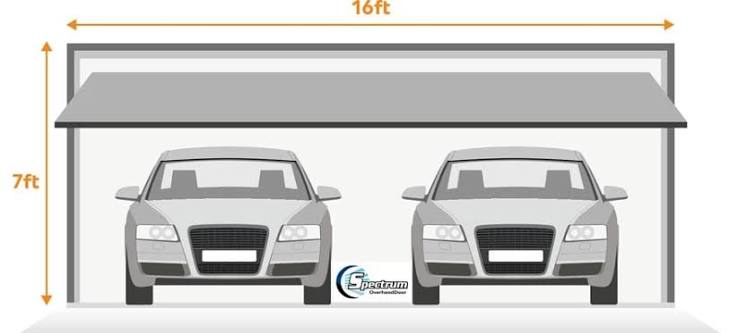
The header bracket must be securely anchored to the structural framing above the garage door. For wider two-car doors (often 16 feet wide), ensure the bracket is centered and supported by solid wood, not just drywall.
Rail Length
Two-car garage doors are taller and wider. Ensure the opener’s rail is long enough to fully open the door without hitting the back wall. Most standard rails fit 7-foot tall doors, but if you have 8-foot or 10-foot doors, you may need an extension kit.
Safety Sensors
Federal law requires safety reversal sensors. These must be installed no higher than 6 inches above the floor. In a two-car garage, ensure the beam path is clear of storage items, bikes, or cars parked too far forward.
Step-by-Step: How to Choose the Right Opener
Follow this simple process to narrow down your choices:
- Weigh Your Door: If unsure, assume a standard insulated two-car door weighs between 130–180 lbs. Add 20% if it has windows or wood.
- Determine Noise Sensitivity: If the garage is attached to your house, prioritize belt drive. If detached, chain drive saves money.
- Select Horsepower: Choose 3/4 HP for standard use; 1 HP for heavy or high-use scenarios.
- Check Compatibility: Ensure the opener is compatible with your door’s spring system (torsion vs. extension). Most modern openers work with both, but verify with the manufacturer.
- Read Reviews: Look for models with high ratings for reliability and customer support. Brands like LiftMaster, Chamberlain, and Genie are popular in the US market.
FAQ Section
Q: Can I use a 1/2 HP opener for a two-car garage?
A: Technically, yes, if the door is very light (single-layer steel without insulation). However, it is not recommended. The motor will work harder, leading to premature wear, slower operation, and potential failure. Investing in a 3/4 HP unit is safer and more cost-effective in the long run.
Q: How long does a garage door opener last?
A: With proper maintenance, a quality garage door opener lasts between 10–15 years. Belt drive models may require belt replacement after 5–7 years, while chain drives may need lubrication and chain tension adjustments annually.
Q: Is a DC motor better than an AC motor?
A: Yes, for residential use. DC motors are quieter, offer soft start/stop capabilities, and are more energy-efficient. They also allow for easier integration of battery backup systems. Most modern 3/4 HP and 1 HP openers use DC motors.
Q: Do I need a professional installer?
A: While DIY installation is possible for those with mechanical skills, garage doors are under high tension and can be dangerous. If you are replacing an existing opener, it is manageable. If you are installing a new door and opener system, hiring a professional is strongly recommended for safety and warranty purposes.
Q: What is the difference between torsion and extension springs?
A: Torsion springs are mounted above the door on a metal shaft, while extension springs run along the horizontal tracks. Torsion springs are safer, more balanced, and last longer. Most modern two-car garages use torsion springs. Ensure your opener is compatible with your spring type.
Conclusion
Choosing the right garage door opener is an investment in your home’s convenience, security, and longevity. To answer the question, “What size garage door opener for a 2 car garage?” the best choice for most homeowners is a 3/4 HP belt drive opener. It offers the perfect balance of power, quiet operation, and durability.
If your door is exceptionally heavy or you use the garage frequently, consider stepping up to 1 HP. Prioritize features like smart connectivity and battery backup to future-proof your purchase. By selecting the right size and type, you ensure smooth, reliable access to your home for years to come.
Found this guide helpful? Share it with friends or neighbors who are upgrading their garage setup!
Leave a Reply