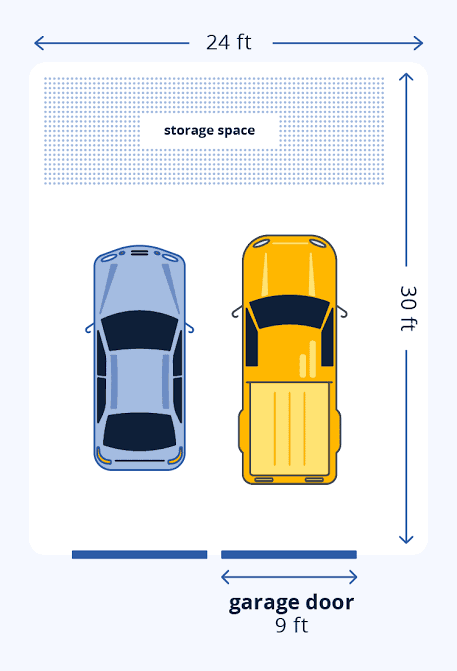
Have you ever stared at your driveway, wondering if your current setup can actually fit two vehicles comfortably side-by-side? You are not alone. Many homeowners struggle with this exact dilemma when renovating or building new. Knowing what is the size of a 2 car garage door is crucial for ensuring smooth entry, maximizing storage space, and boosting your home’s curb appeal.
In this guide, we will break down everything you need to know about double garage door dimensions. We will cover standard sizes, custom options, and critical measurement tips to help you make an informed decision without the headache.
Standard Dimensions for a 2 Car Garage Door
When most people ask, “What is the size of a 2 car garage door?” they are looking for the industry standard. While custom sizes exist, the majority of homes in the United States utilize specific dimensions that balance cost, availability, and functionality.
The most common standard width for a double garage door is 16 feet. This size allows enough room for two mid-sized sedans or compact SUVs to park side-by-side with minimal risk of door dings. However, as vehicles have grown larger over the past decade, many homeowners are opting for wider options.
Common Width Options
- 16 Feet: The traditional standard. Suitable for two compact cars.
- 18 Feet: The modern preferred standard. Provides better clearance for SUVs and trucks.
- 20 Feet: The luxury option. Ideal for large trucks, vans, or if you want extra workspace on the sides.
For height, the standard is typically 7 feet. However, if you own a lifted truck, an RV, or plan to install a roof rack, you should consider an 8-foot high door. Always measure your tallest vehicle before finalizing your height choice.
Why Choosing the Right Width Matters
Selecting the correct width is not just about fitting the cars inside; it is about usability and long-term satisfaction. A door that is too narrow can lead to frustrating daily struggles, while a door that is appropriately sized adds value to your property.
The “Door Ding” Factor
One of the primary reasons homeowners upgrade from a 16-foot to an 18-foot door is to prevent “door dings.” When two people exit their vehicles simultaneously in a tight 16-foot space, their car doors often collide. An extra two feet provides a buffer zone that protects your paint job and reduces stress.
Resale Value Impact
Real estate experts note that functional garage spaces are a top priority for buyers. A garage that feels cramped can be a dealbreaker. By installing a properly sized 2-car garage door, you enhance the perceived utility of your home. According to various housing market analyses, updated and functional garage doors can offer a significant return on investment, often recouping a large percentage of the cost upon sale.
Single vs. Double: Which Configuration Is Better?
Before you commit to a single large door, consider whether two separate single doors might be a better fit for your lifestyle. This is a common debate among architects and homeowners.
| Feature | Single 16-18 ft Door | Two 8-9 ft Doors |
|---|---|---|
| Cost | Generally lower (one track, one opener) | Higher (two tracks, two openers) |
| Aesthetics | Clean, modern look | Traditional, symmetrical look |
| Convenience | Easy access to entire space | Can open just one side for small items |
| Insulation | One large seal to maintain | Two seals, potential for more drafts |
| Maintenance | One mechanism to service | Two mechanisms to service |
If you frequently only use one car, having two separate doors allows you to open just one, which can help with energy efficiency in extreme climates. However, a single wide door offers unobstructed access, which is beneficial if you use your garage as a workshop or for large projects.
How to Measure Your Garage Opening Accurately
Even if you know what is the size of a 2 car garage door generally, your specific home may have unique constraints. Measuring incorrectly is the number one cause of installation delays and additional costs. Follow these steps to ensure precision.
Step 1: Measure the Width
Measure the width of the opening at three points: the top, middle, and bottom. Use the smallest measurement as your reference. This accounts for any unevenness in the framing. Do not measure the old door itself, as it may not fit the opening perfectly.
Step 2: Measure the Height
Similarly, measure the height from the floor to the top of the opening on both the left and right sides. Again, use the smallest measurement. Ensure the floor is level where the door will sit.
Step 3: Check Headroom and Side Room
- Headroom: This is the space between the top of the door opening and the ceiling. Standard torsion spring systems require about 12–15 inches of headroom. If you have low ceilings, you may need a low-headroom track system.
- Side Room: Measure the space from the edge of the opening to the nearest wall or obstruction on both sides. You typically need 3–4 inches on each side for the vertical tracks and hardware.
For more detailed technical specifications on door framing, you can refer to general construction standards on Wikipedia.
Material Choices and Their Impact on Size
While the rough opening determines the maximum size, the material you choose can influence the final fit and performance. Different materials have different structural strengths and insulation properties.
- Steel: The most popular choice. It is durable, low-maintenance, and available in precise standard sizes. Steel doors are less likely to warp, ensuring a consistent fit over time.
- Wood: Offers a classic aesthetic but is prone to expanding and contracting with humidity changes. If you choose wood, you may need slightly more clearance in your frame to accommodate seasonal swelling.
- Aluminum: Lightweight and resistant to rust, often used for modern, full-view glass doors. These are great for wide openings but may require reinforced framing due to their weight distribution.
Cost Considerations for 2 Car Garage Doors
Understanding the financial implications helps you budget effectively. The price varies significantly based on size, material, and insulation.
- Basic Non-Insulated Steel (16 ft): $800 – $1,200
- Insulated Steel (18 ft): $1,500 – $2,500
- Custom Wood or High-End Composite (20 ft): $3,000 – $5,000+
Remember to factor in the cost of professional installation, which typically ranges from $500 to $1,000 depending on your location and the complexity of the job. Trying to save money by DIY-ing a heavy double door can be dangerous and may void warranties.
Frequently Asked Questions (FAQ)
1. Can I fit two full-size trucks in a 16-foot garage door?
It is tight. Full-size trucks are often over 6.5 feet wide each, plus mirrors. A 16-foot door leaves very little margin for error. An 18-foot or 20-foot door is highly recommended for two full-size trucks to ensure you can open the doors without hitting the other vehicle.
2. What is the standard height for a 2 car garage door?
The standard height is 7 feet. However, 8 feet is becoming increasingly common to accommodate SUVs, roof racks, and lifted vehicles. Always measure your tallest vehicle with any accessories attached.
3. Do I need a special opener for a 2 car garage door?
Yes. A double garage door is heavier than a single door. You will need a garage door opener with sufficient horsepower, typically ½ HP or ¾ HP, to lift the door smoothly and safely. Using an underpowered opener can lead to premature motor failure.
4. Can I convert two single garage doors into one double door?
Yes, but it requires significant structural work. You must remove the center support beam and reinforce the header to span the wider opening. This is a major renovation project that should always be handled by a licensed contractor to ensure structural integrity.
5. How much clearance do I need on the sides of a 2 car garage door?
You typically need at least 3 to 4 inches of space on each side of the door opening for the vertical tracks and hardware. If you have less space, you may need to look into specialized low-clearance track systems.
Conclusion
Knowing what is the size of a 2 car garage door is the first step toward creating a functional and attractive entryway for your home. While 16 feet is the traditional standard, upgrading to 18 or 20 feet can significantly improve usability and protect your vehicles from damage.
Take the time to measure your space accurately, consider your vehicle sizes, and think about your long-term needs. Whether you choose steel, wood, or aluminum, the right door will enhance your home’s value and your daily convenience.
If you found this guide helpful, please share it with friends or family who are planning their next home improvement project. Have questions about your specific garage setup? Leave a comment below!
Leave a Reply