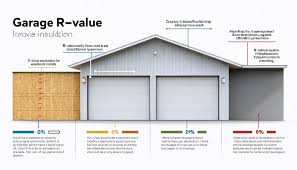
If you’re wondering what is the best R value for garage doors, you’re not alone. Many homeowners struggle with cold drafts, high energy bills, or uncomfortable temperatures in their garages—and often, the culprit is poor insulation. Choosing the right R-value can transform your garage into a more comfortable, energy-efficient space while protecting your belongings and lowering utility costs.
Why Does R-Value Matter for Garage Doors?
Before diving into specific numbers, let’s clarify what R-value actually means. R-value measures thermal resistance—in simple terms, how well a material resists heat flow. The higher the R-value, the better the insulation.
For garage doors, this matters because:
- Garages are often attached to living spaces
- Poorly insulated doors let heat escape in winter and enter in summer
- Temperature fluctuations can damage stored items, vehicles, and tools
- Energy waste increases heating and cooling costs
According to the U.S. Department of Energy, proper insulation can reduce energy loss by up to 15–20% in homes with attached garages. That’s significant savings over time.
What Is The Best R Value For Garage Doors?
The short answer: For most residential garage doors, an R-value between R-8 and R-16 is ideal. However, the “best” value depends on several factors:
Climate Considerations
| Climate Zone | Recommended R-Value | Reason |
|---|---|---|
| Mild (Southern US) | R-8 to R-10 | Moderate temperature swings |
| Moderate (Midwest, Pacific Northwest) | R-12 to R-14 | Balanced heating and cooling needs |
| Cold (Northern US, Canada border) | R-16 to R-19+ | Extreme winter temperatures |
If you live in Minnesota or Maine, you’ll want maximum insulation. In Florida or Arizona, moderate insulation suffices since extreme cold isn’t a concern.
Garage Usage Matters
How you use your garage affects your insulation needs:
- Storage only: R-8 to R-10 may be sufficient
- Workshop or hobby space: R-12 to R-14 recommended
- Living space conversion: R-16 or higher essential
- Attached to home: Higher R-values prevent heat transfer to living areas
Door Material Impact
Different garage door materials have varying baseline insulation properties:
- Steel doors: Typically require added insulation panels; can achieve R-8 to R-17
- Aluminum doors: Poor natural insulators; need robust insulation to reach R-10+
- Wood doors: Natural insulator; typically R-6 to R-12 depending on thickness
- Fiberglass/composite: Moderate insulation; usually R-8 to R-13
Types of Garage Door Insulation
Understanding insulation types helps you make informed decisions. Here are the most common options:
1. Polystyrene Foam Board
- R-value per inch: Approximately R-4 to R-5
- Pros: Affordable, easy to install, moisture-resistant
- Cons: Less durable than polyurethane, can crack over time
- Best for: DIY projects, budget-conscious homeowners
2. Polyurethane Foam Injection
- R-value per inch: Approximately R-6 to R-7
- Pros: Superior insulation, fills gaps completely, adds structural strength
- Cons: More expensive, requires professional installation
- Best for: Maximum efficiency, new door installations
3. Reflective Foil Insulation
- R-value: Varies (typically R-3 to R-6 when combined with other materials)
- Pros: Lightweight, reflects radiant heat
- Cons: Less effective alone, works best in hot climates
- Best for: Supplemental insulation in warm regions
For detailed information on insulation materials, you can reference Wikipedia’s article on thermal insulation.
Cost vs. Benefit: Is Higher R-Value Worth It?
Many homeowners ask whether investing in higher R-values pays off. Let’s break it down:
Initial Costs
- R-8 door: $800–$1,200
- R-12 door: $1,200–$1,800
- R-16+ door: $1,800–$3,000+
Long-Term Savings
- Energy bill reduction: $50–$150 annually (depending on climate and usage)
- Extended door lifespan due to reduced temperature stress
- Increased home resale value
- Improved comfort for adjacent living spaces
Break-even point: Most homeowners recoup their investment within 5–7 years through energy savings alone. If you plan to stay in your home longer, higher R-values make financial sense.
How to Choose the Right R-Value for Your Garage Door
Follow these steps to determine your ideal R-value:
Step 1: Assess Your Climate
Check your USDA climate zone. Northern states benefit from R-16+, while southern states may find R-8 to R-10 adequate.
Step 2: Evaluate Garage Use
Will you spend time working in the garage? Store temperature-sensitive items? Convert it to a living space? Higher usage demands higher R-values.
Step 3: Consider Existing Insulation
If your walls and ceiling are already well-insulated, focus on the door. If not, consider whole-garage insulation for maximum efficiency.
Step 4: Set Your Budget
Balance upfront costs with long-term savings. Remember that quality insulation lasts 15–20 years.
Step 5: Consult a Professional
A local garage door specialist can assess your specific situation and recommend optimal solutions. Many offer free consultations.
Common Mistakes to Avoid
Don’t fall into these traps when selecting garage door insulation:
- Ignoring air sealing: Insulation alone won’t help if gaps allow air leakage. Use weatherstripping around door edges.
- Choosing based on price only: Cheap insulation may save money now but cost more in energy bills later.
- Overlooking door weight: Heavier insulated doors require stronger springs and openers. Ensure your system can handle the added weight.
- DIY without proper knowledge: Improper installation reduces effectiveness. When in doubt, hire professionals.
FAQ Section
What R-value should I look for in a garage door?
For most US homeowners, R-12 to R-16 provides the best balance of insulation and cost. Colder climates benefit from R-16+, while warmer regions may find R-8 to R-10 sufficient.
Can I add insulation to my existing garage door?
Yes! You can install polystyrene foam boards or reflective foil kits to existing doors. However, professionally installed polyurethane foam offers superior results. Expect R-value improvements of 4–8 points with aftermarket kits.
Does a higher R-value mean a heavier garage door?
Generally, yes. Polyurethane-insulated doors are heavier than polystyrene or uninsulated doors. Ensure your garage door opener and springs are rated for the additional weight to avoid premature wear.
How much can I save on energy bills with an insulated garage door?
Savings vary by climate and usage, but most homeowners see 10–20% reductions in heating and cooling costs related to garage-adjacent spaces. In cold climates, annual savings can reach $100–$150.
Is R-19 too much for a garage door?
Not necessarily. If you live in an extremely cold region or use your garage as a workshop or living space, R-19 provides excellent insulation. However, for typical storage use in moderate climates, R-12 to R-16 is usually sufficient and more cost-effective.
How long does garage door insulation last?
Quality insulation lasts 15–20 years with proper maintenance. Polyurethane foam tends to outlast polystyrene boards. Regularly inspect for damage, moisture, or compression that could reduce effectiveness.
Conclusion
So, what is the best R value for garage doors? For most American homeowners, R-12 to R-16 strikes the perfect balance between performance, comfort, and affordability. Those in colder climates or using garages as functional spaces should lean toward R-16 or higher, while mild-climate residents may find R-8 to R-10 adequate.
Investing in proper garage door insulation isn’t just about comfort—it’s about protecting your home, reducing energy waste, and saving money year after year. Whether you’re replacing an old door or upgrading an existing one, choosing the right R-value pays dividends in warmth, efficiency, and peace of mind.
Found this guide helpful? Share it with friends and family on social media who might be struggling with chilly garages or high energy bills. Your network will thank you!
Leave a Reply