Have you ever stood in your driveway, staring at that large opening, and wondered if your new SUV will actually fit inside? Or perhaps you are planning a renovation and need to order a replacement door but feel overwhelmed by the various options available. You are not alone; many homeowners struggle with this exact question. Understanding what is the average size of a garage door is crucial for ensuring proper fit, functionality, and curb appeal for your home.
Standard Single-Car Garage Door Dimensions
When we talk about the most common residential garage, we are usually referring to a single-car setup. But what exactly does “standard” mean in this context?
The average size of a single-car garage door is typically 8 feet wide by 7 feet high. This dimension has been the industry standard for decades because it accommodates the vast majority of sedans, compact SUVs, and small trucks manufactured in the last 30 years.
However, trends are shifting. With vehicles getting wider and taller, many newer homes and renovations are opting for slightly larger doors. Here is a breakdown of common single-car door widths:
- 8 feet wide: The traditional standard. Suitable for compact cars and older models.
- 9 feet wide: Increasingly popular. Provides extra clearance for wider modern vehicles, making it easier to enter and exit without scraping side mirrors.
- 10 feet wide: Often used for larger trucks or if you want significant extra space on either side.
Height Considerations
While width varies, height is somewhat more consistent, though it is changing.
- 7 feet high: The classic standard height. Adequate for most cars but may be tight for SUVs with roof racks or lifted trucks.
- 8 feet high: Now considered the new standard for many builders. This extra foot provides ample clearance for taller vehicles and allows for better storage solutions above the door track.
Pro Tip: If you drive a full-size pickup truck or an SUV with a roof box, strongly consider a 9×8 foot door. The additional width and height can prevent costly accidents and make daily use much less stressful.
Double-Car Garage Door Sizes Explained
For homes with two vehicles, the configuration options expand significantly. You can choose between one large double door or two separate single doors. Each has its own advantages regarding aesthetics, cost, and convenience.
One Large Double Door
A single double-car garage door is often more cost-effective than installing two separate doors because it requires only one opener and one set of tracks.
The average size of a double-car garage door is typically 16 feet wide by 7 feet high. However, just like with single doors, variations are common:
- 16 feet wide: The standard width. Fits two average-sized cars comfortably.
- 18 feet wide: Provides more breathing room between vehicles and is ideal if you park larger trucks or vans side-by-side.
- Height: Usually 7 or 8 feet, depending on the vehicle height.
Two Separate Single Doors
Opting for two individual doors offers redundancy (if one opener breaks, you still have access) and can enhance the architectural symmetry of your home’s facade.
- Standard Configuration: Two 8×7 foot or 9×7 foot doors.
- Total Width: Effectively 16 or 18 feet, similar to a single double door, but split into two units.
| Feature | Single Double Door (16ft) | Two Single Doors (8ft each) |
|---|---|---|
| Cost | Generally lower (one opener/track) | Higher (two openers/tracks) |
| Aesthetics | Modern, streamlined look | Traditional, symmetrical look |
| Convenience | Open once for both cars | Open individually as needed |
| Maintenance | One unit to maintain | Two units to maintain |
What About RV and Oversized Garage Doors?
Not all vehicles fit into standard boxes. If you own a recreational vehicle, a boat, or a large commercial van, standard dimensions will not suffice. This is where custom or oversized doors come into play.
RV garage doors, often called “overhead doors,” are designed to accommodate significant height and width.
- Width: Typically ranges from 12 to 14 feet.
- Height: Commonly 10 to 12 feet, sometimes even higher for large motorhomes.
According to industry standards, these doors require heavier-duty springs and tracks due to their increased weight and size. It is essential to consult with a professional installer when dealing with non-standard dimensions to ensure safety and longevity. For more detailed technical specifications on door types, you can refer to resources like Wikipedia’s page on Garage Doors, which provides a broad overview of historical and mechanical developments in garage door technology.
How to Measure Your Garage Door Opening Accurately
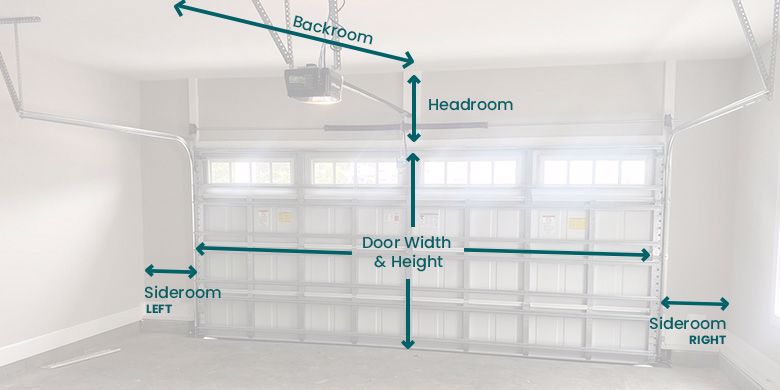
Before ordering a new door, accurate measurement is critical. An incorrect measurement can lead to costly returns, installation delays, or improper sealing. Follow these steps to measure your garage door opening correctly:
- Measure the Width:
- Use a steel tape measure for accuracy.
- Measure the width of the opening at the top, middle, and bottom.
- Record the widest measurement. Do not measure the old door itself, as it may not fit the opening perfectly.
- Measure the Height:
- Measure the height from the floor to the top of the opening on both the left and right sides.
- Record the tallest measurement. Ensure the floor is level; if it is not, note the difference.
- Check Side Room (Headroom):
- Measure the space from the top of the door opening to the ceiling or any obstructions (like lights or pipes).
- Standard torsion spring systems require about 12 inches of headroom. Roll-up doors may require less.
- Check Backroom (Depth):
- Measure the distance from the garage door opening to the back wall of the garage.
- Ensure there is enough space for the door to fully open without hitting stored items or the wall. Most standard doors need at least 10 feet of backroom.
Important: Always measure in inches and round up to the nearest whole inch. When in doubt, consult a professional installer to verify your measurements before purchasing.
Factors Influencing Garage Door Size Choices
Several factors beyond vehicle size should influence your decision on garage door dimensions:
- Local Building Codes: Some municipalities have specific requirements for garage door sizes, especially in flood zones or historic districts. Always check with your local building department.
- Home Architecture: The style of your home may dictate certain proportions. A Victorian home might look disproportionate with a massive modern door, while a contemporary home might benefit from sleek, wide openings.
- Future-Proofing: Consider future vehicle purchases. If you plan to buy an electric truck or a larger family vehicle in the next five years, sizing up now can save money later.
- Storage Needs: If you use your garage for storage, a taller door allows for overhead shelving or loft storage, maximizing vertical space.
FAQ Section
1. What is the most common garage door size in the US?
The most common single-car garage door size is 8 feet wide by 7 feet high. For double-car garages, the standard is 16 feet wide by 7 feet high. However, 9-foot wide single doors and 8-foot high doors are becoming increasingly popular.
2. Can I install a larger garage door in my existing opening?
Generally, no. The garage door must fit the existing structural opening. To install a larger door, you would need to modify the framing of your garage, which is a significant construction project involving structural engineers and contractors. It is usually more cost-effective to work within your existing opening dimensions.
3. How much clearance do I need on the sides of my garage door?
You typically need at least 3 to 6 inches of clearance on each side of the garage door opening for the tracks and hardware. This space is essential for the proper operation of the door and should not be obstructed by walls or storage.
4. Are custom-sized garage doors more expensive?
Yes, custom-sized garage doors are generally more expensive than standard sizes. Standard sizes benefit from mass production, which lowers costs. Custom doors require specialized manufacturing, materials, and often more complex installation, leading to higher prices. However, they may be necessary for unique architectural features or oversized vehicles.
5. What is the standard height for a garage door today?
While 7 feet remains common, 8 feet is rapidly becoming the new standard height, especially in newer constructions. This trend is driven by the increasing height of modern SUVs, trucks, and the desire for additional storage space above the door.
6. How do I know if my garage door is too small for my vehicle?
If you have less than 6 inches of clearance on either side of your vehicle when parked, or less than 1 foot of clearance above the highest point of your vehicle (including roof racks), your garage door may be too small. Difficulty entering or exiting the vehicle without hitting the door frame is also a clear sign that a wider door is needed.
Conclusion
Understanding what is the average size of a garage door is the first step toward ensuring your home is both functional and visually appealing. Whether you opt for the traditional 8×7 foot single door or upgrade to a spacious 9×8 foot model, choosing the right dimensions depends on your vehicles, storage needs, and future plans.
Remember, accurate measurement is key. Take the time to measure your opening carefully, consider local codes, and think about long-term usability. If you are unsure, consulting with a professional garage door installer can provide peace of mind and ensure a perfect fit.
Did you find this guide helpful? Share it with friends or family who are planning garage renovations or buying new homes! Let’s help everyone drive into their garages with confidence.
Leave a Reply