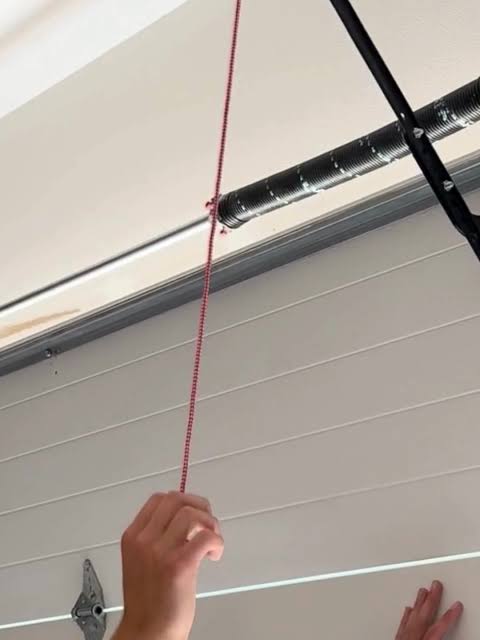
Have you ever stared at that mysterious red cord hanging from your garage door opener and wondered, “What does the red cord do on a garage door?” You’re not alone—most homeowners notice it but never learn its critical purpose. This simple-looking cord is actually a life-saving emergency release mechanism that every homeowner should understand.
In this comprehensive guide, you’ll discover exactly what the red cord does, when to use it, and how to operate it safely. Whether you’re dealing with a power outage, a malfunctioning opener, or just want to be prepared for emergencies, this article has you covered.
What Is the Red Cord on a Garage Door?
The red cord hanging from your garage door opener is officially called the emergency release cord
www.precisiondoornc.com. This safety feature is designed to disconnect the automatic opener mechanism from your garage door, allowing you to operate the door manually when needed
raynordoorauthority.com.
Think of it as a “quick disconnect” switch. When you pull this cord, you’re essentially telling the motor, “I’ve got this—I’ll take over from here.” The door then becomes a manual garage door that you can open and close by hand.
Key facts about the red cord:
- Color: Always red for high visibility and easy identification
- Location: Hangs from the trolley (the part that moves along the rail)
- Purpose: Emergency disconnection between door and opener
- Required by law: All garage door openers manufactured since 1982 must include this feature en.wikipedia.org
How Does the Emergency Release Mechanism Work?
Understanding the mechanics behind the red cord helps you appreciate why it’s so important. Here’s what happens when you pull that cord:
The Trolley and Carriage System
Your garage door opener uses a trolley system that connects to the door via an arm
en.wikipedia.org. The trolley slides back and forth along a rail or track, powered by a chain, belt, or screw drive connected to the motor.
When you pull the red cord:
- The trolley disengages from the opener carriage www.garagedoorspokane.com
- The connection breaks between the motor and the door
- The door becomes free to move independently
- You can now operate the door manually
According to Wikipedia, “A quick-release mechanism is attached to the trolley to allow the garage door to be disconnected from the opener for manual operation during a power failure or in case of emergency”
en.wikipedia.org.
The Physics Behind It
Most of a garage door’s weight (often 100-400 pounds) is counterbalanced by springs
en.wikipedia.org. The opener motor only provides enough force to control the door’s movement, not lift its full weight. This is why you can manually lift a garage door even though it seems impossibly heavy—the springs do most of the work.
When Should You Use the Red Cord?
The red cord isn’t meant for everyday use. It’s specifically designed for emergency situations. Here are the most common scenarios when you should pull it:
1. Power Outages
When the electricity goes out, your automatic opener won’t work. The red cord lets you manually open or close the garage door to get your car out or secure your home.
2. Opener Malfunction
If your garage door opener stops working, makes strange noises, or behaves erratically, you can use the red cord to disconnect it and operate the door manually until you get repairs.
3. Fire or Emergency Evacuation
In case of fire or other emergencies where you need to exit quickly, the red cord provides an alternative escape route through the garage
www.quora.com.
4. Garage Door Opener Maintenance
When performing maintenance or repairs on your opener, you’ll need to disengage it using the red cord for safety.
5. Remote Control Failure
If your remote stops working and you can’t access your garage through other entrances, the red cord provides manual access.
Step-by-Step: How to Properly Use the Red Cord
Using the red cord correctly is crucial for your safety. Follow these detailed steps:
Before You Pull the Cord
Step 1: Ensure the door is fully closed Never pull the red cord when the door is open or partially open. A broken spring could cause the door to slam shut, potentially causing injury or damage
www.precisiondoor.net.
Step 2: Check for obstructions Make sure nothing is blocking the door’s path and that the area is clear of people, pets, and objects.
Step 3: Locate the red cord The cord should hang from the trolley, typically 6-7 feet from the ground. It should be easily visible and accessible.
Pulling the Red Cord
Step 4: Grip the cord firmly Grab the red handle or cord with a firm grip.
Step 5: Pull straight down Pull the cord straight down toward you with a firm, steady motion
primegaragedoorrepairtech.com. You should feel some resistance.
Step 6: Listen for the click You’ll hear a distinct “click” sound when the trolley disengages from the carriage
slideandglide.com.au. This confirms the disconnection is complete.
Step 7: Test the disconnection Try lifting the door manually. It should move freely without resistance from the motor.
Operating the Door Manually
Step 8: Lift the door carefully Use both hands to lift the door evenly. The springs should help, but the door will still weigh 10-20 pounds.
Step 9: Secure the door Once open, make sure the door stays in place. You may need to prop it or use a locking mechanism.
Step 10: To close, lower gently Guide the door down slowly and evenly until it’s fully closed.
How to Re-engage the Garage Door Opener After Using the Red Cord
After using the red cord, you’ll need to reconnect the opener to restore automatic operation. Here’s how:
Method 1: Using the Release Handle
Step 1: Ensure the door is fully closed The door must be completely closed before re-engaging.
Step 2: Locate the release handle Find the red cord and the release handle on the trolley.
Step 3: Pull the cord toward the motor Pull the red cord toward the motor (opposite direction from when you disengaged it)
slideandglide.com.au.
Step 4: Listen for the click You should hear another click as the trolley reconnects to the carriage.
Step 5: Test the opener Use your remote or wall button to test if the opener works properly.
Method 2: Manual Reconnection
If the automatic reconnection doesn’t work:
Step 1: Move the trolley manually Slide the trolley along the rail until it aligns with the carriage.
Step 2: Pull the release cord Pull the cord toward the motor to engage the connection.
Step 3: Verify the connection The trolley should now be firmly attached to the carriage.
Step 4: Test operation Run the opener through a complete cycle to ensure everything works.
Safety Precautions and Common Mistakes to Avoid
The red cord is a safety feature, but improper use can create hazards. Here’s what you need to know:
Critical Safety Rules
NEVER pull the red cord when:
- The door is open or partially open www.overheaddoorcompanyofhuntsville.com
- Children or pets are near the door
- The door appears to be off-track or damaged
- You suspect broken springs
ALWAYS:
- Keep the cord accessible and not tangled
- Teach all family members where it is and how to use it
- Test the cord annually to ensure it works
- Call a professional if the cord is stuck or broken
Common Mistakes to Avoid
Mistake #1: Pulling the cord with the door open This is the most dangerous mistake. If a spring is broken, the door could slam down with hundreds of pounds of force
www.precisiondoor.net.
Mistake #2: Leaving the door disengaged After manual operation, always reconnect the opener. A disconnected opener won’t provide security or convenience.
Mistake #3: Using the cord for convenience The red cord is for emergencies only. Using it regularly can wear out the mechanism.
Mistake #4: Ignoring a stuck cord If the red cord is stuck or won’t pull, don’t force it. Call a professional garage door technician
raynordoorauthority.com.
Pros and Cons of Manual Garage Door Operation
Understanding the advantages and disadvantages helps you make informed decisions about when to use the red cord.
| Pros | Cons |
|---|---|
| ✓ Works during power outages | ✗ Requires physical effort |
| ✓ Provides emergency escape route | ✗ Door is heavy (10-20 lbs effective weight) |
| ✓ Allows access when opener fails | ✗ No automatic security features |
| ✓ Simple to operate | ✗ Must remember to re-engage opener |
| ✓ No special tools needed | ✗ Not suitable for frequent use |
| ✓ Life-saving in emergencies | ✗ Can be difficult for elderly or disabled |
Maintenance Tips for Your Emergency Release Cord
To ensure your red cord works when you need it most, follow these maintenance tips:
Monthly Checks
- Visual inspection: Look for fraying, damage, or wear
- Accessibility: Ensure nothing blocks access to the cord
- Height: The cord should hang 6-7 feet from the ground
Annual Testing
- Test the release: Pull the cord to ensure it disengages smoothly
- Test reconnection: Verify the opener reconnects properly
- Lubrication: If the mechanism is stiff, apply a small amount of garage door lubricant raynordoorauthority.com
When to Call a Professional
Contact a garage door technician if:
- The cord is broken or missing
- The release mechanism is stuck
- The door won’t re-engage after pulling the cord
- You notice unusual noises when operating the release
Frequently Asked Questions (FAQ)
Q1: Can I pull the red cord when the garage door is open?
A: No, you should never pull the red cord when the door is open or partially open
www.overheaddoorcompanyofhuntsville.com. If a spring is broken or weak, the door could slam shut with tremendous force, potentially causing serious injury or property damage. Always ensure the door is fully closed before pulling the emergency release cord.
Q2: What happens if I accidentally pull the red cord?
A: If you accidentally pull the red cord, your garage door opener will stop working because the motor is disconnected from the door. To fix this, simply reconnect the opener by pulling the red cord toward the motor (opposite direction from when you pulled it) until you hear a click. Then test the opener to ensure it’s working properly again
www.ocgaragedoorsguys.com.
Q3: How much does it cost to replace a garage door emergency release cord?
A: The emergency release cord itself is inexpensive, typically costing between $5-$20 for the part. However, if you hire a professional to replace it, expect to pay $75-$150 for labor, bringing the total cost to around $80-$170. If the entire trolley assembly needs replacement, costs can range from $150-$300 including parts and labor.
Q4: Is the red cord required by law?
A: Yes, the emergency release cord is required by federal law. Since 1982, all garage door openers manufactured and installed in the United States must include a quick-release mechanism that allows the door to be disconnected from the opener
en.wikipedia.org. This requirement was established to prevent entrapment and provide emergency access.
Q5: Can I use the red cord if my garage door spring is broken?
A: You can pull the red cord with a broken spring, but extreme caution is required. A garage door with a broken spring will be very heavy (the full weight of the door, often 100-400 pounds) and could fall dangerously. It’s best to call a professional immediately if you suspect a broken spring. Do not attempt to manually operate a door with a broken spring unless it’s a life-threatening emergency.
Q6: How often should I test my emergency release cord?
A: You should test your emergency release cord at least once a year to ensure it’s working properly. During the test, pull the cord to disengage the opener, manually operate the door, and then reconnect the opener. This simple test takes only a few minutes but ensures the mechanism will work when you need it most.
Conclusion
Understanding what does the red cord do on a garage door is essential for every homeowner. This simple red cord is your emergency release mechanism—a critical safety feature that disconnects your garage door from the automatic opener, allowing manual operation during power outages, emergencies, or opener malfunctions.
Key takeaways:
- The red cord is an emergency release mechanism that disconnects the opener from the door
- Use it only during emergencies, power outages, or opener failures
- Never pull it when the door is open
- Always reconnect the opener after manual operation
- Test it annually to ensure proper function
By knowing how to use the red cord safely and effectively, you’re prepared for unexpected situations and can keep your family safe.
Found this guide helpful? Share it with friends and family on social media—you never know who might need this life-saving information! Don’t forget to bookmark this page for future reference.
Disclaimer: This article provides general guidance for educational purposes. Always consult your garage door opener’s manual for specific instructions, and contact a professional technician for complex issues or repairs.
Leave a Reply