Introduction
Is your garage door making that dreaded screeching noise every time it opens? Or perhaps you’ve noticed it moving slower than usual, causing concern about potential breakdowns. You are not alone; millions of homeowners face this issue annually, often wondering what do you use to lubricate garage door springs to fix the problem safely and effectively.
Ignoring these signs can lead to premature wear, costly repairs, or even dangerous spring failures. In this guide, we will walk you through the exact products professionals recommend, step-by-step application techniques, and common mistakes to avoid. By the end, you’ll have a quieter, smoother-operating door and peace of mind knowing you’ve extended the lifespan of your garage system.
Why Lubrication Matters for Garage Door Springs
Before diving into the specific products, it is crucial to understand why lubrication is non-negotiable. Garage door springs, whether torsion (mounted above the door) or extension (mounted on the sides), undergo immense tension and friction with every cycle.
According to industry standards, a typical garage door is opened and closed over 1,500 times a year. Without proper lubrication, metal-on-metal friction generates heat and wear. This leads to:
- Increased Noise: Squeaking and grinding sounds.
- Premature Failure: Rust and corrosion weaken the steel, leading to snaps.
- Higher Energy Consumption: The opener motor has to work harder, increasing electricity bills and wear on the motor.
Proper lubrication creates a protective barrier against moisture and reduces friction, ensuring smooth operation. It is one of the simplest yet most impactful maintenance tasks you can perform.
The Best Lubricants for Garage Door Springs
When asking what do you use to lubricate garage door springs, the answer isn’t just “any oil.” Using the wrong product can attract dirt, gum up the mechanism, or damage rubber components. Here are the top-tier choices recommended by professional technicians.
1. Silicone-Based Spray Lubricant (Top Recommendation)
Silicone spray is widely considered the gold standard for garage door maintenance. It is lightweight, penetrates deep into the coils, and does not attract dust or debris.
- Pros:
- Non-sticky formula keeps springs clean.
- Safe for rubber seals and plastic parts.
- Works well in extreme temperatures (both hot and cold).
- Cons:
- May need reapplication more frequently than heavy greases (every 6 months).
2. White Lithium Grease Spray
Lithium grease is a heavier alternative that provides long-lasting protection. It is excellent for high-friction areas but must be used sparingly on springs to avoid buildup.
- Pros:
- Long-lasting protection.
- Excellent water resistance.
- Ideal for metal hinges and rollers as well.
- Cons:
- Can attract dirt if over-applied.
- Harder to clean off if spilled on the car or floor.
3. Dedicated Garage Door Lubricant
Several brands offer specialized formulas labeled specifically for garage doors. These are often a blend of silicone and other additives designed to tackle both noise and corrosion.
- Pros:
- Formulated specifically for this application.
- Often includes corrosion inhibitors.
- Cons:
- Typically more expensive than generic silicone sprays.
Comparison Table: Choosing the Right Product
| Feature | Silicone Spray | Lithium Grease | WD-40 (Standard) |
|---|---|---|---|
| Best For | Springs & Rollers | Hinges & Heavy Friction | Cleaning Only |
| Attracts Dirt? | No | Yes (if excessive) | No (but evaporates) |
| Longevity | Moderate | High | Very Low |
| Safe for Rubber? | Yes | Yes | No |
| Recommendation | Highly Recommended | Good Alternative | Avoid for Lubrication |
Expert Note: Never use standard WD-40 as a lubricant. While it is great for cleaning rust and displacing moisture, it is a solvent that evaporates quickly. It will leave your springs dry and unprotected within days. For more details on the chemical composition of lubricants, you can refer to Wikipedia’s entry on Lubricants.
Step-by-Step Guide: How to Lubricate Garage Door Springs
Now that you know what do you use to lubricate garage door springs, let’s look at how to apply it correctly. Improper application can be messy and ineffective.
Tools You Will Need:
- Your chosen lubricant (Silicone or Lithium Spray).
- A sturdy ladder.
- Clean rags or paper towels.
- Safety glasses.
Step 1: Safety First
Ensure the garage door is fully closed. This relieves tension on extension springs and makes torsion springs safer to access. Disconnect the garage door opener if possible to prevent accidental activation.
Step 2: Clean the Springs
Before applying new lubricant, wipe down the springs with a rag to remove old grease, dust, and cobwebs. Lubricating over dirt creates an abrasive paste that accelerates wear.
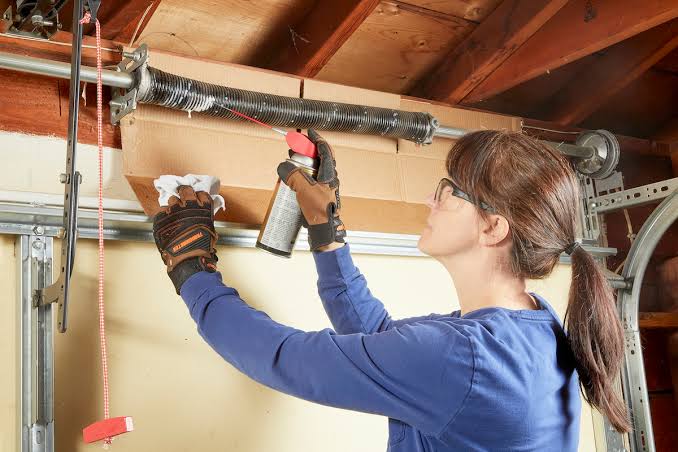
Step 3: Apply the Lubricant
Shake the can well. Hold the nozzle about 2–3 inches away from the spring.
- For Torsion Springs: Spray along the length of the spring while slowly rotating the coil if accessible, or spray each segment evenly. Focus on the points where the coils touch each other.
- For Extension Springs: Spray the entire length of the spring, paying attention to the pulleys and cables at the ends.
Pro Tip: Use short bursts rather than one continuous stream. You want a light coating, not a dripping mess.
Step 4: Wipe Excess
Use a clean rag to wipe away any drips or excess spray. This prevents the lubricant from falling onto your car or driveway.
Step 5: Test the Door
Reconnect the opener and operate the door up and down two or three times. This helps distribute the lubricant evenly across all contact points. Listen for any remaining noises.
Common Mistakes to Avoid
Even with the right product, errors can occur. Here are the most common pitfalls:
- Using Motor Oil or Vegetable Oil: These substances go rancid, attract pests, and create a sticky mess that traps dirt.
- Over-Lubricating: More is not better. Excess lubricant drips onto the floor, creating a slip hazard and staining concrete.
- Ignoring Other Parts: Springs aren’t the only moving parts. Ensure you also lubricate the rollers, hinges, and latch assembly for complete maintenance.
- Neglecting Safety Cables: If you have extension springs, ensure the safety cables are intact. Lubrication does not fix broken safety mechanisms.
When to Call a Professional
While lubrication is a DIY-friendly task, some issues require expert attention. If you notice:
- A gap in the torsion spring (indicating a break).
- The door is uneven or crooked when opening.
- Loud banging noises despite lubrication.
Stop immediately and call a certified technician. Garage door springs are under high tension and can cause severe injury if handled incorrectly.
FAQ Section
Q1: How often should I lubricate my garage door springs?
A: It is recommended to lubricate your garage door springs every 6 months. If you live in a humid or dusty environment, you may need to do it every 3–4 months. Regular maintenance prevents rust and keeps the operation smooth.
Q2: Can I use WD-40 on my garage door springs?
A: No. Standard WD-40 is a cleaner and degreaser, not a long-term lubricant. It will strip away existing grease and evaporate, leaving your springs dry and prone to rust. Use a silicone-based or lithium-based spray instead.
Q3: Is it safe to lubricate torsion springs myself?
A: Yes, as long as the door is closed and you are only spraying lubricant. Do not attempt to adjust, tighten, or repair the springs themselves. Torsion springs are under extreme tension and should only be serviced by professionals.
Q4: What happens if I don’t lubricate my garage door springs?
A: Without lubrication, friction increases, leading to squeaking noises, accelerated wear, and eventual rust. This can shorten the lifespan of the springs significantly, leading to premature failure and costly replacement.
Q5: Can lubrication fix a noisy garage door?
A: Often, yes. Most garage door noise is caused by dry metal parts rubbing together. Applying a silicone-based lubricant to springs, rollers, and hinges usually eliminates squeaks and grinding sounds. If noise persists, there may be a mechanical issue requiring repair.
Conclusion
Knowing what do you use to lubricate garage door springs is a small piece of knowledge that yields big results. By choosing a high-quality silicone spray or white lithium grease and applying it correctly twice a year, you can silence annoying squeaks, prevent rust, and extend the life of your garage door system.
Remember, maintenance is far cheaper than replacement. Take 15 minutes this weekend to inspect and lubricate your springs. Your ears—and your wallet—will thank you.
Did you find this guide helpful? Share this article with your neighbors or on social media to help others keep their garage doors running smoothly!
Leave a Reply