Choosing the right garage door opener can feel overwhelming with so many options on the market. You want something reliable, quiet, and within your budget, but technical specs often leave homeowners confused. Understanding what are the different types of garage door openers is the first step to making an informed decision that enhances your home’s security and convenience.
Whether you live in a detached house or a townhouse with bedrooms above the garage, the mechanism driving your door matters more than you might think. This guide breaks down every major type, helping you choose the perfect system for your lifestyle.
What Are the Main Types of Garage Door Openers?
When shopping for a new opener, you will primarily encounter four distinct drive mechanisms. Each type uses a different method to lift and lower your garage door, resulting in unique performance characteristics regarding noise, durability, and maintenance.
The four primary types are:
- Chain Drive
- Belt Drive
- Screw Drive
- Direct Drive (Jackshaft)
While all these systems perform the same basic function, their internal mechanics differ significantly. According to industry standards, the choice often depends on your climate, budget, and how much noise tolerance you have. For a deeper technical understanding of mechanical drive systems, you can refer to general engineering principles on Wikipedia.
Let’s dive into each type to see which one fits your home.
1. Chain Drive Openers: The Durable Workhorse
Chain drive openers are the most common and traditional type found in American homes. They operate using a metal chain—similar to a bicycle chain—that moves along a track to pull the trolley and lift the door.
Pros:
- Cost-Effective: Typically the most affordable option, ranging from $150 to $250.
- High Durability: Built to withstand heavy use and extreme temperatures.
- Easy Repair: Parts are widely available and easy to replace.
Cons:
- Noisy Operation: The metal-on-metal contact creates significant vibration and noise.
- Maintenance Required: Chains need regular lubrication to prevent rust and squeaking.
Best For: Detached garages where noise is not a concern. If your garage is separate from your living quarters, a chain drive offers the best bang for your buck.
2. Belt Drive Openers: The Quiet Choice
Belt drive openers use a reinforced rubber or fiberglass belt instead of a metal chain. This design was specifically engineered to reduce the noise and vibration associated with chain drives.
Pros:
- Whisper-Quiet: Ideal for homes with bedrooms above or adjacent to the garage.
- Low Maintenance: Belts do not require lubrication and are less prone to rust.
- Smooth Operation: Provides a gentler start and stop for the door.
Cons:
- Higher Cost: Usually costs $50–$100 more than chain drives.
- Climate Sensitivity: Extreme cold can sometimes make rubber belts brittle over time, though modern materials have improved this issue.
Best For: Attached garages and homeowners who prioritize peace and quiet. If you work from home or have light sleepers in the house, this is the top recommendation.
3. Screw Drive Openers: The Low-Maintenance Option
Screw drive openers use a threaded steel rod that rotates to move the trolley. As the screw turns, the trolley travels along the threads to lift the door. These are less common than chain or belt drives but offer unique advantages.
Pros:
- Fewer Moving Parts: With only one main moving component, there is less wear and tear.
- Consistent Performance: Performs well in varying temperatures without needing adjustment.
- Moderate Noise: Quieter than chain drives but louder than belt drives.
Cons:
- Lubrication Needs: The screw requires periodic lubrication to function smoothly.
- Slower Speed: Generally operates slower than chain or belt systems.
- Vibration: Can still produce some vibration, though less than chain drives.
Best For: Homeowners in regions with moderate climates who want a balance between cost and low maintenance. They are also great for heavier doors due to their torque capabilities.
4. Direct Drive (Jackshaft) Openers: The Space Saver
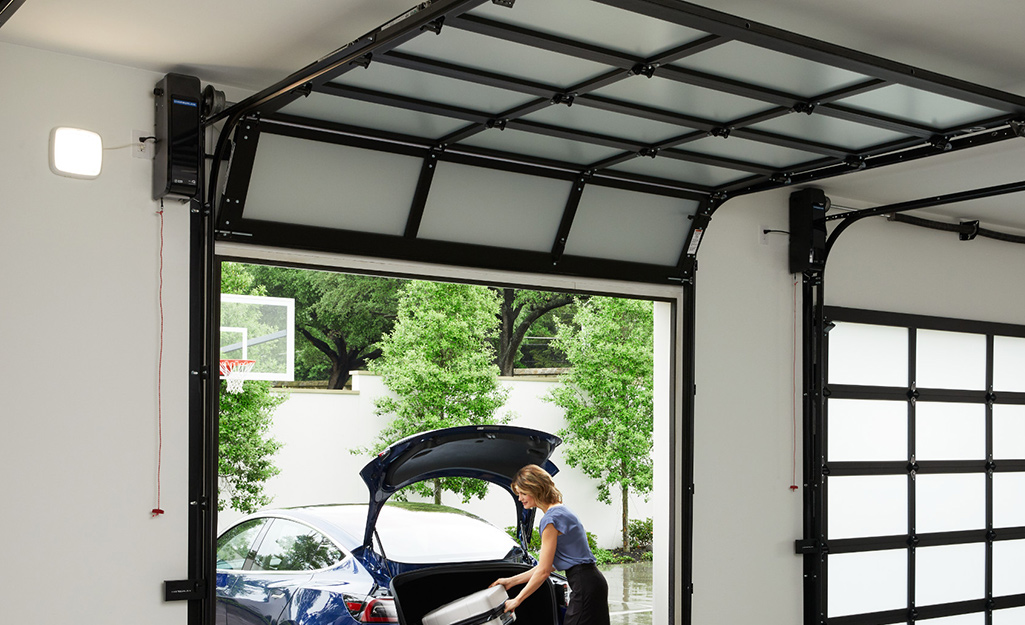
Also known as jackshaft or wall-mounted openers, these units install on the wall beside the garage door rather than on the ceiling. They connect directly to the torsion bar above the door to twist it open and closed.
Pros:
- Space Efficiency: Frees up ceiling space, perfect for storage racks or high-clearance vehicles.
- Quiet and Smooth: Direct connection reduces vibration and noise significantly.
- Safety: Often includes advanced safety features and battery backups.
Cons:
- Highest Cost: Typically the most expensive option, often exceeding $400.
- Complex Installation: Requires professional installation due to the need to interface with the torsion spring system.
- Door Compatibility: Only works with doors that have torsion springs, not extension springs.
Best For: Modern homes with high ceilings, workshops, or garages used for storage. If you have a lift kit truck or RV, this is the ideal choice.
Comparison Table: Which Opener Is Right for You?
To help you visualize the differences, here is a quick comparison of the four main types.
| Feature | Chain Drive | Belt Drive | Screw Drive | Direct Drive |
|---|---|---|---|---|
| Noise Level | High | Very Low | Medium | Low |
| Cost | $ | $$ | $$ | $ |
| Maintenance | Moderate | Low | Moderate | Low |
| Durability | High | High | High | High |
| Best Use Case | Detached Garage | Attached Garage | Moderate Climate | Space Saving |
Key Factors to Consider Before Buying
Beyond the drive type, several other factors influence your decision. Ignoring these can lead to buyer’s remorse or premature system failure.
Horsepower (HP) Requirements
Garage door openers come in various horsepower ratings, typically ranging from ½ HP to 1¼ HP.
- ½ HP: Suitable for single, lightweight wooden or aluminum doors.
- ¾ HP: The standard for most double-car garage doors and heavier wooden doors.
- 1+ HP: Recommended for extra-heavy custom doors or frequent use.
Tip: Always check your door’s weight and size. An underpowered opener will strain and burn out quickly.
Smart Features and Connectivity
Modern openers are no longer just motors; they are smart home hubs. Look for models with:
- Wi-Fi Connectivity: Control your door from anywhere via smartphone apps.
- Battery Backup: Ensures operation during power outages, a critical feature in storm-prone areas.
- Security Codes: Rolling code technology prevents hackers from intercepting your signal.
Warranty and Brand Reputation
Invest in brands with strong customer support and comprehensive warranties. A good warranty should cover the motor for at least 5–10 years and parts for 1–2 years. Popular reliable brands include LiftMaster, Chamberlain, and Genie.
Frequently Asked Questions (FAQ)
Q1: Which garage door opener is the quietest?
A: Belt drive openers are generally the quietest among ceiling-mounted units due to their rubber or fiberglass belts. However, direct drive (jackshaft) openers are also exceptionally quiet because they eliminate the trolley system entirely. If noise is your primary concern, avoid chain drives.
Q2: How long do garage door openers last?
A: On average, a well-maintained garage door opener lasts between 10 to 15 years. Belt and direct drive systems may last slightly longer due to fewer moving parts and less vibration. Regular maintenance, such as lubricating chains or screws, can extend this lifespan.
Q3: Can I install a garage door opener myself?
A: While DIY installation is possible for chain and belt drives, it requires careful attention to safety sensors and spring tension. Direct drive (jackshaft) openers should always be installed by professionals due to their connection to the torsion spring system, which can be dangerous if handled incorrectly.
Q4: Do I need a battery backup for my garage door opener?
A: It is highly recommended, especially if you live in an area prone to power outages. A battery backup allows you to open and close your garage door even when the power is out, ensuring you are not locked in or out during emergencies. Many modern smart openers now include this feature as standard.
Q5: What is the difference between AC and DC motor openers?
A: AC motors are traditional, powerful, and often louder. DC motors are newer, quieter, and offer variable speed control, allowing for a softer start and stop. DC motors are also more energy-efficient and are commonly found in belt drive and smart opener models.
Conclusion
Understanding what are the different types of garage door openers empowers you to choose a system that aligns with your home’s structure and your personal preferences. Whether you prioritize the affordability of a chain drive, the silence of a belt drive, the low maintenance of a screw drive, or the space-saving benefits of a direct drive, there is a perfect match for every homeowner.
Don’t let technical jargon intimidate you. Focus on your specific needs: noise levels, budget, and door weight. By selecting the right opener, you invest in years of hassle-free convenience and enhanced home security.
Found this guide helpful? Share it with friends or family who are planning a garage upgrade! Your next click could save them hours of research and hundreds of dollars.
Leave a Reply