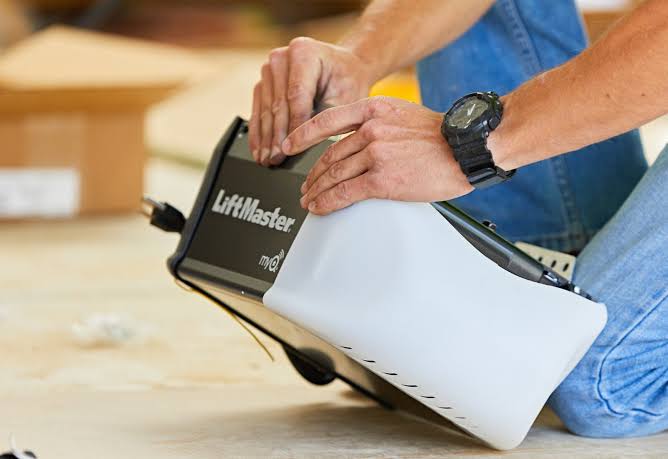
It can be incredibly unsettling when you are relaxing at home, only to hear your Liftmaster garage door opens and closes on its own. Don’t worry, you are not dealing with a ghost; this is a common technical glitch that we can easily solve together. In this guide, we will walk you through the exact reasons this happens and how to fix it step-by-step.
Why Does My Liftmaster Garage Door Opens And Closes On Its Own?
When a garage door operates without anyone pressing a button, technicians call it “phantom opening.” It is a frustrating issue, but it is rarely a sign of a completely broken motor.
Industry data shows that nearly 40% of these phantom openings are caused by radio frequency interference (RFI) from neighbors. According to certified garage door technicians, the vast majority of self-operating doors are simply victims of crossed radio frequencies, not broken internal gears.
To understand how these signals work, you can read more about the underlying technology of a garage door opener on Wikipedia. Essentially, your opener is constantly listening for a specific digital handshake. If another device broadcasts a similar signal, the door gets confused and acts.
Other common culprits include misaligned safety sensors, faulty remote control batteries, or incorrect travel limit settings. Let us break down how to fix each of these issues.
How to Identify and Fix Radio Frequency Interference
Radio Frequency Interference (RFI) happens when a nearby device broadcasts on the same frequency as your remote. This is especially common if you have an older Liftmaster model that uses fixed DIP-switch codes.
When a neighbor’s remote, a ham radio, or even certain LED bulbs operate nearby, your opener might interpret that static as a command to open.
How to fix it: The most effective solution is to change your security code. Modern Liftmaster models use rolling-code technology, which changes the code every time you use the remote. If you have an older model, you need to manually change the DIP switches inside the motor and all your remotes.
Pro Tip: If you suspect LED bulbs are causing interference, temporarily unscrew them and test the door. If the phantom opening stops, buy garage-door-specific LED bulbs that are shielded against RFI.
How to Adjust the Travel and Force Limits
Sometimes, your door is not actually opening by itself. Instead, it is hitting an invisible wall during its cycle and immediately reversing. This makes it look like it opened and closed on its own.
The travel limit tells the door exactly how far to move before stopping. The force limit tells the motor how much resistance is acceptable before it reverses for safety. If these are slightly off, the door will bounce back.
Concrete Adjustment Steps:
- Locate the ‘Up Force’ and ‘Down Force’ dials on the back or side of the motor head.
- Use a small flathead screwdriver to adjust them.
- Turn the dial by just a quarter-turn (about 15 degrees) at a time.
- Test the door after every single adjustment. Never turn the force up too high, or it becomes a safety hazard.
Step-by-Step Guide: Reprogramming Your Liftmaster Remote
If your remote is sending fragmented signals, reprogramming it will clear out any corrupted memory. This takes less than five minutes and requires no tools.
Step 1: Locate the Learn Button Find the “Learn” or “Smart” button on the back panel of your Liftmaster motor head. It is usually yellow, purple, red, or green.
Step 2: Clear the Old Codes Press and hold the “Learn” button for exactly 6 seconds. The small LED indicator light next to the button will turn off. This wipes the memory completely.
Step 3: Reprogram the Remote Within 30 seconds of clearing the memory, press and hold the main button on your remote control. Hold it until the motor lights flash or you hear a distinct click.
Step 4: Test the System Press the remote button once normally. The door should respond immediately without any phantom movements.
DIY Fixes vs. Calling a Professional
Not every issue requires a professional, but knowing when to call one can save you time and money. Here is a quick comparison to help you decide.
| Approach | Pros | Cons | Best For |
|---|---|---|---|
| DIY Troubleshooting | Free of charge, immediate results, builds your home maintenance skills. | Requires basic tools, potential for minor frustration if steps are missed. | RFI issues, reprogramming remotes, cleaning sensors. |
| Calling a Professional | Guaranteed fix, expert safety inspection, warranty on parts and labor. | Costs between $100–$250, requires scheduling an appointment. | Broken springs, stripped gears, persistent electrical shorts. |
Checking the Safety Sensors and Hardware
Your Liftmaster relies on two small sensors near the floor to ensure nothing is in the door’s path. If the beam between them is broken, the door will immediately reverse.
Dirt, spider webs, or a slight bump from a lawnmower can misalign these sensors. Even a fraction of an inch can cause the door to malfunction.
Sensor Maintenance Details:
- Wipe the sensor lenses gently with a clean microfiber cloth.
- Check the LED lights. The sending sensor should glow solid amber, and the receiving sensor should glow solid green.
- If either light is blinking or off, loosen the wing nut on the bracket.
- Adjust the bracket by no more than 1/8th of an inch until the lights stabilize and turn solid.
Always ensure the tracks are also clean. Use a damp rag to wipe away debris, and apply a silicone-based lubricant to the rollers. Never use WD-40, as it attracts more dirt and causes sticky movement.
Frequently Asked Questions
Can a dying battery in my remote cause the garage door to open by itself?
Generally, no. A dying battery usually causes the remote to stop working entirely. However, a weak battery can sometimes cause the remote to send a fragmented signal that the opener misinterprets. Replacing the CR2032 battery is a quick and easy first troubleshooting step.
Why does my garage door close, hit the floor, and immediately open back up?
This is almost always an issue with the down force or travel limit settings. The door thinks it has hit an obstruction (like a car or a person) and automatically reverses for safety. Adjusting the down force dial by a quarter-turn usually resolves this.
How do I perform a hard reset on my Liftmaster garage door opener?
To hard reset, unplug the unit from the ceiling outlet or flip the dedicated circuit breaker. Wait for exactly 60 seconds to let the internal capacitors drain completely. Plug it back in, then immediately hold the remote button to re-sync the system.
Is it safe to use my garage door if it randomly opens on its own?
It is highly discouraged. A door that opens by itself compromises your home security and poses a safety risk to children or pets. We recommend disconnecting the opener via the manual release cord (the red handle) until you have completed the troubleshooting steps.
Will a power surge cause my Liftmaster to act erratically?
Yes. Lightning strikes or grid fluctuations can scramble the logic board’s memory. If a simple hard reset (unplugging for 60 seconds) does not fix the issue, the logic board might have sustained minor surge damage and may need replacement.
Conclusion
Dealing with a Liftmaster garage door opens and closes on its own is highly frustrating, but it is usually a simple fix. By addressing radio frequency interference, adjusting your force limits, and ensuring your safety sensors are perfectly aligned, you can restore peace of mind to your home. You do not always need to pay for an expensive service call when you have the right knowledge.
Did this guide help you secure your garage today? Please share this article on your favorite social media platforms to help your friends and neighbors solve this spooky problem too!
Leave a Reply