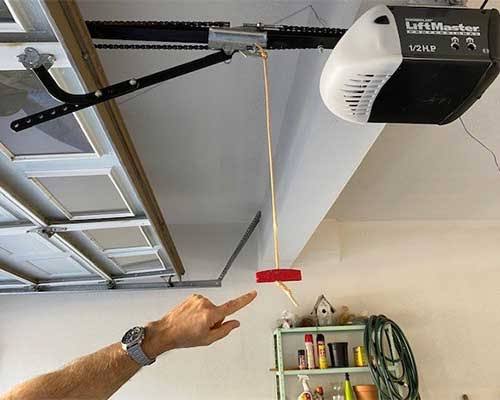
Have you ever stared at your closed garage door in panic after accidentally yanking that bright red handle hanging from the rail? You are not alone. Thousands of homeowners face this confusing moment every year, wondering if they just broke their expensive opener or locked themselves out for good. If you’re thinking, “I pulled the red cord on my garage door,” take a deep breath. You haven’t broken anything; you’ve simply activated the manual override mechanism designed for emergencies.
In this guide, we will walk you through exactly what that red cord does, why your door stopped responding to the remote, and the simple steps to reconnect it so you can get back to normal life.
What Does the Red Cord Actually Do?
The red cord, technically known as the emergency release rope, is a critical safety feature mandated by federal safety standards. Its primary purpose is to disengage the garage door from the automatic opener carriage (the part that moves along the rail).
When you pull this cord, you are mechanically separating the door from the motor. This allows you to open and close the door manually during a power outage or if the opener malfunctions. It is a fail-safe designed to ensure you are never trapped inside your garage if the electronics fail.
However, this feature is often misunderstood. Many people believe pulling the cord resets the system or fixes a glitch. In reality, it does the opposite: it stops the automatic system from working until you manually re-engage it. According to safety guidelines outlined by organizations like the Consumer Product Safety Commission, this mechanism must be easily accessible but distinct enough to prevent accidental activation.
Why Did It Disconnect?
There are two main reasons this happens:
- Accidental Pull: Children playing, moving boxes, or even a pet jumping up can snag the cord.
- Intentional Use: You may have pulled it during a power outage to open the door manually and forgot to reconnect it afterward.
How to Reconnect Your Garage Door After Pulling the Red Cord
If your remote control clicks but the door doesn’t move, the trolley is likely still disconnected. Reconnecting it is a straightforward process, but it requires attention to detail to ensure safety.
Step 1: Ensure the Door Is Fully Closed
Before attempting to reconnect, make sure the garage door is completely down. If the door is partially open, the tension on the springs makes it dangerous and difficult to re-engage the mechanism. Lower the door manually by lifting it slightly to relieve pressure, then guide it down smoothly.
Step 2: Locate the Emergency Release Handle
Look for the red handle hanging from the trolley assembly on the rail. It usually has a rope attached to it. Stand directly under the rail where the trolley is located.
Step 3: Re-engage the Trolley
This step varies slightly by brand (Chamberlain, LiftMaster, Genie, etc.), but the principle is the same:
- For most models: Push the release lever (the part the red rope attaches to) toward the garage door motor unit. You should hear a distinct “click” sound. This indicates that the latch has re-engaged with the trolley.
- Visual Check: Look at the connection point. The lever should be parallel to the rail, not hanging down perpendicular to it.
Step 4: Test the Connection
Do not use the remote yet. First, try to lift the door manually. If it feels extremely heavy or stuck, do not force it. The door should move smoothly with moderate effort. If it lifts easily, the springs are balanced, and the door is ready for automation.
Step 5: Operate with the Remote
Stand clear of the door and press the button on your wall console or remote. The motor should engage, and the door should open automatically. If the motor runs but the door doesn’t move, the trolley may not have fully clicked into place. Repeat Step 3.
Troubleshooting: What If It Still Won’t Work?
Sometimes, reconnecting the cord isn’t enough. Here are common issues and solutions:
| Problem | Possible Cause | Solution |
|---|---|---|
| Motor hums, door doesn’t move | Trolley not fully engaged | Pull the red cord again to reset, then push firmly toward the motor until it clicks. |
| Door reverses immediately | Safety sensors blocked | Check the photo-eye sensors near the floor. Clean lenses and ensure nothing blocks the beam. |
| Remote doesn’t respond | Dead batteries or sync issue | Replace remote batteries. Reprogram the remote if necessary. |
| Door is too heavy to lift | Broken spring | Do not attempt to fix. Call a professional technician immediately. Broken springs are under high tension and can cause severe injury. |
When Should You Call a Professional?
While reconnecting the red cord is a DIY-friendly task, certain scenarios require expert assistance. You should contact a licensed garage door technician if:
- The springs are broken: You see a gap in the coil springs above the door.
- The cables are frayed or loose: These hold the door’s weight and are dangerous to handle without training.
- The door makes grinding noises: This could indicate gear wear in the motor unit.
- The door falls rapidly: This suggests a serious balance issue that could damage your vehicle or injure someone.
According to industry data, garage door springs typically last between 7–10 years or 10,000 cycles. If your system is older than this, consider a professional inspection even if the red cord issue is resolved.
Preventing Accidental Pulls in the Future
Once you’ve fixed the issue, you’ll want to prevent it from happening again. Here are some practical tips:
- Shorten the Rope: If the red rope hangs too low, it’s prone to snagging. Tie a knot in the rope to raise the handle higher, keeping it out of reach of children and pets.
- Install a Shield: Some aftermarket kits offer plastic guards that cover the release mechanism, preventing accidental tugs while still allowing access in an emergency.
- Educate Household Members: Make sure everyone in your home knows that the red cord is for emergencies only, not a toy or a light switch.
FAQ Section
1. Will pulling the red cord reset my garage door opener?
No, pulling the red cord does not reset the electronic settings or memory of your opener. It only mechanically disconnects the door from the motor. To reset the opener’s limits or codes, you need to follow the specific programming instructions in your user manual.
2. Can I leave my garage door disconnected from the opener?
Technically, yes, you can operate the door manually indefinitely. However, this defeats the purpose of having an automatic opener and may compromise security if the manual lock isn’t engaged. It also means you lose the convenience of remote access and smart home integration.
3. Why does my garage door feel heavier after pulling the red cord?
When disconnected, you are lifting the entire weight of the door minus the assistance of the motor. However, the counterbalance springs should still make the door feel relatively light. If it feels excessively heavy, your springs may be broken or improperly balanced, which requires professional repair.
4. Is it safe to pull the red cord while the door is moving?
It is generally safe, but not recommended unless it’s an emergency. Pulling the cord while the door is in motion will stop the motor’s drive, but the door will continue moving due to momentum. This can cause wear on the tracks or rollers. Only use it when the door is stationary or if you need to stop it immediately due to an obstruction.
5. My red cord is missing or broken. What should I do?
If the rope is broken, you can still disengage the trolley by using pliers to pull the lever directly. However, you should replace the rope as soon as possible for safety and ease of use. Replacement ropes are inexpensive and available at most hardware stores or online retailers.
Conclusion
Finding yourself saying, “I pulled the red cord on my garage door,” is a common mishap, but it’s easily resolved. By understanding that this cord is a manual override rather than a reset button, you can quickly reconnect your trolley and restore automatic function. Remember to always ensure the door is closed before re-engaging, listen for the click, and test the balance manually.
If you found this guide helpful, please share it with friends or family who might benefit from knowing how to handle this common garage door mystery. Stay safe, and keep your garage running smoothly!
Leave a Reply