Introduction
It is incredibly frustrating when you are ready to leave for work or an appointment, but your garage door refuses to budge. If you are searching for how to raise a garage door with a broken spring, you are likely dealing with a snapped torsion or extension spring, which renders the automatic opener useless. While this is a significant mechanical failure, you can still manually lift the door to access your vehicle or home if you follow strict safety protocols.
Understanding the Mechanics: Why Is the Door So Heavy?
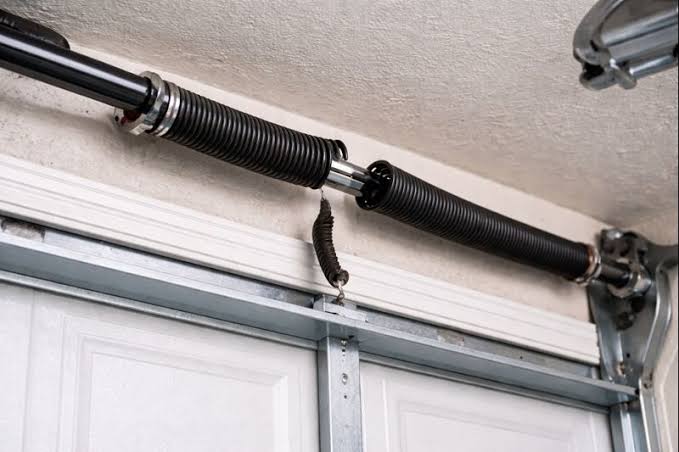
To understand how to raise a garage door with a broken spring, you first need to understand what the spring actually does. Many homeowners mistakenly believe the electric motor is what lifts the door. In reality, the springs do the heavy lifting.
A standard double-car garage door can weigh anywhere from 150 to 300 pounds (68 to 136 kg). The spring system is counterbalanced to neutralize this weight, making the door feel light enough for the motor (or a person) to lift. When the spring breaks, you are no longer fighting the motor; you are fighting gravity directly.
According to the Garage Door entry on Wikipedia, the torsion spring system is the most critical component for safety and operation. Without it, the door becomes a dead weight of several hundred pounds.
Critical Safety Warning Before You Begin
Before attempting to lift the door, you must be aware of the risks. The International Door Association (IDA) reports that garage door injuries send thousands of people to the emergency room annually, with spring-related accidents being among the most severe.
- Torsion Springs are under extreme tension: A broken spring can snap with enough force to cause severe injury. Do not attempt to repair or rewind the spring yourself.
- The Door Can Fall: Without a spring to hold it up, a manually lifted door has no mechanism to stay open. It will slam down if not properly secured.
Expert Insight: “Never place your hands or fingers between the door sections when lifting a door with a broken spring. The weight is unpredictable, and sections can shift suddenly.” — Certified Door Technician, Overhead Door Corp.
Step-by-Step: How To Manually Open the Door
Since the automatic opener cannot lift the dead weight, you must disengage the motor and lift the door by hand. Follow these concrete steps to do it safely.
Step 1: Disengage the Automatic Opener
Locate the emergency release cord. This is usually a red handle hanging from the trolley (the part connected to the motor rail) on the opener track.
- Action: Pull the cord firmly down and away from the motor.
- Result: You will hear a click. This disconnects the trolley from the door, allowing you to move the door independently of the motor.
Step 2: Clear the Area
Ensure no children, pets, or vehicles are directly in the path of the door. If the door slips, it will fall rapidly.
Step 3: The Lifting Technique
Stand inside the garage, facing the door.
- Grip the bottom handle of the door firmly with both hands.
- Keep your back straight and bend your knees.
- Lift smoothly: Do not jerk the door. Use your legs to push up.
- Warning: The door will feel incredibly heavy (approx. 150+ lbs). If you cannot lift it smoothly, stop immediately. You may need a second person to help, or the door tracks might be misaligned.
Step 4: Secure the Door (Crucial Step)
Once the door is fully open, it will not stay up on its own because the spring is broken. You must lock it in place.
- The Vise-Grip Method: Take a pair of locking pliers (Vise-Grips) or C-clamps.
- Placement: Locate the vertical track on either side of the door. Find the roller bracket (the metal piece attached to the bottom of the door that holds the wheels).
- Action: Clamp the pliers tightly onto the track immediately below the bottom roller bracket.
- Why: This physically prevents the door from sliding down the track and crushing you or your car.
Comparison: Temporary Fixes vs. Professional Repair
You might be tempted to fix the spring yourself to save money. However, understanding the complexity is vital for your safety.
| Feature | DIY Repair (Not Recommended) | Professional Service |
|---|---|---|
| Cost | $50 – $100 (Parts only) | $200 – $350 (Parts + Labor) |
| Risk Level | Extreme (High risk of injury) | Low (Trained technicians) |
| Tools Needed | Winding bars, vice grips, ladder | Specialized winding bars, sockets |
| Time Required | 2–4 hours (for beginners) | 45–60 minutes |
| Warranty | None (Voided if installed incorrectly) | 1–3 Years on parts and labor |
Recommendation: Unless you have specific mechanical experience and the correct winding bars, hiring a professional is the only safe option. The energy stored in a torsion spring is significant; a slip of the winding bar can result in broken bones or worse.
Frequently Asked Questions (FAQ)
1. Can I use my automatic opener to lift the door with a broken spring? No. You should never try to use the automatic opener button to force the door up. The motor is not designed to lift the full weight of the door without spring assistance. Doing so will likely burn out the motor or strip the gears, turning a simple spring repair into a costly opener replacement.
2. How long do garage door springs typically last? Springs are rated by “cycles” (one cycle equals one open and one close).
- Standard Springs: Rated for roughly 10,000 cycles (approx. 5-7 years).
- High-Cycle Springs: Rated for 25,000 to 100,000 cycles (approx. 10-15+ years). If your spring broke unexpectedly, it may have reached the end of its lifecycle.
3. Is it safe to leave the garage door open overnight if the spring is broken? Yes, provided you have secured it. If you have followed the steps above and used locking pliers (Vise-Grips) on the track below the rollers to prevent the door from falling, it is safe to leave it open. However, be aware that your garage is unsecured against intruders and weather.
4. Can I replace just one spring if I have a two-spring system? It is highly discouraged. If you have two springs and one breaks, the other is likely near the end of its life. Replacing only one creates an imbalance that puts extra strain on the new spring and the opener, leading to premature failure of the new part. Professionals recommend replacing both simultaneously.
5. What is the loud bang I heard? That was likely the sound of the metal spring snapping under tension. Torsion springs are mounted above the door header, and when they break, they often make a sound similar to a gunshot or a firecracker. This confirms the spring is the issue.
Conclusion
Knowing how to raise a garage door with a broken spring is a valuable skill for emergencies, allowing you to access your vehicle or home when the mechanism fails. However, remember that this is a temporary solution. The manual lifting process requires physical strength and extreme caution, particularly when securing the door with locking pliers to prevent it from falling.
While you can manually open the door, the repair of the spring itself is a dangerous task best left to certified professionals. Prioritize your safety, secure the door properly, and schedule a repair immediately.
Found this guide helpful? Please share it on social media or send it to a friend who might be stuck with a broken garage door today!
Leave a Reply