Introduction
There is nothing quite as frustrating as rushing out the door in the morning, hitting the remote, and watching your garage door lift just a few inches before stopping dead in its tracks. It disrupts your routine and leaves you wondering if you are facing a minor glitch or a major mechanical failure. If you are asking yourself, “Why does my garage door only open a few inches?” you are not alone; this is one of the most common issues homeowners face.
In this guide, we will break down the exact reasons behind this behavior, provide safe troubleshooting steps, and help you decide when to call a professional. Let’s get your door moving smoothly again.
1. Are the Safety Sensors Misaligned or Blocked?
The most frequent culprit behind a garage door that opens slightly and then reverses or stops is the safety sensor system. Modern garage doors are equipped with photo-eye sensors located near the floor on both sides of the door track. Their job is to detect obstacles in the door’s path to prevent injury or damage.
How Sensors Work
These sensors emit an invisible infrared beam. If the beam is interrupted—even by something as small as a leaf, a spiderweb, or a misalignment of a fraction of an inch—the opener interprets it as an obstruction. Consequently, it halts the door or reverses it immediately after opening a few inches.
Troubleshooting Steps:
- Check the Lights: Look at the LED lights on the sensors. Usually, one has a green light (power) and the other has an amber or red light (beam alignment). If the amber light is blinking or off, the sensors are not aligned.
- Clean the Lenses: Wipe the sensor lenses with a soft, dry cloth. Dust and dirt can block the infrared signal.
- Realign the Brackets: Gently adjust the sensor brackets until both lights are solid. Ensure they are pointing directly at each other.
- Remove Obstructions: Clear any boxes, bikes, or debris from the area between the sensors.
According to the Consumer Product Safety Commission, garage door sensors have been mandatory since 1993 to prevent entrapment accidents, highlighting their critical role in door operation.
2. Is the Travel Limit Setting Incorrect?
If your door opens a few inches and then stops without reversing, the issue might lie in the travel limit settings. These settings tell the garage door opener how far to move up (open limit) and how far to move down (close limit).
Over time, vibrations from daily use can cause these settings to drift. If the “open” limit is set too low, the motor will stop prematurely. Conversely, if the close limit is set too tight, the door may think it has hit the ground and stop immediately upon starting.
How to Adjust Travel Limits:
Most modern openers have adjustment screws or digital buttons on the main motor unit.
- Locate the limit adjustment screws (usually labeled “Up” and “Down” or marked with arrows).
- Turn the “Up” limit screw slightly in the direction indicated for increased travel (usually clockwise).
- Test the door. Repeat in small increments until the door opens fully.
- Caution: Do not over-adjust, as this can cause the door to strain against the top stop.
3. Are the Torsion Springs Broken or Weak?
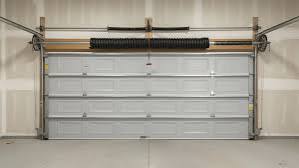
Garage doors are heavy, often weighing between 150 to 400 pounds. The torsion springs above the door are responsible for counterbalancing this weight, making it easy for the motor to lift the door. If a spring is broken, loose, or worn out, the motor cannot lift the door more than a few inches before it becomes overwhelmed.
Signs of Spring Failure:
- Loud Bang: You may have heard a loud noise resembling a gunshot when the spring broke.
- Gap in the Spring: Look at the torsion spring above the door. If there is a visible gap in the coils, it is broken.
- Heavy Manual Lift: Disconnect the opener using the emergency release cord. Try to lift the door manually. If it feels extremely heavy or won’t stay open, the springs are likely faulty.
Safety Warning: Never attempt to repair or replace torsion springs yourself. They are under extreme tension and can cause severe injury or death if handled improperly. Always hire a certified technician for spring repairs.
4. Is There an Obstruction in the Tracks?
Sometimes, the problem is purely physical. Debris, rust, or bent tracks can prevent the rollers from moving smoothly. If the door encounters resistance early in its cycle, the opener’s safety mechanism may trigger, causing it to stop after opening a few inches.
Inspection Checklist:
- Visual Check: Shine a flashlight into the tracks on both sides. Look for rocks, nails, or built-up grime.
- Roller Condition: Check if the rollers are cracked or chipped. Damaged rollers can jam in the track.
- Track Alignment: Ensure the tracks are parallel and securely bolted to the wall. A bent track can pinch the rollers.
Cleaning and Lubrication:
- Clean the tracks with a damp cloth to remove dirt and grease.
- Apply a silicone-based lubricant to the rollers and hinges. Avoid WD-40, as it attracts dust and can gum up the mechanism over time.
- Tighten any loose bolts on the track brackets.
5. Is the Opener Motor Failing?
If all else fails, the issue might be with the garage door opener itself. Older motors can lose torque, or internal gears may strip. If the motor hums but the door doesn’t move, or if it struggles to lift even a few inches, the motor or gear assembly may be failing.
When to Replace the Opener:
- The unit is more than 10–15 years old.
- You hear grinding noises from the motor housing.
- The door works manually but not with the opener, despite correct limit settings.
Comparison: DIY Fixes vs. Professional Help
| Issue | Difficulty Level | Risk Factor | Recommended Action |
|---|---|---|---|
| Sensor Misalignment | Low | Low | DIY: Clean and realign |
| Limit Settings | Low | Low | DIY: Adjust screws/buttons |
| Track Obstruction | Low | Low | DIY: Clean and lubricate |
| Broken Springs | High | Very High | Professional Only |
| Motor Failure | Medium | Medium | Professional Diagnosis |
FAQ Section
Q1: Why does my garage door open a few inches and then go back down?
This is typically a safety sensor issue. The door reverses because it detects an “obstruction.” Check if the sensor lights are blinking or if something is blocking the beam. It can also happen if the close limit is set too tightly, making the door think it has hit the floor.
Q2: Can I reset my garage door opener to fix this issue?
Yes, resetting the opener can sometimes clear electronic glitches. Unplug the unit for 30 seconds, then plug it back in. You may need to reprogram your remotes and keypad afterward. However, this will not fix mechanical issues like broken springs.
Q3: How much does it cost to repair a garage door that won’t open fully?
Costs vary widely. Simple tasks like sensor realignment or lubrication may cost nothing if done DIY. Professional service calls range from $75 to $150. Replacing broken springs can cost $200–$400, while a new opener installation ranges from $300 to $800+.
Q4: Is it dangerous if my garage door only opens partially?
Yes, it can be. A partially open door compromises home security. More importantly, if the issue is related to broken springs or cables, the door could fall unexpectedly, posing a serious safety risk to people and pets underneath.
Q5: How often should I maintain my garage door to prevent this?
Experts recommend performing a basic inspection and lubrication every six months. Check sensors, test the auto-reverse feature, and listen for unusual noises. Annual professional maintenance is also advisable for older systems.
Conclusion
Dealing with a garage door that refuses to open fully is stressful, but understanding why does my garage door only open a few inches empowers you to take action. In many cases, the solution is as simple as cleaning a sensor or adjusting a limit screw. However, always prioritize safety—especially when dealing with high-tension springs.
By following the steps outlined above, you can diagnose the most common issues and determine whether a DIY fix is possible or if it’s time to call in a pro. A well-functioning garage door is essential for convenience, security, and peace of mind.
Found this guide helpful? Share it with your neighbors or on social media to help others troubleshoot their garage door woes! Don’t forget to bookmark this page for future reference.
Leave a Reply