Introduction
There are few things more frustrating than being trapped inside your own garage when the electricity suddenly cuts out. Whether you are rushing to work, heading to an emergency appointment, or simply trying to get your car out of the driveway, knowing how to open your garage door during a power outage is an essential homeowner skill that can save you time, stress, and potential damage to your property. This guide provides a safe, step-by-step method to manually operate your door while prioritizing your safety and the integrity of your garage door system.
Understanding Your Garage Door Emergency Release Mechanism
Before you attempt to lift the door, it is vital to understand the mechanics at play. Most modern residential garage doors are equipped with a torsion spring or extension spring system designed to counterbalance the weight of the door panels. The electric opener merely acts as a locking mechanism and a motorized assistant; the springs do the heavy lifting.
When the power fails, the opener’s internal lock remains engaged. This is why you cannot simply push the door up by hand without first disengaging the trolley from the opener carriage. According to the Wikipedia entry on garage door openers, the emergency release cord was standardized as a critical safety feature following federal regulations in the early 1990s to prevent entrapment and allow manual access during mechanical failures.
What Is the Red Emergency Release Cord?
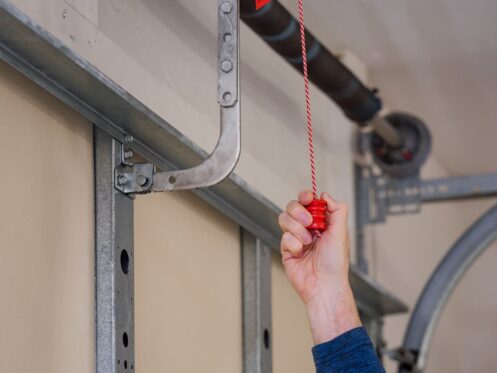
The red emergency release cord is typically located hanging from the center rail of the garage door opener assembly, near the top of the door. It is attached to a lever that connects the trolley (the moving part attached to the door) to the opener carriage (the part moved by the motor). Pulling this cord physically separates these two components, allowing the door to move freely along its tracks independent of the motor.
⚠️ Critical Safety Warning: Never pull the emergency release cord while the door is in motion or partially open. Doing so can cause the door to slam shut violently due to unbalanced spring tension, potentially causing severe injury or property damage. Always ensure the door is fully closed before engaging the manual release.
Step-by-Step: How To Open Your Garage Door During A Power Outage
Follow these precise steps to safely transition from automatic to manual operation. Take your time and prioritize safety over speed.
Step 1: Verify the Door Is Fully Closed
Visually inspect the bottom seal of the garage door. Ensure it is resting evenly on the concrete floor. If the door is even slightly ajar, do not proceed. An unbalanced door under spring tension is extremely dangerous. If the door is stuck halfway, contact a professional technician immediately rather than attempting a manual override.
Step 2: Locate and Inspect the Release Cord
Find the red handle hanging from the opener rail. Check for any obstructions, fraying, or damage. If the cord appears worn or disconnected from the lever, do not use it. In such cases, the mechanism may require professional repair before safe manual operation is possible.
Step 3: Disengage the Opener Trolley
Stand firmly on the ground with stable footing. Grasp the red handle firmly and pull it straight down toward the floor with a steady, controlled motion. You should hear or feel a distinct click indicating the trolley has separated from the carriage. The lever should remain in the disengaged position until you manually reset it later.
Step 4: Lift the Door Manually Using Proper Form
Place both hands flat against the door panel at approximately waist height, centered horizontally. Lift using your legs, not your back, keeping the motion smooth and vertical. A properly balanced residential garage door should weigh no more than 10–15 pounds when lifted manually. If the door feels excessively heavy, sticks, or binds in the tracks, stop immediately. This indicates a broken spring, damaged roller, or track misalignment that requires professional service.
Step 5: Secure the Door in the Open Position
Once fully open, engage the manual lock if your door has one, or place a sturdy clamp or C-clamp on the track just above a roller to prevent accidental closure. Never leave a manually opened door unsecured, especially if children or pets are present. Wind gusts or vibration can cause an unsecured door to fall unexpectedly.
Reconnecting Your Garage Door Opener After Power Returns
Knowing how to open your garage door during a power outage is only half the equation. Properly restoring automatic operation is equally important to avoid future malfunctions.
Step-by-Step Reconnection Process
- Ensure the door is fully closed and resting evenly on the floor.
- Pull the emergency release cord toward the door (or push the lever back into position, depending on your model) until you hear a click confirming re-engagement.
- Restore power to the opener via the circuit breaker or outlet switch.
- Test the opener using the wall button first (not the remote) to observe alignment and balance.
- Verify safety sensors by waving an object through the beam path while closing; the door should reverse immediately upon interruption.
| Action | Correct Method | Common Mistake to Avoid |
|---|---|---|
| Disengaging | Pull cord straight down steadily | Yanking at an angle or jerking |
| Lifting | Use leg strength, hands centered | Lifting with back or off-center grip |
| Securing | Clamp track above roller | Relying on friction alone |
| Reconnecting | Door fully closed first | Re-engaging while door is open |
| Testing | Wall button observation | Assuming remote works correctly |
When NOT To Manually Open Your Garage Door
While manual operation is a valuable backup, certain conditions make it unsafe. Recognizing these scenarios protects you from injury and costly repairs.
- Broken or Damaged Springs: If you hear a loud bang preceding the outage or notice a visible gap in the torsion spring, do not attempt manual operation. The door could weigh 200+ pounds without spring assistance.
- Track Damage or Misalignment: Bent tracks, loose brackets, or derailed rollers create pinch points and binding hazards.
- Frayed or Snapped Cables: Extension spring systems rely on cables that, if compromised, can whip dangerously when tension is released.
- Unusual Noises or Resistance: Grinding, scraping, or sudden stiffness during lifting signals mechanical failure requiring professional diagnosis.
In any of these situations, the safest course is to wait for power restoration or call a licensed garage door technician. Attempting to force a compromised system often transforms a minor repair into a major replacement.
Preventive Measures to Minimize Future Outage Disruptions
Proactive maintenance reduces both the likelihood of needing manual operation and the risk associated with it.
- Monthly Balance Test: Disconnect the opener (pull release cord with door closed) and lift halfway. A balanced door stays in place; if it rises or falls, schedule spring adjustment.
- Biannual Lubrication: Apply silicone-based lubricant to rollers, hinges, and tracks every six months to reduce friction and wear.
- Battery Backup Installation: Many modern openers offer integrated battery backup systems providing 10–20 cycles during outages. This eliminates manual operation entirely for short-term power losses.
- Annual Professional Inspection: Certified technicians can identify worn components before they fail, ensuring your emergency release mechanism functions reliably when needed most.
Frequently Asked Questions About Manual Garage Door Operation
Can I open my garage door manually if the spring is broken?
Technically yes, but it is strongly discouraged. Without spring counterbalance, a standard double-car garage door can weigh 250–300 pounds. Lifting this weight risks serious musculoskeletal injury and can bend tracks or damage panels. Always contact a professional for spring replacement before attempting manual operation.
Will manually opening the door damage my garage door opener?
No, provided you follow the correct procedure. The emergency release mechanism is specifically engineered for this purpose. Damage occurs only when users skip the disengagement step and attempt to force the door against the locked trolley, which can strip gears or burn out motors. Always pull the release cord before lifting.
How long can I safely operate my garage door manually?
You can operate manually indefinitely as long as the door remains properly balanced and all mechanical components are intact. However, prolonged manual use increases wear on rollers and hinges since the opener’s controlled acceleration/deceleration profile is absent. Restore automatic operation as soon as power returns and verify system function.
Why does my garage door feel heavier than usual when opened manually?
Increased resistance typically indicates failing springs, dry rollers, track obstruction, or cable issues. A properly maintained door should lift effortlessly with minimal force. Do not ignore increased weight; it is an early warning sign of component degradation that will worsen over time and eventually lead to complete failure.
Is it safe to leave my garage door disconnected from the opener overnight?
It is acceptable temporarily, but ensure the door is fully closed and secured. Leaving it disconnected for extended periods bypasses safety sensor protection and auto-reverse functionality. Reconnect promptly when power returns and test all safety features before regular use resumes.
Can weather conditions affect manual garage door operation?
Yes. Extreme cold can thicken lubricants and contract metal components, increasing friction. High humidity can swell wooden door panels, creating binding. Temperature swings may also alter spring tension slightly. Perform seasonal maintenance adjustments and consider climate-appropriate lubricants to maintain consistent manual operation year-round.
Conclusion: Stay Prepared and Safe
Mastering how to open your garage door during a power outage empowers you to handle unexpected situations confidently while protecting yourself and your property. By understanding the emergency release mechanism, following proper lifting techniques, and recognizing when professional help is necessary, you transform a potentially stressful ordeal into a manageable task. Remember that preparation extends beyond knowledge—regular maintenance, balance testing, and considering battery backup options ensure your garage door system serves you reliably whether the power is on or off.
Found this guide helpful? Share it with friends, family, or neighbors who might benefit from knowing these essential safety procedures. Tag us on social media with your garage door preparedness tips, and let’s build a community of informed, safety-conscious homeowners together. Your share could prevent someone else from being stranded during their next power outage!
Leave a Reply