Have you ever found yourself stranded in your driveway with a dead car battery, a lost remote, or a malfunctioning garage door opener? It’s a frustrating situation that happens to millions of homeowners every year. Knowing how to open a garage door without the remote can save you time, money, and stress during these unexpected moments.
Whether you’re dealing with a power outage, a broken remote, or simply forgot your key fob at home, this comprehensive guide will walk you through safe, effective methods to access your garage. Let’s explore practical solutions that work for most standard garage door systems.
Understanding Your Garage Door System
Before attempting any manual override, it’s crucial to understand how your garage door operates. Most residential garage doors use one of three types of opening mechanisms:
- Torsion spring systems: Use tightly wound springs above the door
- Extension spring systems: Have springs on either side of the door tracks
- Jackshaft systems: Mounted on the wall beside the door
According to the International Door Association, over 70% of American homes have automatic garage doors, making knowledge of manual operation essential for every homeowner.
The emergency release mechanism is your primary tool when learning how to open a garage door without the remote. This red cord with a handle hangs from the opener carriage and disconnects the door from the motorized system.
Method 1: Using the Emergency Release Cord
The emergency release cord is the most straightforward way to operate your garage door manually. Here’s how to use it safely:
Step-by-Step Instructions:
- Locate the red emergency release cord hanging from the center rail of your garage door opener
- Pull the cord down firmly toward the floor – this disengages the trolley from the opener carriage
- Listen for a click confirming the door is disconnected from the motor
- Lift the door manually using both hands, keeping your back straight
- To re-engage, pull the cord toward the motor until it clicks back into place
Important Safety Note: Never attempt to use the emergency release while the door is moving. Always ensure the door is completely stopped before pulling the cord.
Method 2: Manual Lifting Technique
If your emergency release isn’t accessible or functional, you can still open heavier doors with proper technique:
Proper Lifting Form:
- Stand centered under the door
- Place hands on the bottom panel handles or edges
- Bend your knees, not your waist
- Lift smoothly using leg strength
- Keep the door balanced as you raise it
Most single-car garage doors weigh between 130-180 pounds, while double-car doors range from 200-400 pounds. If you cannot lift the door comfortably, do not force it – seek professional assistance.
Method 3: Using a Locksmith Key
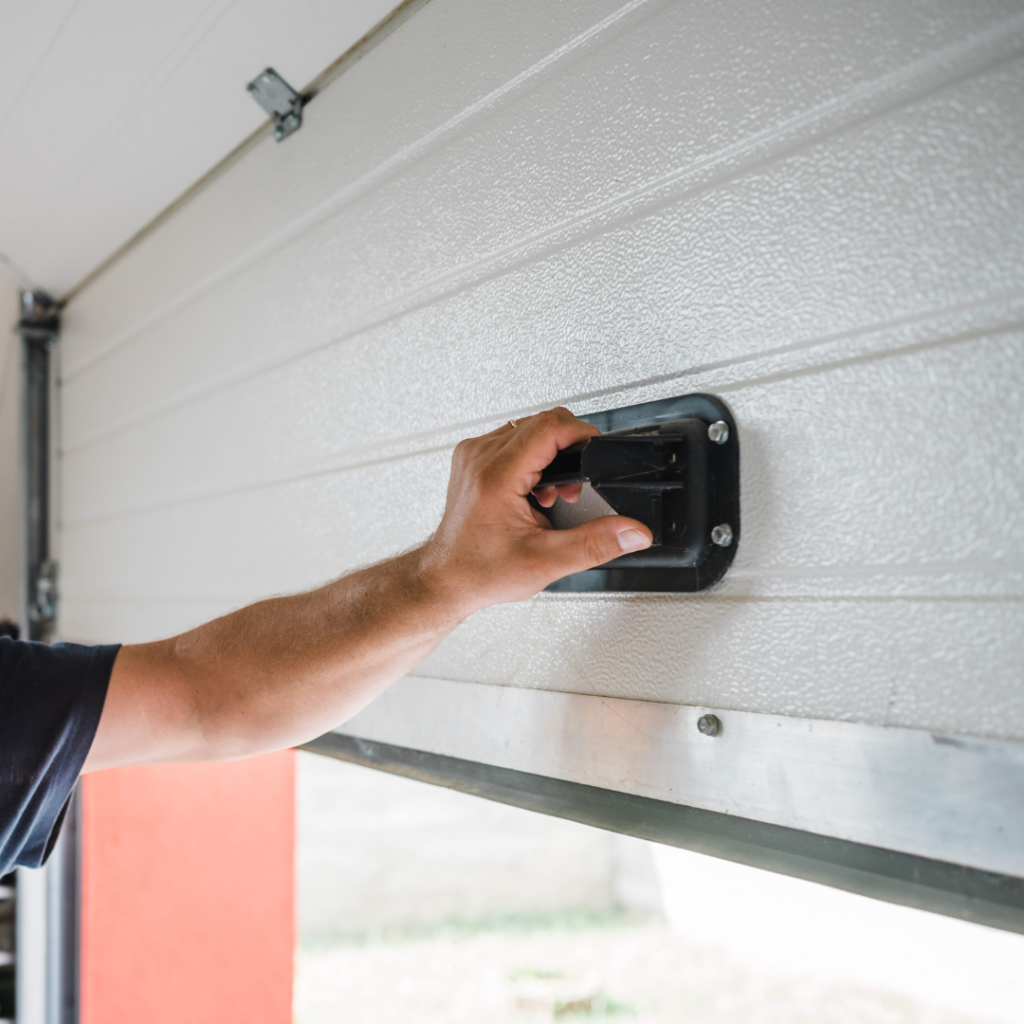
Many older garage door openers come with keyed locks built into the exterior handle. If your system has this feature:
- Insert the key into the exterior lock cylinder
- Turn clockwise to unlock
- Pull the handle upward to release the locking mechanism
- Lift the door manually
Check your owner’s manual or contact the manufacturer if you’ve misplaced this key. Many companies can provide replacement keys using your serial number.
Method 4: Smartphone App Control
Modern smart garage door openers offer app-based control as an alternative to traditional remotes. Popular brands include:
| Brand | App Name | Compatibility |
|---|---|---|
| Chamberlain | MyQ | iOS/Android |
| LiftMaster | MyQ | iOS/Android |
| Genie | Aladdin Connect | iOS/Android |
| Craftsman | Smart Garage | iOS/Android |
To set up app control:
- Download the manufacturer’s app
- Create an account
- Follow pairing instructions
- Test remote functionality through your smartphone
For more information about garage door safety standards, visit Wikipedia’s article on garage doors.
Method 5: External Keypad Entry
If your garage has an external keypad installed:
- Enter your programmed PIN code
- Wait for the light indicator to confirm acceptance
- The door should begin opening automatically
If you’ve forgotten your PIN, consult your owner’s manual for reset procedures. Most keypads allow code changes through a simple button sequence.
Troubleshooting Common Issues
Door Won’t Stay Open
If your garage door won’t stay open after manual release:
- Check spring tension – worn springs may need replacement
- Inspect rollers and tracks for obstructions
- Verify the door is properly balanced
Stuck or Jammed Door
For doors that feel stuck:
- Look for visible obstructions in the tracks
- Check if safety sensors are blocked
- Ensure nothing is caught in the roller mechanism
Power Outage Solutions
During electrical outages:
- Use the emergency release cord method
- Consider installing a battery backup system
- Keep a manual crank tool accessible
When to Call a Professional
While knowing how to open a garage door without the remote is valuable, some situations require expert assistance:
- Broken or snapped springs (extremely dangerous)
- Damaged cables or pulleys
- Persistent alignment issues
- Electrical problems with the opener unit
- Doors that feel unusually heavy or unbalanced
According to the Consumer Product Safety Commission, garage door-related injuries send thousands of people to emergency rooms annually. Never attempt repairs on high-tension components without proper training and tools.
Preventive Maintenance Tips
To avoid future emergencies:
- Test your emergency release monthly to ensure it functions properly
- Keep spare remotes in multiple locations (car, purse, office)
- Maintain your opener with annual professional inspections
- Update batteries in remotes and keypads regularly
- Practice manual operation so you’re prepared for emergencies
FAQ Section
Q: Can I damage my garage door by opening it manually?
A: When done correctly using the emergency release cord, manual operation won’t damage your door. However, forcing a stuck door or improper lifting techniques can cause harm to the door, tracks, or yourself. Always use proper form and stop if you encounter resistance.
Q: How often should I test my emergency release mechanism?
A: Test your emergency release cord at least once per month. This ensures it remains functional and familiarizes you with the process. Regular testing also helps identify potential issues before they become emergencies.
Q: What if my garage door has no emergency release cord?
A: Most modern garage doors have emergency releases, but older models may not. In this case, try using a locksmith key if available, or contact a professional garage door technician. Some very old systems may require specialized tools or techniques.
Q: Is it safe to leave my garage door partially open?
A: Leaving a garage door partially open can be unsafe and may damage the door mechanism. If you need ventilation, consider installing proper vents or leaving the door fully open with security measures in place. Partially open doors can fall unexpectedly.
Q: Can I program a new remote if I lost the original?
A: Yes, most garage door openers allow you to program new remotes. Consult your owner’s manual for specific programming instructions. You’ll typically need to press a “learn” button on the motor unit and follow the pairing sequence. Universal remotes are also available at hardware stores.
Q: How much does it cost to replace a garage door remote?
A: Replacement remotes typically cost between $20-$50, depending on the brand and features. Universal remotes are often less expensive ($15-$30) but may require additional programming steps. OEM (original equipment manufacturer) remotes ensure compatibility but cost more.
Conclusion
Learning how to open a garage door without the remote is an essential skill for every homeowner. Whether you’re dealing with a dead battery, lost remote, or power outage, the methods outlined in this guide will help you regain access to your garage safely and efficiently.
Remember to prioritize safety above all else. Use proper lifting techniques, never force a stuck door, and call professionals for complex mechanical issues. Regular maintenance and preparation can prevent most emergency situations.
Found this guide helpful? Share it with friends and family on social media to help them prepare for garage door emergencies too! Bookmark this page for quick reference during those unexpected moments when technology fails us.
Stay safe, stay prepared, and keep your garage accessible no matter what challenges arise.
Leave a Reply