Introduction
There are few things more frustrating than being trapped inside or locked out of your home because the electricity has failed. If you are currently staring at a closed garage door with no power, knowing how to open a garage door in a power outage is an essential safety skill that every homeowner must master. This guide provides clear, empathetic, and safe instructions to help you regain access without damaging your equipment or risking personal injury.
Understanding Your Garage Door Emergency Release
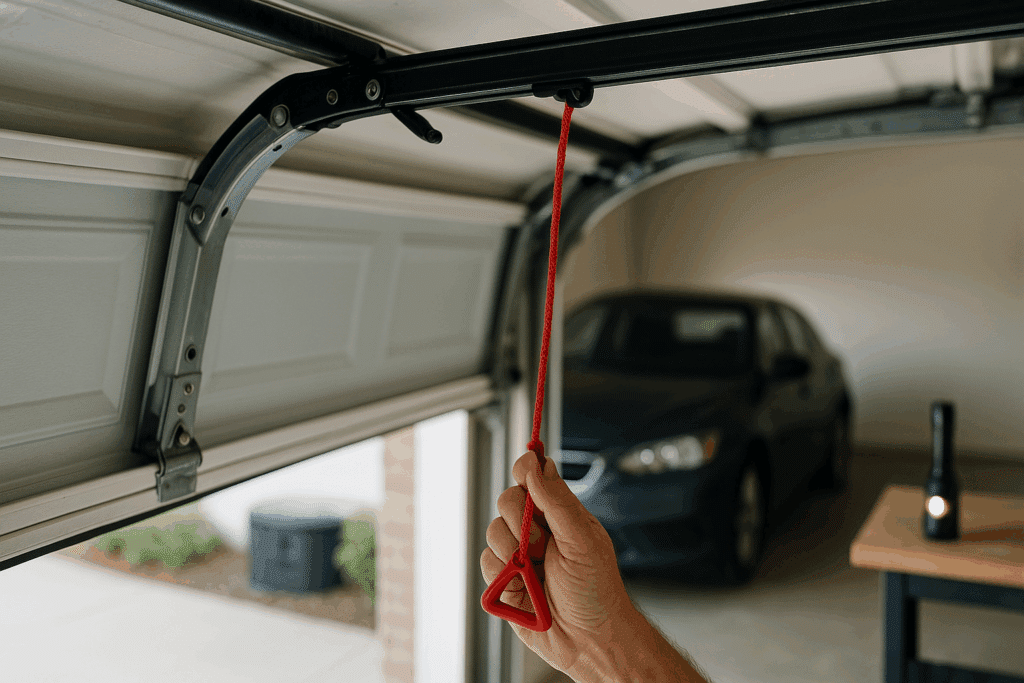
Before you attempt to lift anything, it is vital to understand the mechanism that makes manual operation possible. Modern automatic garage doors are equipped with an emergency release kit, typically identified by a red cord hanging from the opener rail. According to technical standards documented on Wikipedia, this release mechanism disengages the trolley from the drive system, allowing the door to move freely along its tracks independent of the motor.
However, not all openers are identical. While most residential chain-drive and belt-drive systems use a red pull cord, some older models or specialized jackshaft openers may utilize a lever or a different colored handle. Identifying this component correctly is the first step in learning how to open a garage door in a power outage effectively.
⚠️ Critical Safety Warning: Never pull the emergency release cord while the door is in motion or partially open. The springs are under extreme tension, and sudden disengagement can cause the door to slam shut violently, leading to severe injury or property damage. Always ensure the door is fully closed before pulling the cord.
Step-by-Step: How to Manually Open Your Garage Door
When the lights go out, follow these precise steps to operate your door manually. This process requires physical effort, so proceed with caution.
1. Locate and Pull the Emergency Release Cord
Find the red cord near the motor unit. Firmly grasp the handle and pull it straight down (or in the direction indicated by the arrow on the housing). You should hear or feel a distinct click, indicating the trolley has disconnected from the drive carriage. If the cord is stuck, do not yank it aggressively; check for obstructions or consult your owner’s manual.
2. Lift the Door Using Proper Body Mechanics
Once disengaged, the door relies entirely on its counterbalance spring system. Stand facing the door with feet shoulder-width apart. Bend at the knees, keep your back straight, and grip the bottom edge or designated lift handles. Lift smoothly using your leg muscles, not your back. A properly balanced door should require only 10–15 pounds of force to lift. If it feels significantly heavier, stop immediately—your springs may be broken or misadjusted.
3. Secure the Door in the Open Position
Automatic openers have locking mechanisms that prevent free-fall, but manual mode does not. Once fully open, you must secure the door to prevent accidental closure. Use C-clamps on the tracks just below the rollers, or engage any manual locks installed on the door itself. Never leave a manually opened door unsecured, especially if children or pets are present.
4. Close and Re-engage the Opener After Power Returns
When electricity is restored, close the door completely by hand. Then, pull the emergency release cord toward the motor unit until it clicks back into place. Test the automatic function using your wall button (not the remote) to verify proper re-engagement before resuming normal use.
Manual vs. Automatic Operation During Outages: Key Differences
Understanding the limitations of manual operation helps set realistic expectations during emergencies.
| Feature | Automatic Mode | Manual Mode (Power Outage) |
|---|---|---|
| Effort Required | Minimal (motor-driven) | Moderate to High (spring-dependent) |
| Speed | 7–10 seconds typical | 15–30 seconds depending on weight |
| Safety Features | Auto-reverse, sensors active | No auto-reverse; user responsible |
| Security Locking | Motor acts as lock | Requires manual clamps/locks |
| Accessibility | Easy for all users | Challenging for elderly/disabled |
| Battery Backup Option | N/A | Available as add-on ($150–$300) |
Note: Doors with battery backup systems bypass the need for manual release entirely, maintaining automatic functionality for 10–20 cycles during outages.
What If My Door Won’t Open Manually? Troubleshooting Common Issues
Even when you know how to open a garage door in a power outage, mechanical problems can arise. Here are solutions to frequent obstacles:
- Door Feels Extremely Heavy: This almost always indicates a broken torsion or extension spring. Do not attempt to force it. Springs store dangerous levels of energy and should only be serviced by licensed professionals. Mark this as a priority repair once power returns.
- Release Cord Is Stuck or Broken: Age and corrosion can seize the mechanism. Apply penetrating oil to the release assembly and wait 10 minutes before retrying. If the cord snaps, you will need professional service to reinstall the release kit.
- Door Binds or Sticks Mid-Travel: Track misalignment or roller damage may be preventing smooth movement. Inspect tracks for dents or debris. Lightly lubricate rollers with silicone spray (never grease). If binding persists, do not force the door off-track.
- Jackshaft Opener Without Visible Cord: Wall-mounted jackshaft openers often have a manual release lever located on the side of the unit rather than a hanging cord. Consult your specific model’s documentation or look for a labeled release tab near the shaft collar.
Preventive Measures: Preparing for Future Power Failures
Reactive solutions work in emergencies, but proactive preparation saves stress. Consider these upgrades:
- Install a Battery Backup System: Most major opener brands offer compatible battery backups that integrate seamlessly. They provide peace of mind and maintain security features during outages.
- Practice Manual Operation Quarterly: Familiarity reduces panic. Every three months, disconnect power and practice the full manual cycle to ensure the release mechanism functions smoothly and you remember the proper technique.
- Maintain Spring Balance Annually: Have a certified technician inspect and adjust your springs yearly. Proper balance ensures manual lifting remains safe and manageable.
- Keep Emergency Tools Accessible: Store C-clamps, a flashlight with fresh batteries, and your opener’s manual in a designated spot near the garage entry. Fumbling in darkness compounds emergency stress.
- Label the Release Cord: Add a bright tag reading “EMERGENCY RELEASE – PULL ONLY WHEN DOOR IS CLOSED” to prevent accidental misuse by guests or new household members.
Frequently Asked Questions (FAQ)
Q1: Is it safe to open a garage door manually during a power outage?
Yes, it is safe if you follow proper procedures. Always ensure the door is fully closed before pulling the emergency release, lift with correct body mechanics, and secure the door when open. Avoid manual operation if you suspect spring damage or if the door feels abnormally heavy. When in doubt, wait for professional assistance.
Q2: Can I damage my garage door opener by using the manual release?
No, the emergency release is designed specifically for this purpose and will not harm your opener when used correctly. Damage typically occurs only if you pull the cord while the door is moving, force a stuck mechanism, or fail to re-engage properly after power returns. Follow manufacturer instructions precisely to protect your equipment.
Q3: How much force should it take to lift my garage door manually?
A properly balanced residential garage door should require approximately 10–15 pounds of lifting force—roughly equivalent to lifting a gallon of milk. If your door requires significantly more effort, the counterbalance system is malfunctioning. Continuing to lift an unbalanced door risks injury and further mechanical damage. Schedule professional spring service promptly.
Q4: Will my garage door automatically reconnect when power comes back?
No. You must manually re-engage the emergency release after power is restored. Pull the release cord or lever back toward the motor unit until it clicks into the engaged position. Then test operation using the wall-mounted control button before relying on remotes or smart features. Skipping this step leaves your door inoperable via automation.
Q5: What should I do if my garage door has no emergency release cord?
Some newer jackshaft (wall-mount) openers and certain commercial systems use alternative release mechanisms, such as a rotating lever or keyed lock cylinder. Check your opener’s label for the model number and search the manufacturer’s website for specific instructions. If you cannot locate any release mechanism, contact a licensed garage door technician for guidance rather than attempting improvised solutions.
Q6: Can I install a battery backup on my existing garage door opener?
In most cases, yes. Many openers manufactured after 2018 support retrofit battery backup kits. Verify compatibility by checking your opener’s model number against the backup manufacturer’s specifications. Professional installation typically costs $150–$300 including parts and labor. Note that California law (SB 969) mandates battery backup on all new residential openers sold in the state, reflecting growing recognition of this safety feature’s importance.
Conclusion
Knowing how to open a garage door in a power outage transforms a potentially dangerous situation into a manageable task. By understanding your emergency release mechanism, following safe lifting protocols, and preparing proactively with maintenance and backup systems, you protect both your property and your family’s well-being. Remember: when in doubt about spring condition or mechanical integrity, always defer to licensed professionals rather than risking injury.
Found this guide helpful? Share it on Facebook, X (Twitter), or Nextdoor to help neighbors prepare for their next power outage. Tag a friend who just moved into a new home—they’ll thank you later! Stay safe, stay prepared, and never let a blackout leave you stranded. 💡🏠
Leave a Reply