Introduction
Does your plain white garage door feel out of place against your home’s warm, natural exterior? You are not alone; many homeowners struggle to balance modern durability with traditional aesthetics without breaking the bank. Learning how to make a white garage door look like wood is one of the most cost-effective ways to instantly elevate your home’s curb appeal and create a cohesive architectural style. This guide will walk you through a professional-grade faux finishing process that delivers stunning, realistic results on a budget.
Why Choose Faux Wood Over Real Wood Garage Doors?
Before picking up a paintbrush, it helps to understand why this method has surged in popularity among US homeowners. Real wood garage doors offer undeniable beauty, but they come with significant maintenance burdens and higher price tags. According to industry data from Remodeling Magazine’s Cost vs. Value Report, steel or fiberglass doors with faux wood finishes often yield a higher return on investment (ROI) than natural wood because they resist warping, rotting, and insect damage.
Pros and Cons: Faux Wood vs. Natural Wood
| Feature | Faux Wood Finish (Paint/Stain) | Natural Wood Door |
|---|---|---|
| Average Cost | $200 – $600 (DIY materials) | $2,500 – $8,000+ |
| Maintenance | Low (clean & reseal every 3-5 yrs) | High (annual staining/sealing) |
| Durability | Resists moisture & pests | Prone to rot, warp, & termites |
| Installation Time | 2 – 3 days (drying included) | Professional install required |
| Aesthetic Versatility | Customizable grain & tone | Limited to species available |
By choosing a faux finish, you achieve the warmth of timber with the resilience of modern materials. For more context on material evolution, you can explore the history of garage door construction on Wikipedia, which details how steel and composite doors became dominant in American residential architecture.
What Materials Do You Need for a Realistic Wood Grain Effect?
Gathering the right supplies is 80% of the battle. Using cheap brushes or incorrect primers is the most common reason DIY faux wood projects fail. Here is your essential shopping list for a standard two-car garage door (approximately 140 sq. ft.):
- High-Bonding Primer: 1 gallon (oil-based or shellac-based recommended for adhesion).
- Base Coat Paint: 1 gallon of high-quality exterior acrylic latex in a tan, beige, or light brown tone.
- Wood Graining Tool: 1 rocker-style grainer and 1 fine-line artist brush for knots.
- Gel Stain or Glaze: 1 quart of dark walnut or mahogany exterior gel stain.
- Clear Topcoat: 1 gallon of UV-resistant, non-yellowing polyurethane or spar urethane.
- Supplies: Painter’s tape, drop cloths, 220-grit sandpaper, lint-free rags, and a 3-inch angled sash brush.
Expert Tip: Always choose gel stain over liquid stain for vertical surfaces. Gel stains have higher viscosity, preventing drips and allowing you to manipulate the grain pattern before it sets. Liquid stains dry too fast on large vertical panels and result in lap marks.
Step-by-Step: How To Make A White Garage Door Look Like Wood
This tutorial assumes temperatures between 50°F and 85°F (10°C–29°C) with humidity below 70%. Avoid painting in direct sunlight or if rain is forecast within 24 hours.
Step 1: Surface Preparation (Do Not Skip!)
Clean the door thoroughly using a TSP (trisodium phosphate) solution or a dedicated degreaser to remove road grime, oxidation, and wax. Rinse with a garden hose and allow to dry completely for at least 4 hours. Lightly sand the entire surface with 220-grit sandpaper to create a mechanical bond. Wipe away dust with a tack cloth. Proper prep ensures your faux wood finish lasts 10+ years instead of peeling after one winter.
Step 2: Apply the Base Coat
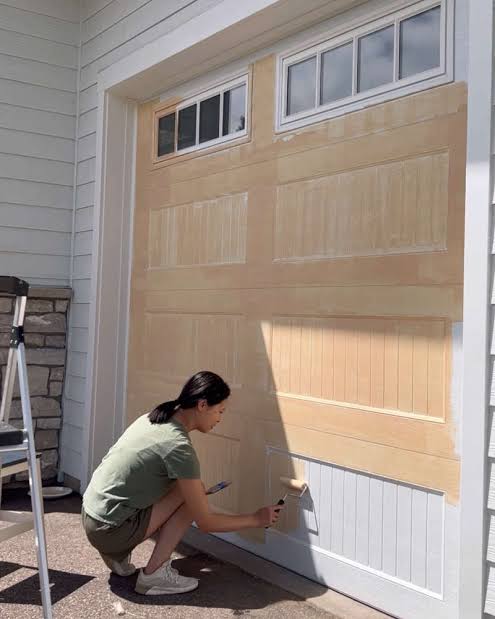
Apply your base coat evenly using a roller for flat sections and an angled brush for edges and recessed panels. The base color represents the “light” areas of wood grain, so ensure full coverage. Allow to dry for 4–6 hours (check manufacturer specs). Apply a second coat if the white underneath shows through.
Step 3: Create the Wood Grain Pattern
Work in manageable sections (one panel at a time). Apply a thin, even layer of gel stain over the base coat. Immediately use the rocker-style graining tool to pull curved, organic lines through the wet stain. Vary your pressure and angle to mimic natural growth rings. Use the fine artist brush to add occasional knots and imperfections—real wood is never perfect. Wipe excess stain with a lint-free rag to soften harsh lines and blend transitions.
Step 4: Seal and Protect
After the stain cures for 24 hours, apply two coats of UV-resistant clear topcoat. Sand lightly with 320-grit paper between coats for a smooth, furniture-like finish. The topcoat is non-negotiable; it prevents UV fading and protects the grain from moisture infiltration. Allow 48 hours of cure time before exposing the door to rain or closing it fully.
Common Mistakes to Avoid When Faux Painting Garage Doors
Even experienced DIYers stumble on these pitfalls. Avoid them to ensure professional results:
- Skipping the primer: White garage doors are often coated with factory-applied polyester or vinyl. Without a bonding primer, your paint will peel.
- Working in direct sun: Heat causes stain to skin over in minutes, making grain manipulation impossible. Work in shade or during cooler morning/evening hours.
- Overworking the grain: Less is more. Excessive brushing muddies the pattern. Trust the tool and let negative space define the grain.
- Using interior products: Exterior doors face thermal cycling, UV radiation, and moisture. Interior stains and polyurethanes will crack, yellow, and fail within months.
Frequently Asked Questions (FAQ)
How long does a faux wood garage door finish last?
When properly sealed with UV-resistant topcoat and maintained, a faux wood finish typically lasts 8–12 years. Reapply clear coat every 3–5 years to extend longevity, especially in high-sun regions like Arizona or Florida.
Can I use this technique on metal, fiberglass, or vinyl garage doors?
Yes, but preparation varies. Metal and fiberglass require bonding primer. Vinyl doors need special vinyl-safe primer and lighter base colors to prevent heat absorption and warping. Always test a small area first.
Is it cheaper to paint or replace a garage door for wood look?
Painting costs $200–$600 in materials versus $2,500–$8,000+ for a new wood-look door. Even hiring a professional faux painter ($800–$1,500) saves thousands compared to replacement while achieving comparable aesthetics.
What is the best base color for realistic faux wood?
Warm neutrals work best: tan, camel, light oak, or greige. Avoid pure white or gray bases, as they create unnatural contrast with dark stain and lack the underlying warmth of real timber.
How do I maintain my faux wood garage door?
Wash annually with mild soap and water. Inspect the clear coat each spring; if it appears chalky or cracked, clean and reapply a fresh topcoat. Avoid pressure washing, which can force water behind the finish and cause delamination.
Can I achieve this look with spray paint alone?
Spray paint provides smooth coverage but cannot replicate wood grain texture. For authentic results, you must combine sprayed or rolled base coats with hand-applied gel stain and graining tools. Spray-only methods look painted, not wooden.
Conclusion: Transform Your Home’s First Impression Today
Learning how to make a white garage door look like wood empowers you to achieve luxury curb appeal without luxury pricing. With proper preparation, quality materials, and patience during the graining process, your garage door can become a stunning architectural feature that complements your home’s style for over a decade. Remember: the secret lies not in perfection, but in embracing the organic imperfections that make real wood beautiful.
Loved this guide? Share it on Pinterest, Facebook, or Instagram to help fellow homeowners transform their exteriors! Tag us in your before-and-after photos—we’d love to celebrate your success. Happy painting! 🎨🏡
Leave a Reply