Introduction
Is your garage door struggling to open or slamming shut unexpectedly? You’re not alone—thousands of homeowners face this frustrating issue every year, often caused by worn-out or incorrectly sized torsion springs. Understanding how to know what size torsion spring for garage door is crucial for both safety and proper functionality. In this comprehensive guide, we’ll walk you through everything you need to measure, identify, and select the right torsion spring for your specific garage door setup.
Why Getting the Right Torsion Spring Size Matters
Before diving into measurements, it’s essential to understand why precision matters. Torsion springs are the workhorses of your garage door system, counterbalancing the door’s weight to make opening and closing effortless. Using the wrong size can lead to:
- Premature spring failure (often within months instead of years)
- Strain on your garage door opener, reducing its lifespan
- Safety hazards from improper tension
- Increased energy costs due to inefficient operation
According to the International Door Association, improperly installed or sized springs account for nearly 40% of garage door service calls. Getting it right the first time saves money, time, and potential injury.
Step 1: Measure Your Current Spring (If Still Intact)
The most accurate way to determine the correct size is to measure your existing spring. Here’s exactly what you need to check:
Wire Diameter
This is the thickness of the spring wire itself. Use a caliper or ruler to measure:
- Common sizes range from 0.207 inches to 0.262 inches
- Measure at multiple points for accuracy
- Record to the nearest thousandth of an inch
Inside Diameter (ID)
Measure the inside width of the spring coil:
- Standard residential doors typically use 1.75″, 2″, or 2.25″ inside diameters
- Use a tape measure across the center of the coils
Length
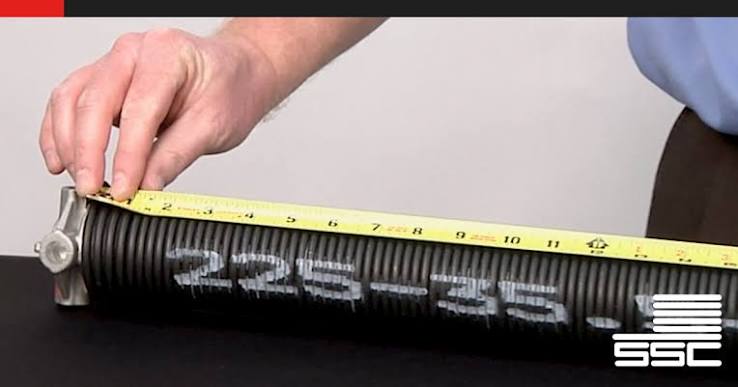
Measure the spring when it’s relaxed (not under tension):
- Common lengths range from 22 to 36 inches
- Measure from end to end, excluding the cones
Wind Direction
Determine if your spring is:
- Left-wound (winds counterclockwise)
- Right-wound (winds clockwise)
- Most systems use one of each for balanced operation
Step 2: Calculate Based on Door Specifications
If your spring is broken or missing, you can calculate the required size using your door’s specifications:
Door Weight
This is the most critical factor. A standard single-car garage door weighs:
- Steel doors: 130–150 pounds
- Wood doors: 150–250 pounds
- Insulated doors: 180–300+ pounds
You can weigh your door using a bathroom scale placed under the bottom section while someone slowly lifts it.
Door Height
Measure the vertical dimension:
- Standard heights: 7 feet or 8 feet
- Custom doors may vary
Number of Springs
Most residential doors use:
- One spring for lighter doors (under 160 lbs)
- Two springs for heavier doors (160+ lbs)
For more detailed technical specifications about garage door components, you can reference Wikipedia’s article on garage doors.
Step 3: Use the Spring Cycle Rating
Torsion springs come with different cycle ratings, indicating how many open/close cycles they can handle:
| Cycle Rating | Expected Lifespan | Best For |
|---|---|---|
| 10,000 cycles | 3–5 years | Budget-conscious homeowners |
| 15,000 cycles | 5–7 years | Average use households |
| 25,000 cycles | 10+ years | Heavy-use or commercial applications |
Pro tip: If you use your garage door more than 3–4 times daily, invest in higher-cycle springs. The extra cost pays off in longevity.
Common Mistakes to Avoid
Even experienced DIYers make these errors when determining spring size:
Assuming All Doors Are Standard
Not all garage doors follow “standard” specifications. Older homes, custom builds, and modified doors often have unique requirements. Always measure rather than assume.
Ignoring Cable Drum Size
The cable drums must match your spring specifications. Mismatched drums can cause uneven winding and premature failure.
Overlooking Temperature Effects
Garage door springs expand and contract with temperature changes. In regions with extreme weather variations, consider springs rated for wider temperature ranges.
Skipping Professional Verification
While DIY measurement is possible, having a professional verify your calculations is wise. Many companies offer free consultations, and this small step can prevent costly mistakes.
When to Call a Professional
While understanding how to know what size torsion spring for garage door empowers you as a homeowner, some situations require expert assistance:
- Broken springs under tension – These store enormous energy and can cause serious injury if handled incorrectly
- Complex multi-door systems – Commercial or oversized residential setups
- Uncertain measurements – When readings fall between standard sizes
- Older door systems – May require custom solutions or additional modifications
The Consumer Product Safety Commission reports over 30,000 garage door-related injuries annually, with spring-related incidents being among the most severe. Don’t risk your safety to save a few dollars.
Tools You’ll Need for Accurate Measurement
Gather these items before starting:
- Caliper or precise ruler (measuring to 0.001 inches)
- Tape measure (for length and door dimensions)
- Notebook and pen (to record all measurements)
- Safety glasses (essential when working near springs)
- Ladder (if springs are mounted high)
- Helper (for weighing the door safely)
Comparing Torsion vs. Extension Springs
Understanding the difference helps confirm you’re dealing with torsion springs:
Torsion Springs:
- Mounted above the door on a metal shaft
- Twist to create tension
- Generally last longer (15,000–25,000 cycles)
- More expensive but safer and smoother operation
Extension Springs:
- Located on both sides of the door track
- Stretch to create tension
- Shorter lifespan (10,000 cycles average)
- Less expensive but require safety cables
If you have extension springs, the sizing process differs significantly. This guide focuses specifically on torsion spring identification.
Frequently Asked Questions
Q: Can I use a slightly different size spring if the exact size isn’t available?
A: No, you should always use the exact specified size. Even small variations in wire diameter or length can dramatically affect performance and safety. Springs are engineered to precise tolerances, and deviations can lead to premature failure or dangerous operation. If your exact size isn’t readily available, consult a professional who can source the correct spring or recommend appropriate alternatives.
Q: How long do torsion springs typically last?
A: Quality torsion springs last between 15,000 and 25,000 cycles, which translates to roughly 7–12 years for average household use (2–4 cycles per day). However, factors like climate, usage frequency, maintenance, and initial installation quality significantly impact lifespan. Springs in humid climates or those subjected to heavy daily use may need replacement sooner.
Q: Do I need to replace both springs if only one is broken?
A: Yes, absolutely. Even if one spring appears functional, it has undergone the same wear and stress as the broken one. Replacing only one creates imbalance and puts excessive strain on the new spring, likely causing it to fail prematurely. Always replace torsion springs in pairs for balanced operation and optimal longevity.
Q: What’s the difference between standard and high-cycle springs?
A: High-cycle springs use higher-quality steel and undergo additional manufacturing processes to withstand more open/close cycles. While standard springs typically rate for 10,000 cycles, high-cycle versions handle 25,000–30,000 cycles. They cost 20–40% more but last two to three times longer, making them cost-effective for frequently used doors.
Q: Can temperature affect my torsion spring performance?
A: Yes, temperature significantly impacts spring performance. Cold temperatures make springs more brittle and reduce their flexibility, while heat can cause them to lose tension. This is why garage doors may operate differently in winter versus summer. If you live in an area with extreme temperature swings, consider springs specifically rated for wide temperature ranges.
Q: Is it safe to measure torsion springs myself?
A: Measuring intact springs is generally safe if you exercise caution and wear safety glasses. However, never attempt to adjust, remove, or install springs under tension yourself. The stored energy in torsion springs can cause severe injury or death if released unexpectedly. Leave any work involving spring tension to trained professionals with proper tools and safety equipment.
Conclusion
Knowing how to know what size torsion spring for garage door doesn’t have to be complicated. By carefully measuring wire diameter, inside diameter, length, and wind direction—or calculating based on your door’s weight and dimensions—you can identify the correct spring for your system. Remember that precision matters: even small measurement errors can lead to premature failure, safety hazards, and costly repairs.
Whether you choose to purchase and install the springs yourself (with professional verification) or hire a qualified technician, understanding the basics empowers you to make informed decisions and avoid common pitfalls. Your garage door operates thousands of times yearly—investing in the right springs ensures smooth, safe, and reliable operation for years to come.
Found this guide helpful? Share it with friends and neighbors who might be struggling with their garage doors. Bookmark this page for future reference, and don’t hesitate to reach out to local professionals for personalized assistance. Your safety and satisfaction are worth the extra effort!
Leave a Reply