Introduction
There are few things more frustrating than being trapped inside your own garage during a blackout, especially when you have somewhere urgent to be. If you are currently staring at a closed door and wondering how to get garage door to open after power outage, please know that this is a common issue with a straightforward mechanical solution. You do not need to be a technician to resolve this; with the right safety precautions and clear instructions, you can manually operate your door and restore automatic function once electricity returns.
Understanding Your Emergency Release Mechanism
Before attempting to force anything, it is vital to understand why the door won’t open. Modern garage door openers utilize an electric motor connected to a trolley system via a release mechanism. When power fails, the motor acts as a brake. To move the door by hand, you must physically disengage this connection.
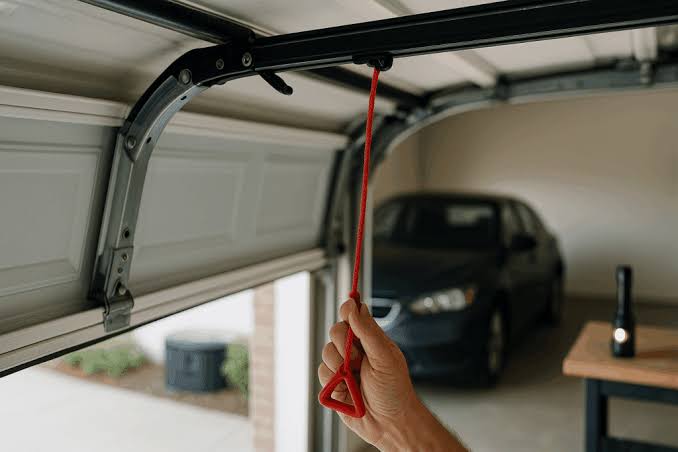
According to industry safety standards documented on Wikipedia, all residential openers manufactured after 1982 are required to have a manual release device for emergency egress. This is typically a red cord hanging from the opener rail or a lever located near the motor unit. Never attempt to lift the door without disengaging this lock first, as doing so can strip gears, damage the torsion spring, or cause severe personal injury.
Safety First: Critical Precautions
- Check Spring Tension: If your door feels impossibly heavy (over 50 lbs of lift force) or slams down violently, your springs may be broken. Stop immediately and call a professional.
- Clear the Area: Ensure no children, pets, or objects are in the door’s path before pulling the release.
- Use Two Hands: Always maintain a firm grip on the bottom panel or handle when lifting.
- Disconnect Power: Even during an outage, unplug the opener or flip the breaker to prevent sudden activation if power restores while you are working.
Step-by-Step: How To Get Garage Door To Open After Power Outage
Follow these precise steps to safely transition from automatic to manual operation.
1. Locate the Emergency Release Cord
Find the red handle or cord hanging from the center rail of your garage door opener track. In some belt-drive models, this may be a small lever or latch near the motor housing. Use a flashlight if visibility is poor.
2. Disengage the Trolley
Pull the red cord straight down toward the floor with a firm, steady motion. You should hear or feel a distinct “click” indicating the trolley has disconnected from the carriage. On lever-style systems, slide the latch into the “manual” position. Do not yank at an angle, as this can bend the release arm.
3. Lift the Door Manually
Stand inside the garage, grip the bottom edge or installed handle, and lift using your legs—not your back. A properly balanced door should require only 10–15 pounds of force to raise. Lift slowly until fully open, then secure it with C-clamps or locking pliers on the track below the rollers if you need to leave it open temporarily.
4. Exit or Enter Safely
Once open, proceed cautiously. Remember that without power, there are no auto-reverse sensors active. Manually lower the door when finished, maintaining control throughout the descent to prevent slamming.
Reconnecting Automatic Operation After Power Returns
Knowing how to get garage door to open after power outage is only half the battle. Proper reconnection prevents future malfunctions.
| Action | Correct Method | Common Mistake |
|---|---|---|
| Restoring Power | Plug in/breaker ON after door is closed | Turning power on while door is open |
| Re-engaging Trolley | Pull release cord toward motor until click | Forcing cord upward aggressively |
| Testing Cycle | Run full open/close cycle empty | Testing with vehicle underneath |
| Sensor Check | Verify LED lights are solid green | Ignoring blinking sensor indicators |
Detailed Reconnection Steps
- Close the Door Completely: Manual re-engagement requires the trolley and carriage to align. Lower the door fully to the floor.
- Restore Electricity: Plug the opener back in or reset the circuit breaker. Wait 30 seconds for the logic board to initialize.
- Re-engage the Release: Pull the red cord toward the motor unit (or slide the lever back) until you hear it snap into place. The trolley should now be locked to the drive mechanism.
- Test the System: Press the wall button. The door should move smoothly through one complete cycle. If it reverses mid-travel or makes grinding noises, the trolley may not be fully seated—repeat step 3.
- Verify Safety Sensors: Wave an object under the beam while closing. The door must reverse instantly. If not, realign the photo-eye sensors before regular use.
When to Call a Professional Instead
While most homeowners can handle how to get garage door to open after power outage, certain scenarios demand expert intervention:
- Broken Springs: Indicated by a loud bang prior to outage or extreme door weight. Torsion springs store lethal energy; DIY repair causes ~30,000 ER visits annually.
- Damaged Release Mechanism: If the cord snaps, lever bends, or trolley won’t re-engage after multiple attempts.
- Opener Motor Failure: If power is restored but the motor hums without movement, internal capacitors or gears may have failed during the surge.
- Repeated Disconnections: If the door frequently slips out of automatic mode, the carriage assembly likely needs replacement.
Expert Insight: “After extended outages, always test your auto-reverse feature before trusting the system. Voltage fluctuations during restoration can corrupt safety sensor calibration,” advises certified door technician Mike Reynolds, IDSIA-certified installer with 18 years of field experience.
FAQ: Common Questions About Garage Doors During Outages
Can I use my car to push the garage door open during a power outage?
Absolutely not. Vehicles exert uneven force that can buckle panels, derail tracks, or shatter windows. Always use the manual release and lift by hand. Car-related garage door damage accounts for significant insurance claims annually and voids most manufacturer warranties.
Will my garage door remote work once power comes back without reprogramming?
In 95% of cases, yes. Modern openers retain memory through non-volatile storage. However, if you experienced a lightning strike or severe surge, the logic board may have reset. Reprogramming takes less than 60 seconds per remote using the “Learn” button on the motor unit.
How long can I safely leave my garage door in manual mode?
Indefinitely, provided the door remains secured when open. However, leaving it disconnected for weeks can allow dust/debris to accumulate in the trolley track, causing re-engagement issues. We recommend cycling the automatic system monthly even during prolonged outages (via generator) to maintain lubrication.
Why does my door feel heavier than usual after restoring power?
This often indicates improper spring balance revealed by manual operation. Power-assisted opening masks weak springs. Have a professional perform a balance test: disconnect the opener and lift halfway—the door should stay stationary. If it drifts, springs need adjustment.
Is it safe to install a battery backup to avoid this problem entirely?
Yes, and increasingly recommended. Battery backup units (BBUs) like the LiftMaster BBU or Genie Aladdin Connect provide 10–20 cycles during outages. California Title 24 and several other state codes now mandate BBUs in new installations. Average cost: $150–$300 installed, providing peace of mind and compliance.
What if my opener doesn’t have a visible red release cord?
Pre-1990s models or commercial units may use alternative mechanisms: a sliding collar on the chain, a rotating knob on the motor shaft, or a pull-chain near the ceiling mount. Consult your model’s manual or search “[Brand + Model Number] manual release” online. Never improvise tools to force disengagement.
Conclusion: Stay Prepared, Stay Safe
Mastering how to get garage door to open after power outage transforms a stressful emergency into a manageable task. By understanding your release mechanism, following safe lifting protocols, and properly reconnecting afterward, you protect both your property and your family. Remember: when in doubt about spring tension or mechanical integrity, professional service is always the wiser investment.
Don’t wait for the next storm to test your knowledge. Share this guide on Facebook, X (Twitter), or Nextdoor so neighbors can prepare too. Tag someone who recently moved into an older home—they’ll thank you when the lights go out. Stay safe, stay prepared, and keep those doors moving smoothly! 💡🚪
Leave a Reply