Introduction
Is your garage door struggling to open, making loud noises, or suddenly dropping halfway? These are classic signs that your torsion spring may be worn out or improperly sized. Knowing how to choose the right torsion spring for garage door systems is critical not only for smooth operation but also for your family’s safety. In this comprehensive guide, we’ll walk you through everything you need to know—from measuring your current spring to understanding cycle life ratings—so you can make an informed decision with confidence.
Understanding Torsion Springs: What Are They and Why Do They Matter?
Before diving into selection criteria, it’s essential to understand what torsion springs do. Unlike extension springs that stretch along the sides of the door, torsion springs are mounted horizontally above the garage door opening on a metal shaft. They store mechanical energy when wound tightly and release it to lift the heavy door with minimal effort from the opener.
According to industry standards, a properly functioning torsion spring system can last between 10,000 to 30,000 cycles (one cycle equals one full open-and-close motion). For an average household using the garage door twice daily, this translates to roughly 7–15 years of service. However, choosing the wrong spring can drastically reduce lifespan and create hazardous conditions.
Key Insight: Torsion springs account for nearly 90% of the lifting force in modern garage doors. An incorrect choice can lead to premature opener failure, uneven door movement, or even dangerous snap-back incidents.
Step 1: Measure Your Existing Spring Accurately
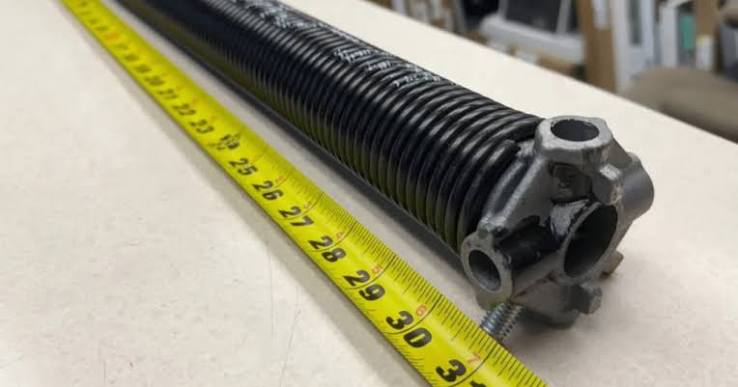
The most reliable way to choose a replacement is by measuring your current spring. If the old spring is still intact, gather these four critical measurements:
1. Wire Size
Measure the diameter of the spring wire using a caliper or ruler. Common sizes include:
- 0.218 inches
- 0.225 inches
- 0.234 inches
- 0.250 inches
Tip: Even a slight difference in wire size significantly affects strength. Always measure at multiple points since wear can cause inconsistencies.
2. Inside Diameter (ID)
This is the inner width of the spring coil. Standard residential torsion springs typically have an ID of:
- 1.75 inches
- 2.0 inches
- 2.25 inches
Ensure you measure across the inside of the coils, not the outside.
3. Length
Measure the total length of the spring when it is fully relaxed (not under tension). Common lengths range from 22 to 36 inches. Note that some systems use two springs of different lengths working together.
4. Wind Direction
Determine whether your spring is left-wound or right-wound. Stand facing the spring:
- If the coils twist clockwise away from you, it’s right-wound.
- If they twist counterclockwise, it’s left-wound.
Most dual-spring systems use one of each type to balance torque evenly.
Step 2: Calculate the Required Spring Weight
If your old spring is broken beyond recognition, you’ll need to calculate the required spring weight based on your door specifications. Here’s the formula professionals use:
Spring Weight = Door Weight ÷ Number of Springs × Lift Ratio
For example:
- A standard single-car garage door weighs approximately 130–150 pounds.
- A double-car door weighs 200–250 pounds.
- Most residential doors use a 4:1 lift ratio (meaning the spring provides four times the lifting assistance).
Let’s say you have a 200-pound door with two torsion springs:
- Required force per spring = 200 lbs ÷ 2 springs × 0.25 (lift ratio factor) = 25 lbs of assist per spring.
However, this simplified calculation doesn’t account for drum size, cable length, or track angle. For precise results, consult a garage door spring specification chart or use an online calculator provided by reputable manufacturers.
Step 3: Consider Cycle Life Ratings
Not all torsion springs are created equal. Manufacturers offer different cycle life ratings, which indicate how many open-close cycles the spring can endure before failing. Here’s a comparison:
| Cycle Rating | Estimated Lifespan | Best For | Cost Range |
|---|---|---|---|
| 10,000 cycles | 5–7 years | Budget-conscious homeowners | $ |
| 15,000 cycles | 8–10 years | Average households | $$ |
| 20,000+ cycles | 12–15+ years | High-use or premium setups | $ |
Expert Recommendation: If you use your garage door more than three times daily or live in an area with extreme temperature fluctuations, invest in a higher-cycle spring. The upfront cost is offset by reduced maintenance and replacement frequency.
Step 4: Match the Spring to Your Door Type
Different garage doors require specific spring configurations:
Single-Spring Systems
- Used for lighter doors (under 180 pounds).
- Easier to install but less balanced.
- Riskier if the spring fails, as there’s no backup.
Dual-Spring Systems
- Standard for most modern residential doors.
- Provides balanced lifting and redundancy.
- If one spring breaks, the other can temporarily support the door until replacement.
High-Lift or Vertical-Lift Doors
- Require specialized springs with higher torque ratings.
- Often used in workshops or commercial settings.
- Consult a professional for these configurations.
Common Mistakes to Avoid When Choosing Torsion Springs
Even experienced DIYers make these errors:
- Guessing the wire size: A 0.01-inch difference can mean the difference between a smoothly operating door and one that strains the opener.
- Ignoring wind direction: Installing a left-wound spring where a right-wound one is needed will prevent proper winding and cause immediate failure.
- Overlooking drum size: The cable drum diameter affects how much cable wraps per rotation, influencing spring tension requirements.
- Buying cheap imports: Low-quality springs may lack proper heat treatment, leading to premature fatigue and breakage.
Safety First: When to Call a Professional
Torsion springs operate under extreme tension—often exceeding 200 pounds of force. Improper handling can result in serious injury or property damage. Always consider hiring a certified technician if:
- You’re uncomfortable working with high-tension components.
- Your door uses a non-standard configuration (e.g., side-mounted torsion).
- You notice additional issues like bent tracks, damaged cables, or misaligned rollers.
Remember: A professional installation typically costs $150–$350, including labor and parts, which is far less than medical bills from an accident.
FAQ Section
Q1: How do I know if my torsion spring needs replacement?
A: Look for visible gaps in the coils, rust, or a door that feels heavier than usual. If the door doesn’t stay open when manually lifted halfway, the spring has likely lost tension.
Q2: Can I replace just one spring in a dual-spring system?
A: It’s strongly recommended to replace both springs simultaneously. Since they’ve endured the same number of cycles, the second spring is likely near failure too. Replacing only one creates imbalance and increases stress on the new spring.
Q3: What’s the difference between torsion and extension springs?
A: Torsion springs mount above the door and twist to store energy, offering smoother operation and better safety. Extension springs stretch along the horizontal tracks and are generally found in older or lighter-duty systems.
Q4: How often should I lubricate my torsion spring?
A: Apply a silicone-based or lithium grease spray every 6–12 months. Avoid WD-40, as it attracts dust and doesn’t provide long-lasting lubrication.
Q5: Will a stronger spring damage my garage door opener?
A: Yes, if the spring provides too much lift, the opener’s motor may struggle during closing, leading to premature wear. Always match the spring rating to your door’s weight.
Q6: Can temperature affect torsion spring performance?
A: Absolutely. Cold weather makes metal brittle, increasing breakage risk, while heat can cause expansion and loss of tension. Choose springs rated for your climate zone if possible.
Conclusion
Choosing the right torsion spring for your garage door isn’t just about matching dimensions—it’s about ensuring safety, longevity, and smooth operation. By accurately measuring your existing spring, calculating the correct weight, selecting an appropriate cycle life, and avoiding common pitfalls, you can extend your door’s lifespan and avoid costly repairs.
If you found this guide helpful, share it with friends or neighbors who might be struggling with their garage doors. And remember, when in doubt, always consult a licensed professional. Your safety is worth far more than any DIY savings.
Stay safe, and keep those garage doors rolling smoothly! 🚪🔧
Leave a Reply