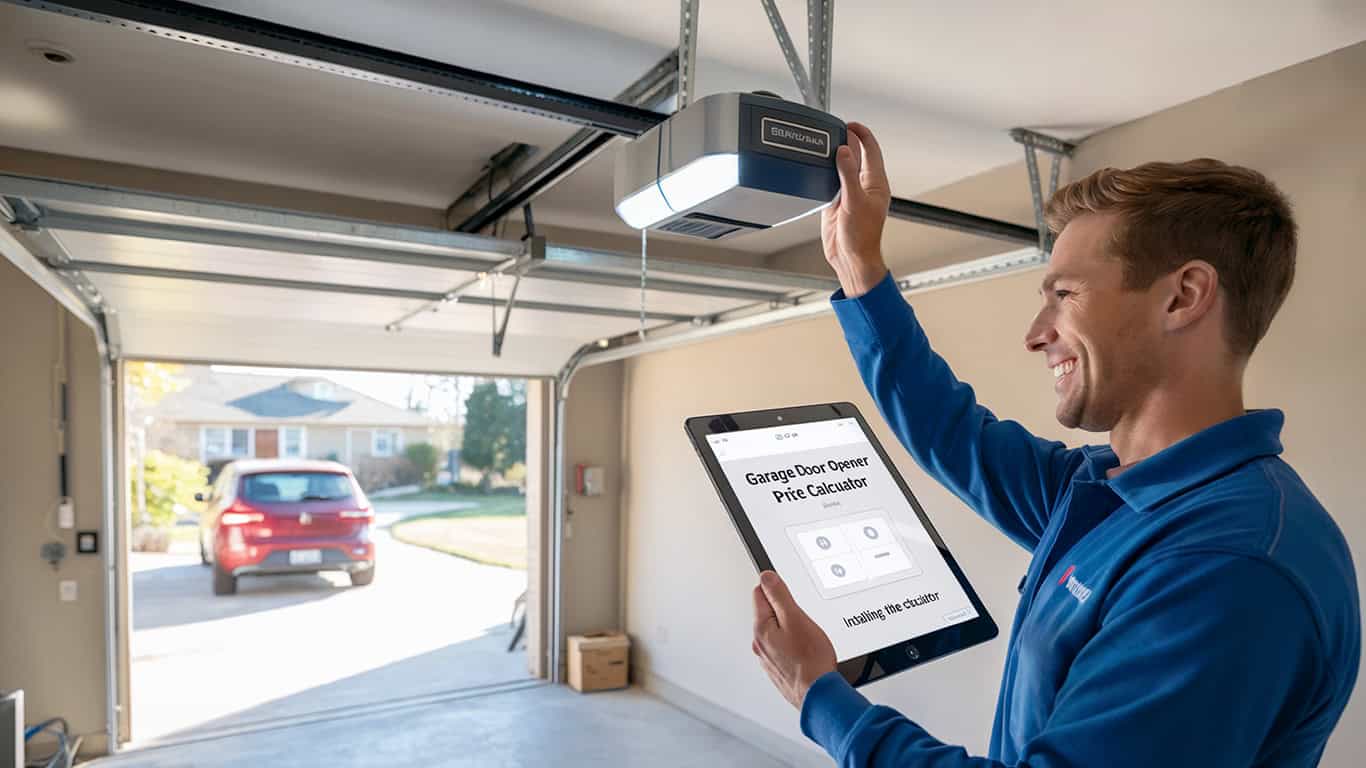
Have you ever stood in your driveway, pressing the remote button repeatedly, only to hear silence from your garage? It is a frustrating experience that disrupts your daily routine and raises immediate security concerns. If your current unit is failing or outdated, you are likely wondering how much to get a new garage door opener without breaking the bank. This guide breaks down every cost factor so you can make an informed decision with confidence.
Understanding the Average Cost Breakdown
When budgeting for a replacement, it is essential to look beyond just the price tag of the hardware. The total expense comprises the unit itself, professional labor, and any necessary additional parts. For most US homeowners, the total cost typically ranges between $350 and $1,200.
The wide variance depends heavily on the type of opener you choose and the complexity of the installation. A basic chain-drive model will sit at the lower end of this spectrum, while high-end smart openers with battery backups will push toward the higher end. Understanding these components helps you allocate your budget effectively.
| Component | Estimated Cost Range |
|---|---|
| Basic Chain-Drive Unit | $150 – $250 |
| Mid-Range Belt-Drive Unit | $250 – $400 |
| Premium Smart/Wi-Fi Unit | $400 – $600+ |
| Professional Installation Labor | $150 – $350 |
| Additional Accessories (Keypads, Sensors) | $50 – $150 |
Note: Prices may vary based on your location and local labor rates.
What Factors Influence the Price of a Garage Door Opener?
Several variables dictate the final invoice you receive from a contractor or retailer. Being aware of these factors allows you to control costs where possible.
1. Drive Type Mechanism
The mechanism that lifts the door is the primary cost driver. Chain-drive openers are the most affordable but tend to be noisier, making them suitable for detached garages. Belt-drive systems use rubber belts, offering quieter operation ideal for homes with bedrooms above the garage. Screw-drive units are less common but require less maintenance. Each step up in comfort and quietness adds to the price.
2. Horsepower (HP) Rating
Your door’s weight determines the necessary power. Standard single-car doors usually require ½ HP, while heavy double-car wooden doors may need ¾ HP or 1 HP. Higher horsepower motors cost more upfront but ensure longevity and smoother operation for heavier doors. Undersizing your motor can lead to premature failure, costing you more in repairs later.
3. Smart Features and Connectivity
In 2026, connectivity is no longer a luxury but a standard expectation for many. Openers with Wi-Fi capability allow you to monitor and control your garage via smartphone apps. While convenient, these smart garage door openers carry a premium. However, they often integrate with home security systems, adding value beyond mere convenience.
4. Installation Complexity
If you are replacing an existing unit with a similar model, labor costs remain low. However, if your garage lacks proper electrical outlets or requires structural reinforcement for the mounting bracket, labor hours increase. Always ask your installer if there are potential “hidden” structural issues before agreeing to a fixed price.
DIY vs. Professional Installation: Which Saves More Money?
One of the most common questions homeowners face is whether to install the unit themselves. While DIY can save on labor costs, it comes with risks.
The Case for DIY Installation
If you are handy with tools and have experience with basic electrical wiring, you might save $150–$350 by doing it yourself. Many manufacturers provide detailed manuals and video tutorials. However, you must ensure you have the right tools, including a sturdy ladder, wrenches, and a helper to hold the motor unit in place.
The Case for Professional Installation
Hiring a professional ensures the job is done safely and correctly. Experts know how to balance the door springs properly—a task that can be dangerous for amateurs. Improperly balanced doors can cause the opener to fail prematurely. Moreover, professional installations often come with a warranty on both labor and parts, providing peace of mind.
For most homeowners, especially those unfamiliar with torsion springs, professional installation is recommended. The safety risks and potential for incorrect setup outweigh the initial savings.
Hidden Costs You Should Anticipate
Beyond the base price, several ancillary costs can surprise unprepared buyers. Being aware of these prevents budget overruns.
- Disposal Fees: Some contractors charge a small fee to remove and dispose of your old opener.
- Electrical Upgrades: If your garage does not have a nearby outlet, an electrician may need to install one, costing an additional $100–$200.
- Safety Sensor Alignment: Modern codes require photo-eye sensors. If your existing brackets are incompatible with the new unit, you may need to purchase new mounting hardware.
- Battery Backup Units: With increasing power outages due to weather events, adding a battery backup is wise. This feature can add $100–$150 to your total but ensures access during blackouts.
How to Choose the Right Opener for Your Home
Selecting the right model involves matching features to your specific lifestyle needs. Consider the following criteria:
- Noise Level: If your garage is attached to your home, prioritize belt-drive models for quiet operation.
- Security Needs: Look for models with rolling code technology, which changes the access code every time you use the remote. This prevents code grabbing by thieves.
- Smart Home Integration: If you use Alexa, Google Home, or Apple HomeKit, ensure the opener is compatible with your ecosystem.
- Warranty Length: A longer warranty often indicates higher build quality. Look for at least a 5-year warranty on the motor and 1 year on parts.
For more detailed technical specifications on garage door safety standards, you can refer to resources like Wikipedia’s page on garage door openers, which provides historical context and mechanical insights.
Maintenance Tips to Extend Lifespan
Once you have invested in a new opener, proper maintenance ensures it lasts its full 10–15 year lifespan. Regular upkeep is far cheaper than premature replacement.
- Lubricate Moving Parts: Every six months, apply a silicone-based lubricant to the chain or belt and the roller bearings. Avoid grease, which attracts dust.
- Test Safety Reversals: Monthly, place a 2×4 piece of wood on the floor under the door. Close the door; it should reverse immediately upon contact. If it does not, adjust the sensitivity settings.
- Tighten Hardware: Vibration from operation can loosen bolts and brackets. Check and tighten all mounting hardware annually.
- Keep Tracks Clean: Wipe down the metal tracks with a damp cloth to remove debris that could hinder movement.
FAQ Section
How long does a garage door opener last?
Most modern garage door openers last between 10 to 15 years with proper maintenance. Factors such as frequency of use, climate conditions, and maintenance habits significantly influence longevity. If your unit is older than 10 years, consider proactive replacement to avoid sudden failure.
Can I install a new opener on my existing rail system?
In some cases, yes. If the new opener is from the same manufacturer and uses a similar drive type, you might reuse the rail. However, mixing brands or drive types (e.g., switching from chain to belt) usually requires a new rail kit. Always consult the installation manual or a professional to ensure compatibility.
Is a smart garage door opener worth the extra cost?
For many homeowners, yes. Smart openers provide real-time notifications if the door is left open, allow remote access for delivery drivers, and integrate with security systems. The convenience and enhanced security often justify the $100–$200 premium over standard models.
What horsepower do I need for a double-car garage door?
For a standard double-car garage door, ½ HP is usually sufficient. However, if the door is made of heavy wood or has insulation, upgrading to ¾ HP is advisable. Higher horsepower ensures smoother operation and reduces strain on the motor, extending its life.
Does insurance cover garage door opener replacement?
Typically, homeowners insurance does not cover replacement due to wear and tear or mechanical failure. However, if the damage results from a covered peril such as a storm, fire, or vandalism, your policy may cover the cost. Check with your insurance provider for specific details regarding your coverage.
Conclusion
Determining how much to get a new garage door opener involves balancing upfront costs with long-term value. While you can spend as little as $350 for a basic setup, investing $800–$1,200 in a quiet, smart, and professionally installed unit offers superior convenience and security. Remember to factor in installation labor, potential electrical upgrades, and maintenance costs.
By choosing the right drive type, horsepower, and features for your specific needs, you ensure a reliable entry point for your home for years to come. Don’t let a failing opener disrupt your life—take action today.
Found this guide helpful? Share it with your neighbors on Facebook or Twitter to help them prepare for their next home upgrade!
Leave a Reply