Introduction
There is nothing quite as frustrating as waking up, hitting the remote to open your garage, and hearing a loud bang followed by silence. Your car is trapped, your schedule is disrupted, and you are left wondering about the repair bill. If you are currently in this situation, you are likely asking yourself: how much is it to replace spring on garage door?
The cost can vary significantly depending on the type of spring, your location, and whether you choose professional help or a DIY approach. In this guide, we will break down the exact costs, explain the differences between spring types, and provide crucial safety information to help you make the best decision for your home and budget.
Understanding the Costs: What Do You Really Pay?
When budgeting for this repair, it is essential to understand that the price is not just for the metal coil itself. The total bill comprises parts, labor, and potentially additional hardware replacements.
Average Cost Breakdown (2026 Estimates)
For most homeowners in the United States, replacing a garage door spring costs between $150 and $350 for a single spring and $250 to $500 for a pair. However, several factors influence this range.
| Component | Estimated Cost | Notes |
|---|---|---|
| Parts Only (DIY) | $40 – $100 | Price varies by spring type and wire size. |
| Labor (Professional) | $100 – $200 | Includes service call and installation time. |
| Total Professional Cost | $150 – $350+ | For one spring; pairs cost more. |
| Emergency/After-Hours | +$50 – $100 | Extra fees for weekends or nights. |
Note: Prices may vary based on your state and local market conditions.
Why Do Prices Vary So Much?
- Spring Type: Torsion springs (mounted above the door) are generally more expensive than extension springs (mounted on the sides) due to their complexity and higher weight capacity.
- Cycle Rating: Springs are rated by “cycles” (one open and close equals one cycle). A standard spring lasts 10,000 cycles, while high-cycle springs last 25,000+. Higher cycles mean a higher upfront cost but longer lifespan.
- Door Weight: Heavier doors (like solid wood or insulated steel) require thicker, heavier-gauge springs, which cost more.
Torsion vs. Extension Springs: Which One Do You Have?
Identifying your spring type is the first step in determining the cost. Most modern homes use torsion springs, while older homes or lighter doors may use extension springs.
Torsion Springs
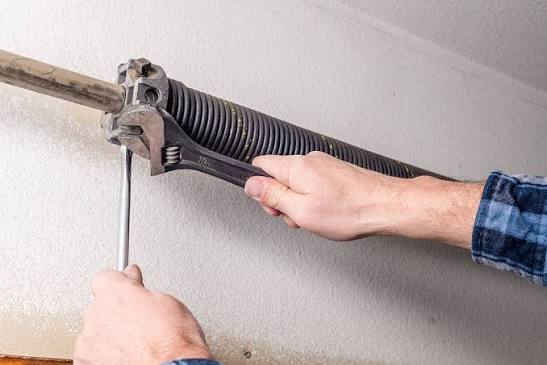
These are mounted horizontally on a metal shaft above the closed garage door. They work by twisting (torque) to lift the door.
- Cost: Higher ($200–$400 installed).
- Lifespan: Longer (15,000–20,000 cycles).
- Safety: Safer when installed correctly, but extremely dangerous to handle due to high tension.
Extension Springs
These run parallel to the horizontal tracks on both sides of the door. They stretch to provide lifting force.
- Cost: Lower ($150–$250 installed).
- Lifespan: Shorter (10,000 cycles).
- Safety: Prone to snapping violently if a safety cable is not installed.
Expert Insight: According to industry standards, if one torsion spring breaks, it is highly recommended to replace both. Since they were installed at the same time, the second spring is likely near the end of its life as well. Replacing both saves you from paying for a second service call in the near future.
Is It Safe to Replace Garage Door Springs Yourself?
This is the most critical question. While DIY can save you $100–$150 in labor, garage door springs are under immense tension. A slipping winding bar can cause severe injury, including broken bones or lacerations.
The Dangers of DIY
- High Tension: A torsion spring can store enough energy to launch tools across the room.
- Specialized Tools: You need specific winding bars, vice grips, and clamps. Standard household tools are often insufficient and unsafe.
- Calibration Errors: Incorrectly balanced doors can damage the opener or cause the door to crash down.
When to Call a Professional
You should hire a licensed technician if:
- You have never worked with high-tension springs before.
- Your door uses torsion springs (higher risk).
- The cable has also snapped or come off the drum.
- You do not have the proper winding bars.
For more detailed safety standards regarding garage door systems, you can refer to the Consumer Product Safety Commission guidelines or general mechanical safety principles outlined on Wikipedia’s Garage Door page.
Step-by-Step: How Professionals Replace Springs
If you decide to hire a pro, here is what you can expect during the service visit. Understanding the process helps you verify that the job is done correctly.
- Disconnection: The technician disconnects the garage door opener to prevent accidental activation.
- Release Tension: Using winding bars, they carefully unwind the old spring to release the stored energy. This is the most dangerous step.
- Removal: The old spring is removed from the torsion tube.
- Installation: The new spring is slid onto the tube. It must match the exact length, wire size, and inside diameter of the old one.
- Winding: The technician winds the new spring to the correct number of quarter-turns. This is calculated based on the door’s height and weight.
- Testing: The door is manually lifted to check for balance. It should stay in place when opened halfway.
Signs Your Garage Door Spring Is About to Break
Preventative maintenance can save you from being stranded. Watch out for these warning signs:
- Loud Noise: A loud bang or snap indicates a break has already occurred.
- Gap in the Spring: Look for a visible separation in the coils of a torsion spring.
- Door Won’t Open: The opener hums, but the door only moves a few inches.
- Uneven Movement: The door tilts to one side as it opens.
- Cable Slack: The lift cables appear loose or detached from the bottom brackets.
FAQ: Common Questions About Garage Door Spring Replacement
1. How long do garage door springs last?
On average, garage door springs last between 7 to 9 years with normal use (approx. 10,000 cycles). High-cycle springs can last up to 15 years. Frequent use or extreme temperature fluctuations can shorten this lifespan.
2. Can I replace just one torsion spring?
Technically, yes, but it is not recommended. Since both springs were installed at the same time, they have endured the same wear and tear. Replacing only one puts uneven stress on the system and means you will likely need another repair soon. Always replace torsion springs in pairs.
3. Does homeowners insurance cover broken garage door springs?
Generally, no. Homeowners insurance covers sudden, accidental damage from events like storms or fires. Broken springs are considered “wear and tear” or maintenance issues, which are the homeowner’s responsibility.
4. Why is my garage door heavy to lift manually?
If the door feels heavy, the springs are likely losing tension or have broken. A properly balanced door should be easy to lift with one hand. If it is heavy, do not force it, as this can damage the opener or tracks.
5. What is the difference between standard and high-cycle springs?
Standard springs are rated for 10,000 cycles. High-cycle springs are made from higher-quality oil-tempered wire and are rated for 25,000+ cycles. While they cost 20–30% more, they last twice as long, making them cost-effective in the long run.
6. Can a broken spring damage my garage door opener?
Yes. When a spring breaks, the opener motor has to lift the entire weight of the door (which can be 200–400 lbs). This strains the motor, gears, and belts, potentially leading to premature opener failure.
Conclusion
Knowing how much is it to replace spring on garage door empowers you to budget effectively and avoid overpaying. With average costs ranging from $150 to $350, this is a manageable home repair, but it carries significant safety risks.
While DIY might seem tempting to save money, the potential for serious injury makes professional installation the wisest choice for most homeowners. Remember to replace torsion springs in pairs and consider upgrading to high-cycle springs for longer durability.
Did you find this guide helpful? Share it with your neighbors on Facebook or Twitter to help them prepare for unexpected garage door issues. Stay safe, and keep your garage running smoothly!
Leave a Reply