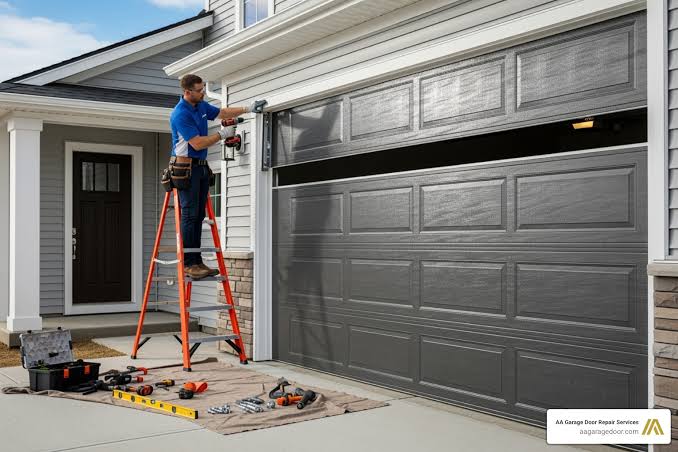
Is your old garage door loud, drafty, or simply ruining your home’s curb appeal? You are definitely not alone in facing this frustrating home improvement dilemma. If you are trying to figure out exactly how much does a new garage door installed cost, you have come to the right place. Let’s break down the numbers together so you can make a confident, budget-friendly decision.
How Much Does A New Garage Door Installed Cost in 2026?
Let’s get straight to the point. On average, the national cost to replace a garage door ranges from $850 to $2,800.
However, most US homeowners spend around $1,400 for a standard 16×7 foot double-door replacement. This price typically includes both the door itself and professional labor.
If you opt for a basic, single-layer steel door, you might pay as low as $600. On the other end of the spectrum, custom-carved wooden doors with smart-home integration can easily push your budget past $5,000. Understanding these baseline numbers is the first step to avoiding sticker shock.
What Factors Affect the Total Garage Door Installation Price?
When you call a contractor, they won’t just give you a flat rate. Several specific variables will dictate your final bill.
- Door Size: Single doors (8×7 feet) are significantly cheaper than double doors (16×7 feet) or custom oversized doors for RVs.
- Material: This is the biggest price driver. We will break this down shortly.
- Insulation (R-Value): If your garage is attached to your home, you need insulated doors to maintain indoor temperatures. Higher insulation means a higher price.
- Design and Windows: Adding decorative windows or custom wood overlays can add $300 to $1,000 to the base price.
- Labor and Disposal: Professional installation usually costs between $200 and $500. This often includes the safe removal and dumping of your old door.
How Do Different Materials Impact the Final Cost?
Choosing the right material balances your aesthetic preferences with your budget. Here is a quick comparison of the most common garage door materials in the US market:
| Material | Average Cost (Door Only) | Durability | Best For |
|---|---|---|---|
| Steel | $500 – $1,800 | High | Most homeowners; low maintenance. |
| Wood | $1,500 – $4,500+ | Moderate | Luxury homes; high curb appeal. |
| Aluminum/Glass | $1,200 – $3,000 | Moderate | Modern architecture; coastal areas. |
| Fiberglass | $800 – $2,000 | Low-Moderate | Coastal regions; resists salt corrosion. |
Note: Steel remains the most popular choice in the US because it offers the best balance of affordability and durability.
To understand the mechanical evolution of these materials over the decades, you can read more about the general history and mechanics on the official Garage door Wikipedia page.
Professional Installation vs. DIY: Which is Better?
Many homeowners wonder if they can save money by installing the door themselves. While it is technically possible, it comes with significant risks. Here is a quick breakdown to help you decide.
Professional Installation
- Pros: Guaranteed safety, preserves manufacturer warranty, includes old door disposal, completed in half a day.
- Cons: Costs an extra $200 to $500 in labor fees.
DIY Installation
- Pros: Saves you the labor costs; highly rewarding if you have advanced carpentry skills.
- Cons: Extremely dangerous (garage door springs are under lethal tension), voids most warranties, requires specialized tools, and takes a full weekend.
Expert Advice: Unless you are a seasoned contractor, always hire a professional. The cost of a hospital visit from a snapping torsion spring far outweighs the $300 you might save on labor!
4 Steps to Get an Accurate Garage Door Quote
To ensure you get a fair price and a door that actually fits, follow these concrete steps when shopping for a replacement:
- Measure Your Opening Precisely: Use a steel tape measure. Measure the width and height of the opening to the nearest 1/8 inch (for example, exactly 16 feet wide and 84 inches high).
- Check the Headroom and Backroom: You need at least 10 to 12 inches of headroom above the door opening to accommodate the metal track and the motor opener.
- Determine Your Insulation Needs: If your garage is attached to your house, aim for an R-value of 12 to 18 for proper temperature control. If it is a detached shed, an R-value of 6 to 9 is perfectly sufficient.
- Request 3 Local Estimates: Contact licensed, insured local contractors. Ask them for a strict, itemized breakdown showing the cost of materials, labor, and the disposal fee for your old door.
Frequently Asked Questions (FAQ)
1. Does a new garage door actually increase my home’s value? Yes, absolutely! According to real estate experts, replacing your garage door is one of the best return-on-investment (ROI) projects you can do. You can expect to recoup roughly 90% to 95% of the installation cost in added home value at resale.
2. How long does it take to install a new garage door? A professional crew can typically remove your old door and install the new one in about 4 to 6 hours. If you are also replacing the metal tracks and the motorized opener, expect the job to take a full day.
3. Can I just replace the damaged garage door panels instead of the whole door? You can replace individual panels if the door is relatively new and the manufacturer still produces that exact model. However, if your door is over five years old, finding a matching panel is nearly impossible, and replacing the entire door is usually more cost-effective.
4. Do big-box stores like Home Depot or Lowe’s install garage doors? Yes, both Home Depot and Lowe’s offer installation services. However, they do not use their own employees for this task. They subcontract the actual labor to vetted, local professional installation companies in your area.
Conclusion
Upgrading your garage door is a fantastic way to boost your home’s energy efficiency, security, and overall curb appeal. While the average cost to install a new garage door sits around $1,400, your specific project will depend on your chosen materials, size, and insulation needs. By understanding these costs and following a structured quoting process, you can ensure a smooth, stress-free renovation.
Found this guide helpful? Don’t keep it to yourself! Share this article on your Facebook, Pinterest, or X (Twitter) to help your friends and family budget for their next home improvement project!
Leave a Reply