Introduction
There are few sounds more alarming to a homeowner than the sudden, deafening bang of a snapping metal cable in the middle of the night. If your garage door refuses to open or feels impossibly heavy, you are likely wondering, “How do you know if garage door spring is broken?” This is a stressful situation that can leave your vehicle trapped and your home insecure.
Understanding the specific symptoms of spring failure is not just about convenience; it is a matter of safety and preventing further damage to your opener system. In this comprehensive guide, we will walk you through the definitive signs of a broken spring, explain the mechanics behind the failure, and provide actionable steps to handle the situation safely without risking injury.
The Critical Warning Signs: How Do You Know If Garage Door Spring Is Broken?
Garage door springs are the workhorses of your entryway. They counterbalance the weight of the door, which typically ranges from 130 to 400 pounds. When one fails, the entire system is compromised. Here are the five primary indicators that answer the question, how do you know if garage door spring is broken.
1. A Loud Bang or Snap Noise
The most unmistakable sign is auditory. Torsion springs store an immense amount of kinetic energy. When they fail, that energy releases instantly, creating a noise comparable to a gunshot or a firecracker going off inside your garage.
- What it sounds like: A sharp, metallic ping followed by a reverberating echo.
- Why it happens: Steel fatigue causes the coil to snap at its weakest point, usually near the winding cone or center bracket.
- Immediate Action: Do not attempt to operate the door. The sudden release of tension can cause cables to derail or drums to spin violently.
2. The Door Feels Extremely Heavy Manually
Your garage door should be balanced. Even with the opener disconnected, you should be able to lift the door manually with one hand using only moderate effort. If the spring is broken, you are lifting the dead weight of the steel panels.
- The Test: Pull the emergency release cord (usually red) to disengage the opener. Attempt to lift the door halfway.
- The Result: If the door slams down immediately or requires two adults to budge, the counterbalance system has failed.
- Safety Note: Never let go of the door while testing this. An unbalanced door can fall rapidly, causing severe crush injuries.
3. Visible Gap in the Torsion Spring Coil
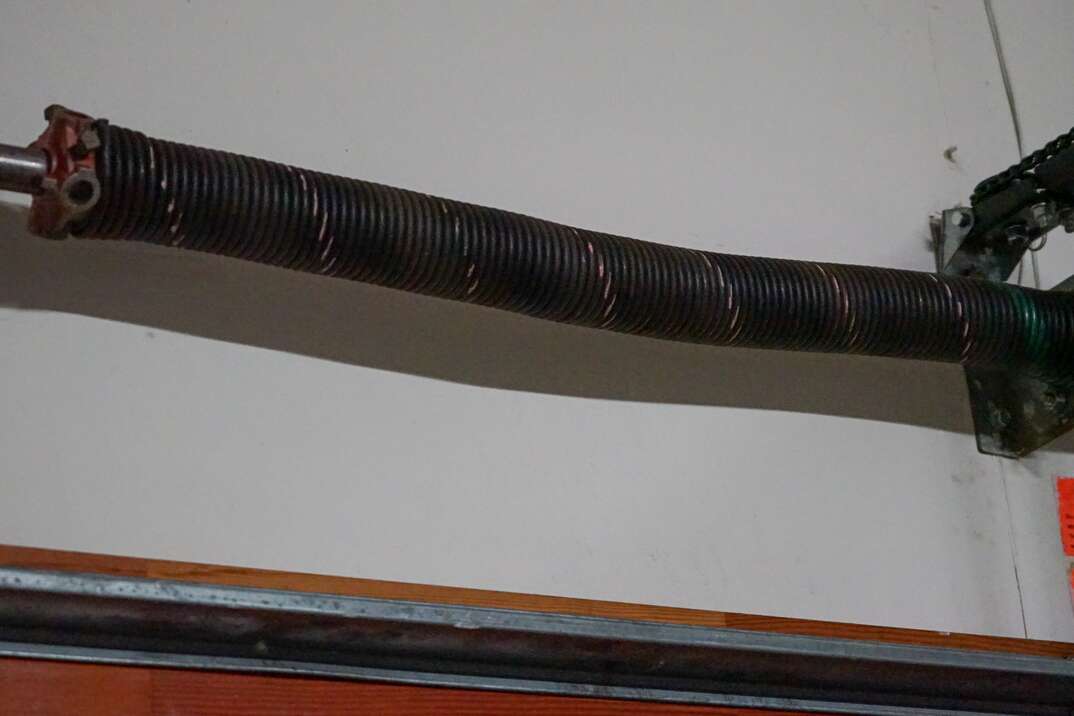
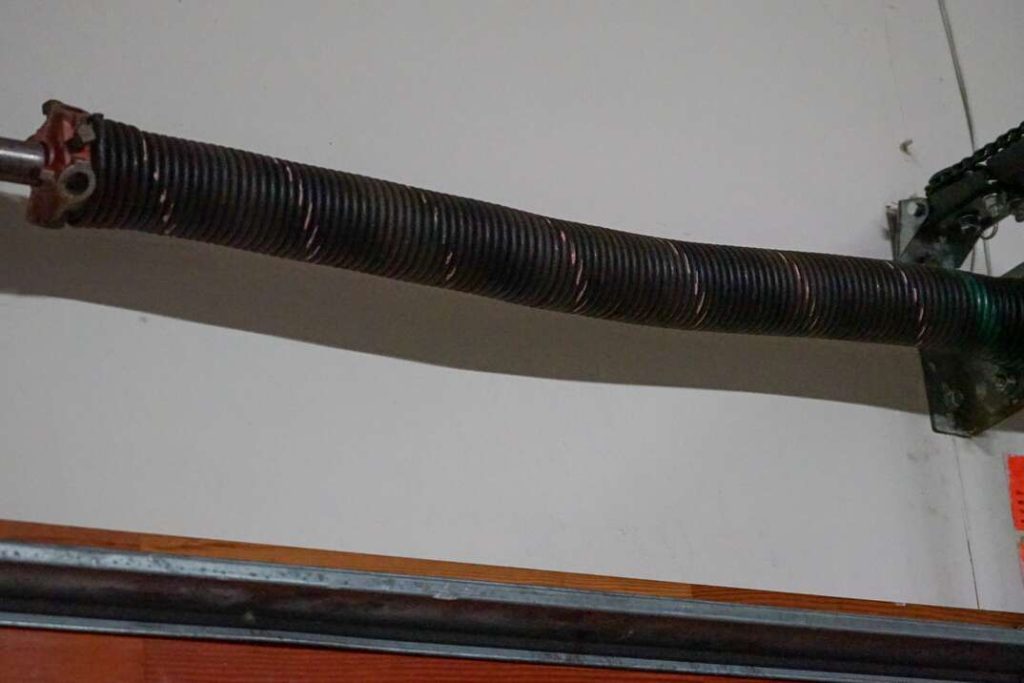
For those asking how do you know if garage door spring is broken without hearing a noise, visual inspection is key. Torsion springs are mounted horizontally above the door opening.
- What to look for: Inspect the spring(s) above the header. A broken torsion spring will have a visible separation or gap between the coils where the steel snapped.
- Extension Springs: If you have extension springs (mounted vertically along the tracks), look for a broken safety cable or a snapped coil at the end pulley.
- Wear Indicators: Many modern torsion springs have a painted line running through the center. If this line is misaligned or separated, the spring has fractured.
4. The Opener Strains or Fails to Lift
Automatic openers are designed to assist movement, not lift dead weight. When a spring breaks, the motor must compensate for hundreds of pounds of missing counterbalance force.
- Symptoms: The motor hums loudly but the door doesn’t move, or the door rises only a few inches before stopping.
- Risk Factor: Continuing to run the opener against a broken spring can strip the drive gear, burn out the capacitor, or snap the trolley carriage.
- Data Point: According to industry repair data, over 60% of premature opener failures are directly linked to operating the system with compromised springs.
5. Cables Are Loose, Frayed, or Off the Drum
Springs and cables work in tandem. When a spring snaps, the tension on the lift cables changes instantly.
- Visual Check: Look at the cable drums on either side of the torsion tube. Are the cables slack? Have they jumped off the groove?
- Secondary Damage: Loose cables often fray against metal brackets or wrap unevenly around the drum, creating secondary repair costs.
- Correlation: If you see cable issues and the door is heavy, the spring is almost certainly the root cause.
Torsion vs. Extension Springs: Identifying Your System
To accurately diagnose the problem, you must understand which system you own. This knowledge helps professionals provide accurate quotes and ensures you identify the correct failure point.
| Feature | Torsion Springs | Extension Springs |
|---|---|---|
| Location | Horizontal bar above door opening | Vertical tracks on both sides |
| Mechanism | Twisting torque via winding cones | Stretching tension via pulleys |
| Lifespan | 15,000 – 30,000 cycles | 10,000 – 15,000 cycles |
| Failure Sign | Visible gap in coil center | Snapped coil or broken safety cable |
| Safety Level | Higher (contained on shaft) | Lower (requires safety containment cable) |
| Repair Complexity | High (requires winding bars) | Moderate (still dangerous under tension) |
Expert Insight: “Most homes built after 1990 utilize torsion systems because they offer smoother operation and better balance. However, older extension systems are still common. Regardless of type, never assume a spring is ‘just old’—metal fatigue is invisible until catastrophic failure.” — Certified Garage Door Technician Association Guidelines
Why Do Garage Door Springs Break? Understanding the Mechanics
Prevention starts with understanding causation. While asking how do you know if garage door spring is broken addresses the symptom, knowing the why addresses longevity. For a deeper technical understanding of the mechanical principles involved, you can refer to the Wikipedia entry on Garage Doors, which details the historical evolution and engineering standards of these counterbalance systems.
Cycle Life and Metal Fatigue
Every spring is rated for a specific number of cycles (one open + one close = one cycle). Standard builder-grade springs are rated for 10,000 cycles, roughly 7-10 years of normal use. High-cycle springs can reach 50,000+ cycles. Once the metal exceeds its elastic limit, microscopic fractures propagate until failure occurs.
Lack of Lubrication
Friction generates heat and accelerates wear. Dry coils grind against each other during operation. Applying white lithium grease or silicone-based lubricant every six months reduces friction and extends lifespan by up to 30%. Avoid WD-40, as it attracts dust and gumms up the mechanism.
Temperature Fluctuations
Steel contracts in extreme cold and expands in heat. In northern US climates, winter mornings see the highest rate of spring failures. The thermal contraction increases internal stress on already fatigued metal, pushing it past the breaking point during the first morning cycle.
Improper Balance or Installation
If the original installer used undersized springs to save money, the system operates under constant overload. Similarly, if the door itself has binding rollers or bent tracks, the springs must work harder to overcome resistance, drastically shortening their service life.
Safety First: What NOT To Do When a Spring Breaks
When homeowners ask how do you know if garage door spring is broken, the next logical question is often “Can I fix it myself?” The responsible answer requires emphasizing danger.
- NEVER Use Winding Bars Without Training: Torsion springs contain enough stored energy to break arms, shatter fingers, or cause fatal head trauma. Professional winding bars are specifically sized; makeshift tools like screwdrivers can slip catastrophically.
- DO NOT Operate the Opener: Disconnect power immediately. Running the motor against dead weight damages expensive components.
- AVOID Lifting the Door Manually: Unless absolutely necessary for emergency egress, keep the door closed. Secure it with locking pliers on the track below a roller to prevent accidental dropping.
- SKIP YouTube DIY Tutorials for Replacement: While informative, videos cannot account for your specific door weight, spring size, or installation quirks. One miscalculation in winding turns results in dangerous over-tensioning.
Frequently Asked Questions (FAQ)
Q1: Can I replace just one torsion spring if my door has two?
Technically yes, but professionally no. If one spring broke due to age/fatigue, the matching spring is equally worn and will likely fail within weeks. Replacing both simultaneously ensures balanced tension and saves on future service calls. Most reputable companies mandate dual replacement for warranty validity.
Q2: How much does garage door spring replacement cost in 2026?
National averages range from $250 to $450 for professional torsion spring replacement, including parts and labor. Extension spring replacements typically run $180–$300. Prices vary based on spring size, cycle rating, geographic location, and after-hours emergency fees. Always get itemized quotes that specify cycle ratings.
Q3: How long do new garage door springs last?
Standard residential torsion springs last 10,000 cycles (approximately 7–10 years with 3-4 daily uses). High-cycle springs (25,000–50,000 cycles) can last 15–25 years. Your usage pattern matters significantly; households using the garage as a primary entrance accumulate cycles faster than those using it primarily for storage.
Q4: Is it safe to manually open the door with a broken spring?
Only in emergencies. The door weighs its full mass without counterbalance assistance. Use proper lifting technique, secure the door in the open position with clamps or vice grips on the track, and never leave it unattended. Treat this as a temporary measure until professional repair arrives.
Q5: Can a broken spring damage my garage door opener?
Absolutely. Operating an opener against a broken spring forces the motor to lift 300+ pounds of dead weight. This strips nylon drive gears, burns out capacitors, and warps rail assemblies. If you suspect spring failure, disconnect the opener immediately to prevent cascading damage that doubles repair costs.
Q6: What maintenance prevents premature spring failure?
Biannual lubrication with silicone spray or white lithium grease is essential. Additionally, test door balance quarterly by disconnecting the opener and lifting manually—the door should stay put at mid-height. Address binding rollers, bent tracks, or loose hardware promptly, as these issues transfer excess stress to the springs.
Conclusion: Prioritize Safety Over Speed
Knowing how do you know if garage door spring is broken empowers you to respond quickly and safely. Whether it’s the telltale bang, the impossible weight, or the visible gap in the coil, recognizing these signs early prevents secondary damage and protects your family from injury. Remember: garage door springs are precision-engineered safety components, not weekend DIY projects.
Your garage door is the largest moving object in your home. Treating its maintenance with respect ensures reliable access and peace of mind for years to come. Don’t wait for complete failure—if you’ve noticed any warning signs discussed above, schedule a professional inspection today.
Found this guide helpful? Share it with neighbors, friends, or family members who might be struggling with a stubborn garage door. A quick share on Facebook, Nextdoor, or X could save someone from a dangerous DIY mistake or an expensive opener replacement. Stay safe, stay informed, and keep your home running smoothly!
Leave a Reply