Introduction
A broken garage door spring can leave you stranded and frustrated, but figuring out the right replacement doesn’t have to be overwhelming. If you are wondering, “how do I know which garage door spring to buy,” you are in the right place. This guide will walk you through identifying, measuring, and selecting the perfect spring for your home safely and confidently.
How Do I Know Which Garage Door Spring To Buy: The Basics
Before purchasing a replacement, you must identify the type of spring your garage door currently uses. Garage doors generally rely on one of two systems: torsion springs or extension springs. Buying the wrong type will not only fail to lift your door but can also pose severe safety risks.
According to the International Door Association (IDA), garage door springs typically last between 10,000 to 20,000 cycles. For an average household, this translates to about 7 to 10 years of regular use. Recognizing the signs of wear early can save you from sudden failures.
Torsion vs. Extension Springs: What is the Difference?
Understanding the basic mechanics of a spring is crucial before attempting any DIY replacement. Here is how to tell them apart:
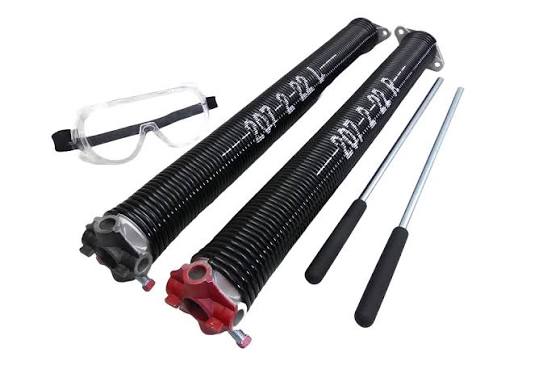
- Torsion Springs: These are mounted horizontally on a metal shaft above the closed garage door. You will usually see one or two tightly wound springs. They are known for smoother operation and longer lifespans.
- Extension Springs: These are located on both sides of the door, running parallel to the horizontal tracks. They stretch and contract as the door moves. They often have a safety cable running through the center.
Step-by-Step: How to Measure Your Garage Door Spring
Accuracy is non-negotiable when measuring garage door springs. A discrepancy of even a fraction of an inch can cause the door to operate poorly or become dangerous. Follow these concrete steps:
- Ensure Safety First: Disconnect the garage door opener and ensure the door is fully closed to release tension safely.
- Measure the Wire Diameter: Use a digital caliper or a precise tape measure. Measure the wire thickness to the nearest 0.001 inches. For example, a common residential size is 0.250 inches.
- Measure the Inside Diameter (ID): Measure the inside of the spring coil. Most residential torsion springs have an inside diameter of exactly 2 inches.
- Measure the Spring Length: Measure the length of the spring only, excluding the winding cones or hooks at the ends. Common lengths are 24 inches or 26 inches.
- Determine the Wind Direction: For torsion springs, note if it is a left-wound or right-wound spring. Stand inside the garage facing the door. If the spring is on the left, it is usually right-wound, and vice versa.
Pro Tip: Always measure both springs if your system uses two. Even if only one is broken, they should be replaced in pairs to ensure balanced lifting.
Calculating the Right Weight and Size for Your Door
Springs are engineered to counterbalance the specific weight of your garage door. To find the correct spring, you need to know your door’s weight.
- Single-car steel doors typically weigh between 130 to 150 lbs.
- Double-car steel doors usually weigh between 200 to 250 lbs.
- Wooden or insulated doors can weigh upwards of 300 to 400 lbs.
If you do not know the weight, you can use a bathroom scale. Disconnect the opener, lift the door manually to the halfway point, and place the scale under the bottom edge. The reading will give you a close approximation of the door’s weight.
Torsion Spring vs. Extension Spring: Pros and Cons
Choosing between upgrading to torsion or sticking with extension springs depends on your budget and door usage.
| Feature | Torsion Springs | Extension Springs |
|---|---|---|
| Lifespan | Longer (15,000–20,000 cycles) | Shorter (10,000 cycles) |
| Noise Level | Quiet and smooth | Can be noisy during operation |
| Safety | Safer (contained on a shaft) | Requires safety cables to prevent snapping |
| Cost | Higher initial cost | More budget-friendly |
| Space Needed | Requires headroom above the door | Requires space along the side tracks |
Where to Buy and What to Look For
When you are ready to purchase, buy from reputable garage door parts suppliers rather than generic hardware stores. Look for springs that are oil-tempered and feature a protective coating to resist rust.
Always verify the supplier’s return policy and warranty. A high-quality spring should come with at least a 1-year warranty. Avoid unusually cheap options, as they often use inferior steel that fatigues quickly.
Frequently Asked Questions (FAQ)
1. Can I replace just one garage door spring?
If your door has two torsion springs, it is highly recommended to replace both at the same time. Since they were installed at the same time, the surviving spring is likely near the end of its lifespan. Replacing both ensures balanced operation and prevents a second breakdown shortly after.
2. How much does a replacement garage door spring cost?
A single high-quality torsion spring typically costs between $40 and $100, depending on the size and cycle rating. Extension springs are generally cheaper, ranging from $20 to $40 each. Professional installation will add labor costs, usually bringing the total to $150–$350.
3. What happens if I buy the wrong size garage door spring?
An undersized spring will not lift the door completely, straining the garage door opener and causing premature motor failure. An oversized spring will make the door slam shut violently, posing a severe safety hazard to people and property.
4. How long do garage door springs usually last?
Standard springs are rated for 10,000 cycles (one open and one close equals one cycle). High-cycle springs can last up to 25,000 or 30,000 cycles. For average use, expect a lifespan of 7 to 10 years.
5. Is it dangerous to replace a garage door spring myself?
Yes, it can be extremely dangerous. Torsion springs store a massive amount of kinetic energy. If handled improperly without the correct winding bars, the spring can snap violently, causing severe injury or property damage. If you are unsure, always hire a certified professional.
Conclusion
Knowing how do I know which garage door spring to buy comes down to three simple steps: identifying the spring type, measuring it with precision, and matching it to your door’s weight. By following this guide, you can ensure a smooth, safe, and long-lasting repair.
Don’t let a broken spring disrupt your day. Take accurate measurements, choose a high-quality replacement, and prioritize safety above all else.
Found this guide helpful? Share it with your friends and neighbors on Facebook, Twitter, or Pinterest to help them tackle their garage door repairs with confidence!
Leave a Reply