Dealing with a stuck garage door is incredibly frustrating, especially when you are in a rush to leave for work. If you are currently stressing over your budget and wondering how much does a garage door spring cost to repair, you are not alone. Let us break down the exact costs and solutions so you can get your door moving smoothly again without breaking the bank.
How Much Does A Garage Door Spring Cost To Repair on Average?
When homeowners ask, “How much does a garage door spring cost to repair?”, the answer generally falls between $150 and $350 for a professional service call.
However, the final price tag depends heavily on the type of spring you have, the size of your door, and your local labor rates. According to recent industry data, parts typically account for 30% to 40% of the bill, while labor makes up the rest.
Here is a quick breakdown of what you can expect to pay:
- Service Call Fee: $50 – $100 (Often waived if you proceed with the repair).
- Spring Parts: $30 – $150 (Depending on the type and weight rating).
- Labor Costs: $100 – $200 (Usually takes a professional less than an hour).
Torsion vs. Extension Springs: Which One Do You Have?
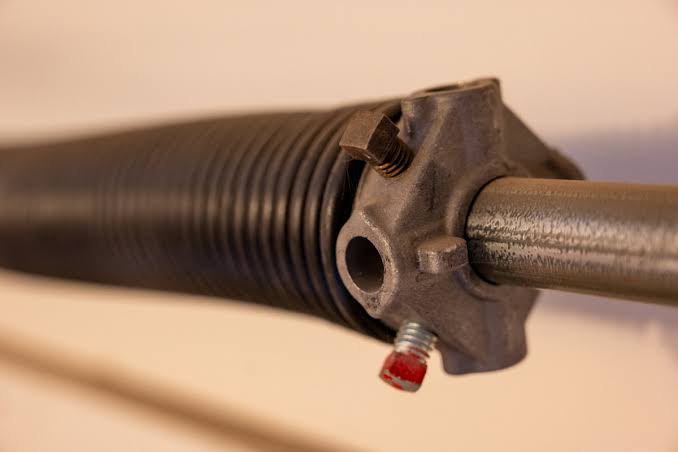
To understand your repair costs, you first need to identify which spring system your door uses. A standard residential garage door relies heavily on the counterbalance system provided by these high-tension springs to operate safely.
| Spring Type | Location | Average Part Cost | Average Labor Cost | Total Average Cost |
|---|---|---|---|---|
| Torsion Spring | Mounted horizontally above the closed door | $70 – $150 | $100 – $200 | $170 – $350 |
| Extension Spring | Mounted parallel to the tracks on both sides | $30 – $80 | $80 – $150 | $110 – $230 |
Torsion springs are heavier and more complex, which is why they cost more to replace. Extension springs are simpler but require replacing in pairs to maintain balance.
DIY vs. Professional Repair: Pros and Cons
Many homeowners consider fixing the spring themselves to save money. However, safety must be your top priority. According to the International Door Association (IDA), over 30,000 garage door-related injuries occur annually, mostly due to improper spring handling.
DIY Repair
- Pros: Save $100+ on labor costs, learn a valuable new skill, and buy parts at your own convenience.
- Cons: Extremely high risk of severe injury, requires specialized tools (like steel winding bars), and voids any existing manufacturer warranties.
Professional Repair
- Pros: 100% safe execution, includes a comprehensive parts and labor warranty, and the job is completed in under 60 minutes.
- Cons: Higher upfront cost and requires scheduling an appointment.
Expert Verdict: Unless you have prior experience and the correct steel winding bars, always hire a licensed professional for torsion spring repairs.
Step-by-Step Guide to Replacing an Extension Spring
If you have an extension spring and feel confident in your DIY abilities, here is a concrete, step-by-step tutorial to replace it safely.
Tools needed: Stepladder, adjustable wrench, pliers, 2 heavy-duty C-clamps, and a sturdy wooden stick.
- Secure the door: Disconnect the automatic garage door opener. Close the door completely and place 2 heavy-duty C-clamps on the metal tracks just below the bottom roller. This prevents the door from sliding down unexpectedly.
- Release the tension: If your system has a pulley and cable, use a sturdy wooden stick to carefully push the bottom roller bracket upward just enough to slacken the extension spring.
- Remove the old spring: Using your pliers, carefully unhook the S-hook from the bottom bracket. Disconnect the pulley at the top and remove the broken spring.
- Install the new spring: Hook the new spring into the bottom bracket. Crucial step: Ensure the safety cable is threaded directly through the center of the new spring to prevent injury if it snaps.
- Reattach and tension: Reconnect the pulley to the top bracket. Remove the C-clamps from the track. Stretch the spring to the proper length—there should be about 1 to 2 inches of gap between the coils when the door is fully closed.
- Test the balance: Reconnect the opener and test the door. If it struggles to close, slightly reduce the tension.
Warning Signs Your Spring is About to Break
Catching a failing spring early can prevent sudden damage to your garage door opener. Watch out for these red flags:
- A loud bang: You heard a gunshot-like noise from the garage (the sound of a spring snapping under tension).
- A visible gap: If you have a torsion spring, look for a noticeable half-inch gap in the middle of the coil.
- Heavy door: The door feels incredibly heavy when you try to lift it manually halfway up.
- Crooked door: The door appears jammed or crooked when opening, indicating one spring broke before the other.
Frequently Asked Questions
1. How long do garage door springs typically last?
Springs are rated by “cycles” (one cycle equals one full open and close). A standard spring is rated for 10,000 cycles, which translates to roughly 7 to 10 years of normal daily use.
2. Can I just repair a broken spring instead of replacing it?
No. Once a garage door spring breaks, it has lost its structural integrity and metal fatigue has set in. It cannot be welded or patched; it must be completely replaced.
3. Should I replace both springs if only one is broken?
Yes, absolutely. If you have a dual torsion spring system and one breaks, the other is likely close to failing. Replacing only one will create an unbalanced door, which will prematurely burn out your new spring and strain your garage door opener.
4. What causes a garage door spring to break prematurely?
The most common culprits are lack of maintenance, extreme temperature fluctuations, and high humidity causing rust. Applying a silicone-based lubricant to the springs once a year can significantly extend their lifespan.
Leave a Reply