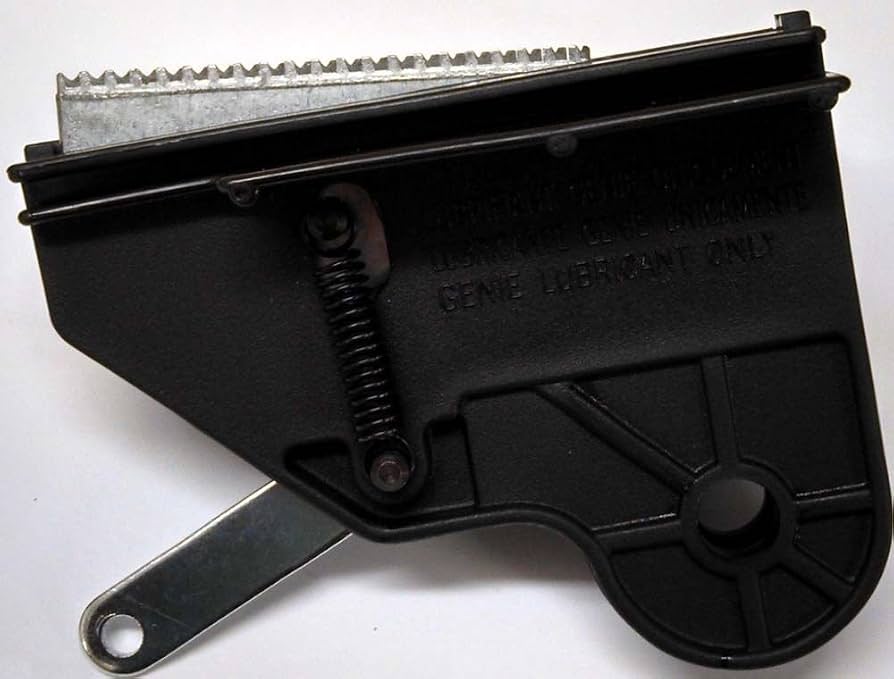
Have you ever stared at your silent garage door, wondering if a small plastic component is really the culprit behind the malfunction? You are not alone. Thousands of homeowners face this exact frustration when their Genie garage door opener screw drive carriage all models system fails to operate smoothly. Identifying the correct carriage can feel overwhelming given the variety of Genie models produced over the decades, but understanding this critical component is the first step toward restoring peace and security to your home.
What Is a Screw Drive Carriage and Why Does It Matter?
Before diving into specific models, it is essential to understand what we are actually talking about. In a screw-drive garage door opener, the motor turns a long threaded steel rod (the screw drive). The carriage is the nut-like assembly that travels along this rod. As the rod spins, the carriage moves back and forth, physically pulling or pushing the arm connected to your garage door.
Unlike chain-drive or belt-drive systems that use a looped mechanism, the screw-drive system relies entirely on the interaction between the threaded rod and the carriage. If the carriage wears out, strips, or breaks, the motor may run, but the door will not move. This makes the carriage one of the most critical wear-and-tear components in your entire opener system.
According to industry standards, screw-drive openers are known for their durability and low maintenance, but they are not immune to mechanical failure. The carriage bears the brunt of the physical force required to lift a heavy wooden or steel door, often hundreds of times a year.
How to Identify Your Genie Model Number
One of the most common mistakes homeowners make is ordering a replacement part based solely on the appearance of their old carriage. Genie has produced numerous variations over the years, and while they may look similar, they are not always interchangeable. To ensure you get the right part for Genie garage door opener screw drive carriage all models, you must identify your specific model number.
Here is how to find it:
- Locate the Label: Look for a sticker or metal plate on the back or side of the motor head unit. It is often near the light lens or on the rear housing.
- Check the Manual: If you still have the original installation manual, the model number is listed on the front cover.
- Common Model Series: Genie screw-drive models often start with prefixes like “G,” “IS,” “CM,” or “H.” For example, models like the G5000, ISL950, or CM7600 are popular screw-drive variants.
If the label is faded or missing, you can also identify the model by measuring the length of the screw drive tube and counting the threads per inch, though this method requires more technical precision.
Compatibility: Which Carriage Fits Which Model?
Genie has streamlined its parts inventory over the years, meaning many older models share the same carriage design as newer ones. However, there are distinct differences between standard-duty and heavy-duty carriages.
Standard vs. Heavy-Duty Carriages
| Feature | Standard Carriage | Heavy-Duty Carriage |
|---|---|---|
| Material | High-impact plastic composite | Reinforced nylon/metal hybrid |
| Weight Capacity | Up to 350 lbs | Up to 500+ lbs |
| Best For | Single-car aluminum doors | Double-car wood/steel doors |
| Noise Level | Quieter operation | Slightly louder due to rigidity |
| Lifespan | 7–10 years | 10–15 years |
Most modern Genie screw-drive openers use a universal carriage design that fits the majority of models manufactured after 2005. For older models, particularly those from the 1990s, you may need a specific legacy part. Always cross-reference your model number with the manufacturer’s compatibility chart before purchasing.
For a deeper understanding of garage door mechanics and safety standards, you can refer to the Wikipedia page on Garage Door Openers, which provides historical context and technical evolution of these systems.
Signs Your Screw Drive Carriage Needs Replacement
How do you know if the carriage is the problem? Often, the symptoms are subtle at first but become more pronounced over time. Here are the most common indicators:
- Grinding Noise: If you hear a grinding or stripping sound when the door operates, the internal threads of the carriage may be worn down.
- Door Slippage: The door starts to open but then slips back down slightly, or the motor runs but the door does not move.
- Visible Damage: Upon inspection, you see cracks, chips, or significant wear on the plastic housing of the carriage.
- Uneven Movement: The door jerks or moves unevenly, indicating that the carriage is not engaging smoothly with the screw drive.
Ignoring these signs can lead to complete failure, leaving your garage door stuck in an open or closed position. In some cases, a failed carriage can damage the screw drive itself, leading to a much more expensive repair.
Step-by-Step Guide to Replacing the Carriage
Replacing the carriage on a Genie screw-drive opener is a manageable DIY project for most homeowners. Follow these steps carefully to ensure safety and proper installation.
Tools Needed:
- Ladder
- Socket wrench set
- Screwdriver (Phillips and flathead)
- Lubricant (specifically designed for screw drives)
- Replacement carriage kit
Instructions:
- Disconnect Power: Unplug the opener or turn off the circuit breaker to prevent accidental activation.
- Release Tension: Pull the emergency release cord to disconnect the door from the opener. Manually close the door completely.
- Remove the Old Carriage: Locate the carriage on the screw drive. Remove the bolts or clips securing it to the door arm. Slide the carriage off the end of the screw drive tube. Note: Some models require you to remove the end cap of the tube first.
- Clean the Screw Drive: Use a clean rag to wipe away old grease and debris from the threaded rod. Inspect the rod for any damage or bending.
- Install the New Carriage: Slide the new carriage onto the screw drive. Ensure it is oriented correctly (the side with the attachment bracket should face the door). Reattach the door arm using the provided hardware.
- Lubricate: Apply a thin layer of screw-drive lubricant to the threaded rod. Avoid using WD-40 or general-purpose grease, as these can attract dirt and degrade the plastic.
- Reconnect and Test: Plug the opener back in. Re-engage the door with the opener by pulling the release handle toward the motor. Test the door operation by opening and closing it several times. Listen for smooth, quiet movement.
Maintenance Tips to Extend Carriage Life
Prevention is always better than cure. By following a few simple maintenance routines, you can significantly extend the life of your Genie garage door opener screw drive carriage all models system.
- Regular Lubrication: Lubricate the screw drive every six months. Use only lubricants recommended by Genie, as they are formulated to work with the specific materials used in the carriage and rod.
- Check Alignment: Ensure the opener is properly aligned with the door. Misalignment puts extra stress on the carriage and can cause premature wear.
- Inspect Regularly: Once a year, visually inspect the carriage and the screw drive for signs of wear, corrosion, or damage.
- Balance the Door: An unbalanced garage door puts excessive strain on the opener. Disconnect the opener and manually lift the door halfway. If it does not stay in place, the springs may need adjustment by a professional.
FAQ Section
Q: Can I use a universal carriage for any Genie screw-drive opener?
A: While many Genie models share a common carriage design, it is not truly universal for all models. Older models (pre-2000) may require specific parts. Always check your model number against the manufacturer’s compatibility list to ensure a proper fit.
Q: How often should I replace the screw drive carriage?
A: There is no fixed timeline, as it depends on usage frequency and door weight. On average, a well-maintained carriage lasts 7–10 years. If you notice grinding noises or slippage, it is time for an inspection and potential replacement.
Q: Why is my garage door making a grinding noise?
A: A grinding noise usually indicates that the threads on the carriage or the screw drive are worn out or stripped. It could also mean the carriage is misaligned. Immediate inspection is recommended to prevent further damage.
Q: Can I lubricate the screw drive with regular grease?
A: No. Regular grease or oil can attract dust and debris, which acts as an abrasive on the plastic carriage. Always use a dedicated screw-drive lubricant, which is designed to stay in place and protect the components without attracting dirt.
Q: Is it safe to replace the carriage myself?
A: Yes, replacing the carriage is generally safe for DIYers if you follow proper safety protocols, such as disconnecting power and releasing tension from the door. However, if you are uncomfortable working with mechanical components or if the door springs are involved, consult a professional technician.
Conclusion
Understanding the role of the Genie garage door opener screw drive carriage all models is key to maintaining a reliable and secure garage door system. By identifying your model, recognizing the signs of wear, and performing regular maintenance, you can avoid costly repairs and ensure smooth operation for years to come. Whether you are a seasoned DIYer or a first-time homeowner, taking proactive steps to care for your opener pays off in convenience and peace of mind.
If you found this guide helpful, please share it with your friends and neighbors on social media. Helping others understand their home maintenance needs builds a stronger, more informed community.
Leave a Reply