Introduction
There is nothing quite as frustrating as pressing the remote button, hearing the motor hum, and watching your garage door lift only two or three inches before jerking to a halt. It leaves you stranded, unsure if you’re dealing with a minor glitch or a major mechanical failure. If your garage door goes up a few inches and stops, you are likely facing a safety sensor issue, a track obstruction, or a tension problem.
In this guide, we will walk you through the exact steps to diagnose and fix this common issue safely. We’ll cut through the technical jargon and provide clear, actionable advice so you can get your door working smoothly again without calling an expensive technician immediately.
Why Does My Garage Door Reverse After Lifting Slightly?
Before diving into tools and repairs, it is crucial to understand why modern garage doors behave this way. Since 1993, US federal law has required all residential garage door openers to have an automatic reverse mechanism. This is a critical safety feature designed to prevent entrapment, particularly for children and pets.
When your door lifts slightly and then reverses or stops, the opener’s logic board believes it has hit an obstacle. It is not “broken” in the traditional sense; it is actually doing its job by protecting you from potential injury. However, false positives are common. According to industry data from the International Door Association (IDA), nearly 60% of service calls for “door reversal” are due to simple misalignments or dirty sensors rather than motor failure.
Understanding this intent helps us troubleshoot effectively. We aren’t fighting the machine; we are correcting the signal it receives.
Check the Safety Eyes: The Most Common Culprit
The first place you should look is the photo-eye sensors. These are small plastic units located near the bottom of the garage door tracks, usually about 6 inches off the ground. They shoot an invisible beam across the doorway. If that beam is interrupted, the door will stop or reverse immediately.
Step-by-Step Sensor Inspection
- Check the LED Lights: Look at the sensors. One should have a steady green light (power), and the other should have a steady amber or red light (alignment). If either light is blinking or off, there is your problem.
- Clean the Lenses: Use a soft, dry microfiber cloth to wipe the lenses. Dust, spiderwebs, or even sunlight glare can disrupt the beam.
- Verify Alignment: Stand behind one sensor and look at the other. They must be pointing directly at each other. Even a millimeter shift caused by a bumped bracket can break the connection.
- Tighten the Brackets: If they look misaligned, loosen the wing nuts slightly, adjust the angle until the lights turn solid, and retighten.
Pro Tip: If the sun is shining directly into the sensor lens during the day, it can blind the receiver. Try shading the sensor with your hand to see if the door operates correctly. If it does, consider installing a sun shield.
Inspect the Tracks for Physical Obstructions
If your sensors are aligned and clean, the next likely reason your garage door goes up a few inches and stops is physical resistance in the tracks. The opener is sensitive to force; if it detects too much drag, it assumes the door is hitting a car or a person.
What to Look For
- Debris: Small rocks, twigs, or hardened mud can get lodged in the track channel.
- Dents: A slight dent in the metal track can cause the rollers to bind.
- Loose Hardware: Check the bolts securing the track to the wall and ceiling. Vibration over time can loosen these, causing the track to shift out of level.
Use a level to ensure the vertical tracks are perfectly plumb. If they are leaning inward or outward, the door will bind as it lifts. Tightening the lag screws often resolves this issue instantly. For more detailed information on track alignment standards, you can refer to general safety guidelines on Wikipedia.
Evaluate the Force and Limit Settings
Modern openers have two critical adjustment settings: Force and Travel Limits. If these are set incorrectly, the door will stop prematurely.
- Force Setting: This determines how much power the motor uses to lift the door. If set too low, the motor gives up when it encounters normal friction.
- Limit Setting: This tells the motor how far to travel before stopping. If the “up” limit is set too short, the door will stop after moving just a few inches.
How to Adjust Settings Safely
Most openers have two dials or digital buttons labeled “Force” and “Limit.”
- Locate the adjustment panel on the motor unit (usually hanging from the ceiling).
- Increase the Up Force setting by one increment. Do not max it out immediately, as this can damage the door if it hits an actual obstacle.
- Test the door. If it still stops, increase the force slightly more.
- If the door lifts but stops before fully opening, adjust the Up Limit switch to allow more travel distance.
Note: Always consult your specific manufacturer’s manual, as adjustment methods vary between brands like LiftMaster, Chamberlain, and Genie.
The Hidden Issue: Broken Springs or Cables
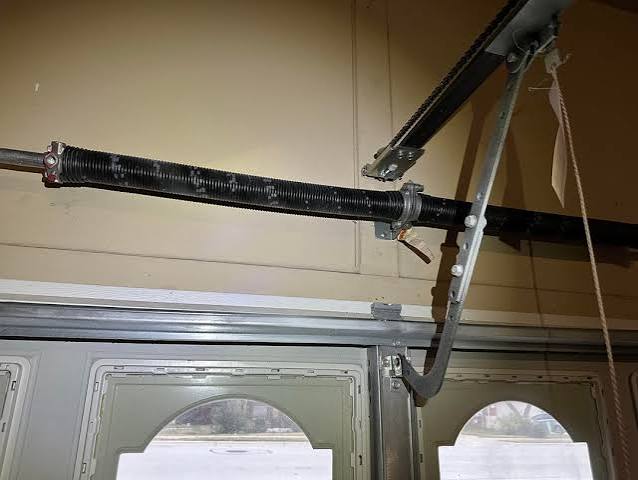
If the door feels extremely heavy when you try to lift it manually (with the release cord pulled), you may have a broken spring. Torsion springs (located above the door) or extension springs (along the tracks) provide the counterbalance that makes the door easy to lift.
When a spring breaks, the opener motor has to lift the entire weight of the door—often 150 to 300 pounds. Most residential motors are not designed for this load and will stall or reverse to protect themselves.
Visual Inspection Checklist
| Component | Sign of Failure | Action Required |
|---|---|---|
| Torsion Spring | Visible gap in the coil above the door | Call a Professional |
| Extension Spring | Broken cable or snapped spring along track | Call a Professional |
| Cables | Frayed wires or loose drum winding | Call a Professional |
Warning: Never attempt to repair or replace garage door springs yourself. They are under extreme tension and can cause severe injury or death if handled improperly. This is strictly a job for certified technicians.
Lubrication and Maintenance: Preventing Future Stops
Sometimes, the issue isn’t a breakage but a lack of maintenance. Dry rollers and hinges create friction, which the opener interprets as an obstruction.
Recommended Maintenance Routine
- Lubricate Moving Parts: Use a silicone-based lubricant or white lithium grease on the rollers, hinges, and springs. Avoid WD-40, as it attracts dust and dries out quickly.
- Tighten Roller Brackets: Ensure the rollers are snug in their brackets but still spin freely.
- Inspect the Chain/Belt: If you have a chain-drive opener, check for slack. A loose chain can cause jerky movement.
Performing this maintenance twice a year can extend the life of your opener by up to 5 years and prevent unexpected stops.
FAQ Section
1. Why does my garage door go up a few inches and stop only in the cold?
Temperature changes affect metal tracks and lubrication. In cold weather, grease can thicken, increasing friction. Additionally, metal tracks contract, potentially misaligning slightly. Try switching to a cold-weather silicone lubricant and checking sensor alignment.
2. Can a weak remote battery cause the door to stop mid-cycle?
No. Once the signal is sent, the opener operates independently of the remote. If the door starts moving, the remote has done its job. Mid-cycle stops are related to the door’s mechanics or safety systems, not the remote control.
3. How do I reset my garage door opener?
To reset most units, unplug the opener for 30 seconds, then plug it back in. You may need to reprogram your remotes and keypad. Consult your manual for model-specific reset codes, as this varies by brand.
4. Is it dangerous if my garage door keeps reversing?
Yes. While the reversal is a safety feature, a door that reverses unpredictably indicates a malfunction. It could fail to reverse when it should hit an obstacle, posing a serious risk to children, pets, or vehicles. Address the issue immediately.
5. When should I call a professional instead of DIY?
Call a pro if you suspect broken springs, snapped cables, or if the door falls rapidly when disconnected from the opener. Also, if you’ve checked sensors, tracks, and force settings and the issue persists, it may be an internal circuit board failure requiring expert diagnosis.
Conclusion
Dealing with a garage door goes up a few inches and stops scenario is stressful, but it is rarely a catastrophic failure. In most cases, the solution is as simple as wiping a sensor lens, clearing a pebble from the track, or adjusting a force dial. By systematically checking the safety eyes, inspecting for obstructions, and ensuring proper lubrication, you can resolve the issue safely and efficiently.
Remember, safety is paramount. If you encounter broken springs or complex electrical issues, do not hesitate to call a licensed technician. Your safety is worth more than the cost of a service call.
If you found this guide helpful, please share it with your neighbors or on social media. Helping others troubleshoot their home maintenance issues builds a safer, more informed community. Have you fixed a similar issue? Let us know in the comments below!
Leave a Reply