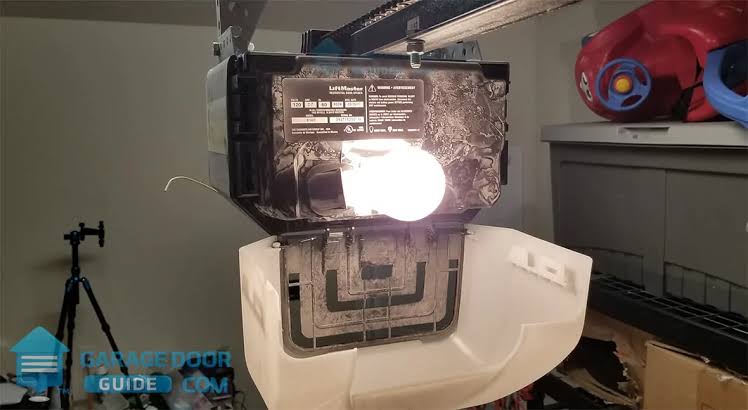
Introduction
Have you ever swapped out a burnt-out light bulb in your garage, only to discover that your garage door remote suddenly stopped working? It is a frustrating and surprisingly common scenario for many homeowners. If you are wondering, “Do You Need Special Light Bulbs For Garage Door Openers?” the short answer is yes. Using the wrong bulb can cause radio frequency interference, shorten the lifespan of your opener, or even create a safety hazard. In this guide, we will break down exactly what you need to know to choose the right bulb, avoid costly mistakes, and keep your garage running smoothly.
H2: Do You Need Special Light Bulbs For Garage Door Openers?
The simple truth is that garage door openers operate in a unique environment. They are subjected to constant vibration, temperature fluctuations, and enclosed spaces. While a standard household bulb might physically fit into the socket, it is not always designed to handle these specific conditions.
Most major manufacturers, such as Chamberlain and LiftMaster, design and test their openers to be used with standard size A19 incandescent light bulbs or similar-sized compact fluorescent lamps
support.chamberlaingroup.com. However, the industry is shifting. Today, you can absolutely use LED bulbs, but they must be specifically rated for garage door opener use. A specialized bulb ensures that the delicate electronic receiver in your opener is not overwhelmed by stray electromagnetic signals.
H2: Why Regular LED Bulbs Can Ruin Your Garage Door Remote
One of the most frequent issues homeowners face after upgrading to energy-efficient lighting is the sudden loss of remote control range. This happens because of Radio-Frequency Interference (RFI).
Standard LED bulbs contain internal drivers and microchips that regulate power. In cheaper or non-rated LED bulbs, these components can emit unintended radio signals
support.chamberlaingroup.com. Because garage door openers rely on specific radio frequencies (usually 315 MHz or 390 MHz) to communicate with your remote, this stray noise can drown out the signal.
The result? You might have to stand directly under the opener to make the door open, or the remote may fail entirely. Fortunately, manufacturers have solved this. Specialized garage door LED bulbs are engineered with shielded drivers that create little or no radio frequency interference, ensuring your remote works flawlessly
store.geniecompany.com.
H2: Incandescent vs. LED: Which is Best for Your Opener?
Choosing between traditional incandescent bulbs and modern LEDs comes down to balancing cost, lifespan, and compatibility. Below is a quick comparison to help you decide.
| Feature | Standard Incandescent Bulb | Specialized Garage Door LED |
|---|---|---|
| Interference Risk | None (Zero RFI) | Very Low (if specifically rated) |
| Lifespan | ~1,000 hours | ~15,000 to 25,000 hours |
| Heat Emission | High (can warm the opener housing) | Very Low (runs cool) |
| Vibration Resistance | Low (filament can break easily) | High (solid-state components) |
| Energy Efficiency | Low (uses 60W–100W) | High (uses 7W–12W) |
Note: For electric garage door openers, it is much better to use specialized LED light bulbs because they last significantly longer than compact fluorescent bulbs and generate minimal heat
www.garaga.com. Less heat means less thermal stress on the opener’s plastic lens cover and internal circuitry.
H2: Step-by-Step Guide to Safely Changing Your Garage Door Light Bulb
Replacing the bulb is a straightforward task, but safety must come first. Follow these concrete steps to ensure a secure and successful replacement.
Step 1: Disconnect the Power
Always unplug the garage door opener from the wall outlet or turn off the dedicated circuit breaker. This prevents any risk of electric shock while you are handling the socket.
Step 2: Remove the Light Lens Cover
Most openers have a plastic or glass lens covering the bulb. This is typically held in place by one or two small screws. Use a Phillips-head screwdriver to remove them, then gently slide or pull the cover off.
Step 3: Extract the Old Bulb
If the bulb is intact, unscrew it counterclockwise. Pro Tip: If the bulb is broken, use a pair of needle-nose pliers or press a cut potato firmly onto the broken base to grip and twist it out safely. Ensure the opener is completely cool before touching it.
Step 4: Install the New Rated Bulb
Screw in your new, garage-door-compatible bulb clockwise. Ensure it is an A19 shape with a standard E26 base. Do not exceed the manufacturer’s maximum wattage rating (commonly 100W for incandescent, or a 100W equivalent for LEDs, which actually draw only about 10W–12W).
Step 5: Reassemble and Test
Replace the lens cover and secure the screws. Restore power to the unit. Stand at least 15 feet away and press your remote button to verify that the signal is strong and the light activates correctly.
H2: Expert Tips for Choosing the Right Bulb
To guarantee you are making the best purchase, keep these professional recommendations in mind:
- Look for Explicit Labeling: Always check the packaging for phrases like “Garage Door Opener Compatible” or “Minimizes Remote Interference.” Brands like Genie and Chamberlain offer proprietary bulbs designed specifically for this purpose store.geniecompany.com.
- Prioritize Shatterproof Coating: Garage doors create significant vibrations when they open and close. Bulbs with a silicone or shatterproof coating are less likely to break prematurely, protecting your opener’s interior from glass debris.
- Understand the Science of Interference: According to the principles of electromagnetism, unshielded electronic components can emit unintended radio signals, a well-documented phenomenon known as radio-frequency interference (RFI) . Buying a certified bulb ensures these components are properly shielded.
- Check the Color Temperature: A color temperature of 4000K (Cool White) or 5000K (Daylight) is ideal for a garage. It provides bright, clear visibility for tasks like woodworking or car maintenance without being overly harsh.
H2: Frequently Asked Questions (FAQ)
Q1: Can I use any LED bulb in my garage door opener?
Answer: While physically possible, it is highly discouraged. Many standard LED bulbs emit electromagnetic interference (EMI) that can block your remote’s signal. Always choose an LED bulb explicitly marketed as “garage door opener compatible” to avoid connectivity issues.
Q2: What happens if I use a regular LED bulb in my garage door opener?
Answer: In the best-case scenario, nothing happens, and the bulb works fine. However, in many cases, the internal driver of a regular LED bulb generates radio noise. This noise interferes with the opener’s receiver, drastically reducing the range of your remote control or rendering it completely useless.
Q3: How many watts should a garage door opener light bulb be?
Answer: Most manufacturers recommend a maximum of 100 watts for incandescent bulbs. If you are using an LED, look for a bulb that is “100W equivalent” but only consumes about 10 to 12 watts of actual power. Always verify the specific wattage limit in your owner’s manual.
Q4: Why do garage door light bulbs burn out so fast?
Answer: The primary culprit is vibration. Every time the garage door moves, it shakes the entire opener unit. Traditional incandescent bulbs have fragile filaments that can break under constant vibration. Additionally, the enclosed plastic lens can trap heat, further shortening the bulb’s lifespan. This is why vibration-resistant, low-heat LEDs are the superior choice.
Q5: Will my garage door opener work if the light bulb is removed entirely?
Answer: Yes, the motor and remote functions of the garage door opener will still work without a light bulb. However, operating a garage in the dark is a safety hazard, and some openers may display an error code or flash a diagnostic light to indicate a missing bulb.
Conclusion
So, do you need special light bulbs for garage door openers? Absolutely. Investing in a specialized, interference-free LED bulb protects your remote’s signal, withstands constant vibration, and provides superior, long-lasting illumination. By avoiding cheap, unshielded alternatives, you save yourself the headache of troubleshooting a “broken” remote and ensure your garage remains a safe, well-lit workspace.
Found this guide helpful? Share it with your friends and neighbors on Facebook, X (Twitter), or Pinterest to help them avoid the dreaded garage door remote interference trap!
Disclaimer: Always refer to your specific garage door opener’s user manual for exact wattage and bulb type recommendations before making a purchase.
Leave a Reply