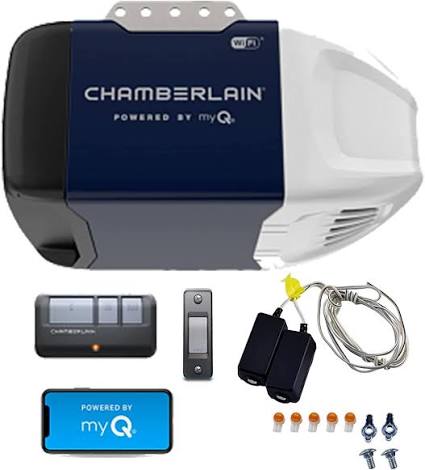
Have you ever winced at the screeching noise of your old garage door opener waking up the entire household? Or perhaps you’ve worried about the reliability of a chain-driven system that seems to rattle more with every use? You are not alone. Thousands of homeowners across the US are switching to smoother, quieter alternatives. The Chamberlain 1/2 HP belt drive garage door opener offers the perfect balance of power, silence, and durability for standard residential doors.
In this comprehensive guide, we will explore why this specific model has become a gold standard in home automation. We will break down its features, compare it to other drives, and help you decide if it is the right upgrade for your home.
Why Choose a Belt Drive Over Chain or Screw?
When shopping for a new opener, the “drive type” is the most critical technical decision you will make. While chain drives are inexpensive and screw drives are compact, belt drives offer a unique set of advantages that justify their slightly higher price point.
The Silence Factor
The primary reason homeowners choose a belt drive is noise reduction. A belt drive uses a steel-reinforced rubber belt instead of a metal chain. This material difference absorbs vibration rather than transmitting it. According to industry standards, belt drives can be up to 50% quieter than traditional chain drives. If your garage is attached to your home, or if you have bedrooms above the garage, this feature is non-negotiable.
Durability and Maintenance
Metal chains require regular lubrication to prevent rust and reduce noise. If neglected, they wear out quickly. In contrast, the rubber belt on a Chamberlain opener is maintenance-free. It does not rust, stretch significantly, or require oiling. This makes it an ideal “install and forget” solution for busy homeowners.
| Feature | Belt Drive | Chain Drive | Screw Drive |
|---|---|---|---|
| Noise Level | Very Quiet | Loud | Moderate |
| Maintenance | None | High (Lubrication) | Low |
| Price | Mid-Range | Low | Mid-High |
| Weather Resistance | Excellent | Good | Poor (Temp sensitive) |
Is 1/2 HP Enough Power for Your Garage Door?
One common misconception is that “more horsepower is always better.” However, for the vast majority of residential homes, a 1/2 HP motor is the sweet spot.
Understanding Horsepower in Garage Doors
Horsepower (HP) refers to the motor’s lifting capacity, not its speed. A 1/2 HP motor is designed to lift standard single-car and double-car garage doors made of wood, steel, or aluminum. Unless you have an oversized solid wood door that weighs over 300 pounds, you do not need a 3/4 HP or 1 HP unit.
Using a motor that is too powerful for a lightweight door can actually cause wear and tear on the springs and tracks due to excessive torque. The Chamberlain 1/2 HP belt drive garage door opener provides sufficient torque to lift standard doors smoothly without straining the mechanical components.
When to Consider Higher HP
You should only consider upgrading to a 3/4 HP model if:
- Your door is made of heavy solid wood.
- Your door is extra tall (over 7 feet) or wide.
- You live in an area with extreme wind loads requiring heavier reinforcement.
For 90% of US homes, the 1/2 HP specification is perfectly adequate and more energy-efficient.
Key Features of the Chamberlain Belt Drive Series
Chamberlain has refined its belt drive technology over decades. Here are the standout features that make their 1/2 HP models a top contender in the market.
MyQ Smart Technology Integration
Most modern Chamberlain 1/2 HP openers come with built-in Wi-Fi and MyQ technology. This allows you to control your garage door from anywhere using your smartphone. You can receive alerts when the door is left open, grant access to delivery drivers, or integrate with smart home systems like Amazon Key, Google Assistant, and Apple HomeKit.
Battery Backup Capability
Power outages often happen during storms—the exact time you might need to leave or secure your home. Many Chamberlain belt drive models offer a compatible battery backup unit. This ensures you can still operate your door manually or via the remote even when the grid is down. This feature adds a layer of security and convenience that chain drives rarely offer in the same price bracket.
Soft Start and Stop
Unlike older motors that jerk the door into motion, the Chamberlain 1/2 HP motor uses a soft-start and soft-stop mechanism. This gradual acceleration and deceleration reduce stress on the door panels and hinges, extending the lifespan of your entire garage door system.
Installation and Maintenance Tips
While professional installation is recommended for safety, many DIY enthusiasts choose to install these units themselves. Here is what you need to know.
Step-by-Step Overview
- Disconnect the Old Opener: Ensure the garage door is closed and disconnected from the old opener rail.
- Assemble the Rail: Attach the belt drive rail to the motor head. Ensure the belt is tensioned correctly according to the manual.
- Mount the Header Bracket: Secure the bracket above the center of the garage door opening. Use lag screws into solid wood framing.
- Hang the Opener: Lift the motor unit and secure it to the ceiling joists using sturdy angle iron brackets. Note: Do not hang the motor solely from the rail.
- Install Safety Sensors: Place the photo-eye sensors 6 inches above the floor on both sides of the door. This is a critical federal safety requirement.
- Program the Remotes: Follow the specific instructions for your model to sync remotes and keypads.
Maintenance Best Practices
Even though belt drives are low-maintenance, you should perform these checks twice a year:
- Visual Inspection: Check the belt for any signs of cracking or fraying.
- Sensor Alignment: Ensure the safety eyes are clean and aligned. A misaligned sensor will prevent the door from closing.
- Balance Test: Disconnect the opener and manually lift the door halfway. It should stay in place. If it falls or rises, your springs are unbalanced and need professional adjustment.
For more detailed technical specifications on garage door mechanics, you can refer to general engineering principles on Wikipedia.
Frequently Asked Questions (FAQ)
1. How long does a Chamberlain belt drive last?
With proper installation and minimal maintenance, a Chamberlain 1/2 HP belt drive opener typically lasts between 10 to 15 years. The belt itself may need replacement after 7–10 years depending on usage frequency, but the motor usually outlasts the belt.
2. Can I replace my chain drive with a belt drive?
Yes, in most cases. However, you will likely need to replace the entire rail system, not just the motor. It is often more cost-effective to buy a complete new unit rather than trying to retrofit a belt onto a chain-drive rail.
3. Is the Chamberlain 1/2 HP suitable for cold climates?
Absolutely. Unlike screw drives, which can struggle in extreme cold due to lubricant thickening, belt drives are unaffected by temperature changes. The rubber belt remains flexible and operational in freezing conditions, making it an excellent choice for northern US states.
4. What happens if the belt breaks?
If the belt breaks, the motor will run, but the door will not move. Chamberlain belts are highly durable, but if failure occurs, replacement belts are inexpensive and easy to find. Always keep a spare remote handy so you can manually unlock the door if needed.
5. Does it work with existing remotes?
Generally, no. Newer Chamberlain models use rolling code technology for security, which is incompatible with very old remotes. You will need to program new remotes or purchase universal compatibles that support Security+ 2.0 technology.
Conclusion
Upgrading your garage door opener is one of the most impactful home improvements you can make. The Chamberlain 1/2 HP belt drive garage door opener stands out as a premium choice for homeowners who value peace, reliability, and smart connectivity. It eliminates the annoying rattles of chain drives while providing enough power for standard residential doors.
By choosing a belt drive, you are investing in a quieter home and a lower-maintenance appliance. Whether you are building a new home or replacing an aging unit, this opener delivers consistent performance year after year.
Did you find this guide helpful? Share this article with your neighbors or on social media to help others discover the benefits of silent garage door operation. Let’s make our neighborhoods a little quieter, one garage at a time!
Leave a Reply