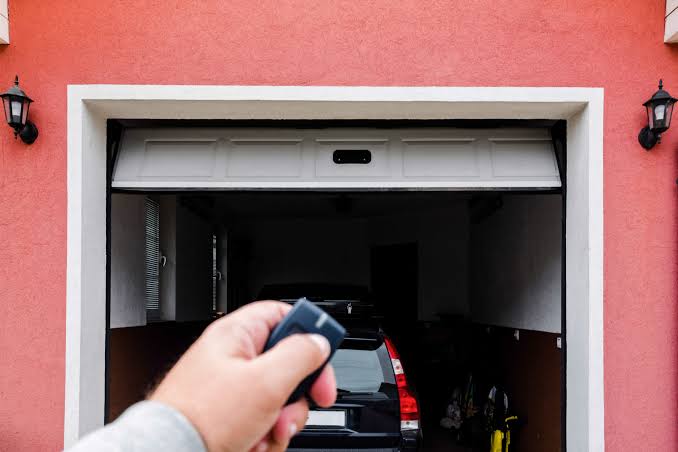
Introduction
Need to rush to work on a freezing morning but feel uneasy about vehicle safety? You might be wondering, can you start your car with the garage door open without risking your health or your home? Let’s explore the safe, smart, and expert-backed ways to handle this everyday dilemma.
Can You Start Your Car With The Garage Door Open? The Short Answer
Yes, you can start your car with the garage door open, but it requires strict safety precautions. While an open garage door provides significantly more ventilation than a closed one, it does not completely eliminate the risks associated with vehicle exhaust.
The primary concern is carbon monoxide (CO), an odorless and colorless gas produced by your car’s engine. Even with the door fully open, exhaust fumes can linger, drift into your home, or accumulate in poorly ventilated spaces. Therefore, understanding the mechanics of your garage and your vehicle’s emission system is crucial before turning the key.
The Hidden Dangers: Carbon Monoxide and Garage Safety
Carbon monoxide is often called the “invisible killer” for a very good reason. According to the Centers for Disease Control and Prevention (CDC), unintentional carbon monoxide poisoning claims the lives of over 400 Americans every year and sends thousands more to emergency rooms
www.facebook.com.
When you start your car, the engine burns fuel and emits exhaust. In a semi-enclosed space like a garage, these fumes do not simply vanish into thin air.
Key Facts About Garage CO Exposure:
- Rapid Accumulation: A car can produce dangerous levels of CO in just a few minutes, even with the garage door wide open.
- Draft Patterns: Wind can easily blow exhaust fumes back into the garage or through open windows and doors leading into your house.
- Health Symptoms: Early exposure causes headaches, dizziness, weakness, and nausea, which are frequently mistaken for the seasonal flu.
For a deeper understanding of how this gas affects the human body, you can refer to the comprehensive medical overview on Carbon Monoxide Poisoning.
Expert Insight: “Many homeowners mistakenly believe that a cracked or fully open garage door is a free pass to idle their vehicles indefinitely,” says Dr. Alan Reed, a public health safety expert. “The reality is that attached garages act as a funnel, directing toxic fumes straight into the living spaces of a home.”
Remote Start Systems vs. Manual Starting: What You Need to Know
Modern vehicles often come equipped with remote start systems, adding a layer of comfort. However, this technology introduces unique considerations when used in a garage environment.
| Feature | Remote Start in Open Garage | Manual Start in Open Garage |
|---|---|---|
| Convenience | High (pre-heats or cools the cabin automatically) | Moderate (requires physical presence in the vehicle) |
| Safety Risk | Moderate (driver is absent to monitor fumes or unusual engine sounds) | Low (driver is present and can react immediately to issues) |
| Garage Door Interaction | Most systems do not automatically open the garage door. | N/A (You manually open the door first) |
| Theft Risk | Slightly higher if the vehicle is left unlocked | Lower (keys remain in your physical possession) |
When evaluating remote start garage door open compatibility, always check your vehicle’s owner manual. Some advanced smart-home integrations can trigger the garage door to open when the car is started, but this is not a standard factory feature. Never assume your car will open the door for you.
Additionally, if you drive a manual transmission vehicle, exercise extreme caution. Many remote start systems will not operate on manual cars unless a specific “reservation mode” is activated, ensuring the car is in neutral and the parking brake is engaged.
Step-by-Step Guide: Safely Starting Your Car in the Garage
If you must start your vehicle inside the garage, follow this precise, step-by-step protocol to minimize risk.
Step 1: Open the Garage Door Completely
Ensure the garage door is 100% open. A partially open door restricts airflow and traps exhaust gases near the ceiling, where they can seep into your home’s attic or upper floors.
Step 2: Inspect the Exhaust Pipe
Before starting, visually inspect your vehicle’s tailpipe. In winter months, snow, ice, or even small animal nests can block the exhaust pipe. A blocked pipe forces carbon monoxide back into the vehicle cabin and the garage, drastically increasing poisoning risks.
Step 3: Ensure Cross-Ventilation
If possible, open a window or the side door of the garage to create a cross-breeze. This helps disperse any lingering fumes. Wait approximately 2 to 3 minutes after opening the door before starting the engine to allow stale air to cycle out.
Step 4: Start the Engine and Monitor
Start your car. If you are using a remote start, walk outside immediately to visually inspect the exhaust and ensure no unusual smoke is present. Limit idling time to a strict maximum of 10 to 15 minutes.
Step 5: Install and Check CO Detectors
This step is non-negotiable. Ensure you have a battery-operated or hardwired Carbon Monoxide detector installed in the garage, and another one just outside the sleeping areas of your home. Test these devices monthly.
Step 6: Exit Promptly
Once the car is warmed up or cooled down, drive it out of the garage immediately. Do not let it idle unnecessarily.
Expert Insights and Real-World Data
To build a safer environment, we must look at the empirical data. The Occupational Safety and Health Administration (OSHA) sets the permissible exposure limit for carbon monoxide at 50 parts per million (ppm) over an 8-hour workday
www.epa.gov. However, a running car in a semi-enclosed garage can easily exceed 1,000 ppm within minutes.
A real-world case study from a suburban Chicago neighborhood highlighted this exact risk. A family experienced chronic morning headaches for several weeks. An environmental inspection revealed that their habit of warming up the car for 20 minutes with the garage door “mostly open” was causing low-level CO to seep through the shared interior door. Once they changed their habit to starting the car after pulling into the driveway, the symptoms vanished entirely.
This underscores a vital rule: convenience should never override ventilation. To further protect your home, install weatherstripping on the interior door leading from the garage to your house. This simple, low-cost upgrade acts as a critical barrier against drifting exhaust fumes.
Frequently Asked Questions (FAQ)
Q1: Will my car automatically open the garage door when I remote start it?
A: In most cases, no. Standard factory remote start systems only ignite the engine and activate the climate control. Unless you have a specific, aftermarket smart-home integration programmed to link your vehicle’s signal to your garage door opener, the door will remain closed. Always verify this manually.
Q2: Is it safe to let my car run in the garage with the door open for 10 minutes?
A: While significantly safer than a closed garage, it is not entirely risk-free. Ten minutes is generally acceptable if the door is fully open, there is a cross-breeze, and your home’s CO detectors are fully functional. However, the safest practice is to pull the car out of the garage before starting it.
Q3: Can carbon monoxide enter my house even if the garage door is open?
A: Yes. Exhaust fumes can drift upward and outward. If you have an open window, a poorly sealed interior door, or HVAC vents located in the garage, CO can easily migrate into your living spaces.
Q4: What is the best alternative to idling my car in the garage?
A: The absolute best alternative is to back your car out of the garage into the driveway before starting the engine. Modern vehicles (especially those manufactured after 1995) do not require prolonged idling to warm up. Driving gently for the first 5 to 10 minutes is actually better for the engine and warms it up faster.
Q5: Can I get fined for idling my car in my own garage?
A: While local law enforcement rarely patrols private garages, many municipalities have anti-idling laws that prohibit running a vehicle for more than 3 to 5 minutes, regardless of location. More importantly, the health risk to your family far outweighs any legal technicality.
Conclusion
So, can you start your car with the garage door open? Yes, but it demands deep respect for the invisible dangers of carbon monoxide. By ensuring full ventilation, limiting idle time to under 15 minutes, and maintaining working CO detectors, you can protect your family’s health without sacrificing daily convenience.
Remember, the safest place to start your car is always outside in the open, fresh air.
If you found this guide helpful and informative, please share it on your favorite social media platforms to help your friends, family, and neighbors stay safe this season. Stay informed, stay ventilated, and drive safely!
Leave a Reply