Have you ever walked out to your car, ready for the day, only to find your garage door stuck halfway or refusing to budge at all? It is a frustrating and potentially dangerous situation that leaves many homeowners asking, “Can you open garage door if spring is broken?” The short answer is yes, but it requires extreme caution, proper technique, and an understanding of the immense tension involved in these mechanisms.
Garage door springs are the unsung heroes of your home’s entryway. They counterbalance the heavy weight of the door, allowing the opener motor to lift it with minimal effort. When a spring snaps, that balance is lost, turning a 150-pound door into a dead weight that can cause serious injury or property damage if mishandled. In this guide, we will walk you through the safe steps to manage this issue, explain why professional help is often the best route, and provide actionable advice to keep your home secure until repairs are made.
Understanding the Danger: Why Broken Springs Are Serious
Before attempting any manual operation, it is crucial to understand what you are dealing with. A typical residential garage door weighs between 130 and 400 pounds. The springs are designed to hold this weight in tension. When one breaks, the remaining tension can release violently, or the door may become unbalanced and prone to falling.
According to safety data from consumer protection agencies, garage door-related injuries are among the most common home accidents, with springs being a primary culprit. Never attempt to replace a spring yourself unless you are a trained technician. The energy stored in a torsion spring is enough to cause severe injury or even death if it slips during adjustment.
For a deeper technical understanding of how these counterbalance systems work, you can refer to the detailed engineering principles outlined on Wikipedia’s page regarding garage doors. This resource provides excellent background on the mechanical advantages and safety standards required for these installations.
Method 1: Using the Emergency Release Cord
The safest and most common way to manually operate a garage door when the spring is broken (or the power is out) is by using the emergency release mechanism. This method disengages the door from the automatic opener, allowing you to lift it by hand.
Step-by-Step Guide:
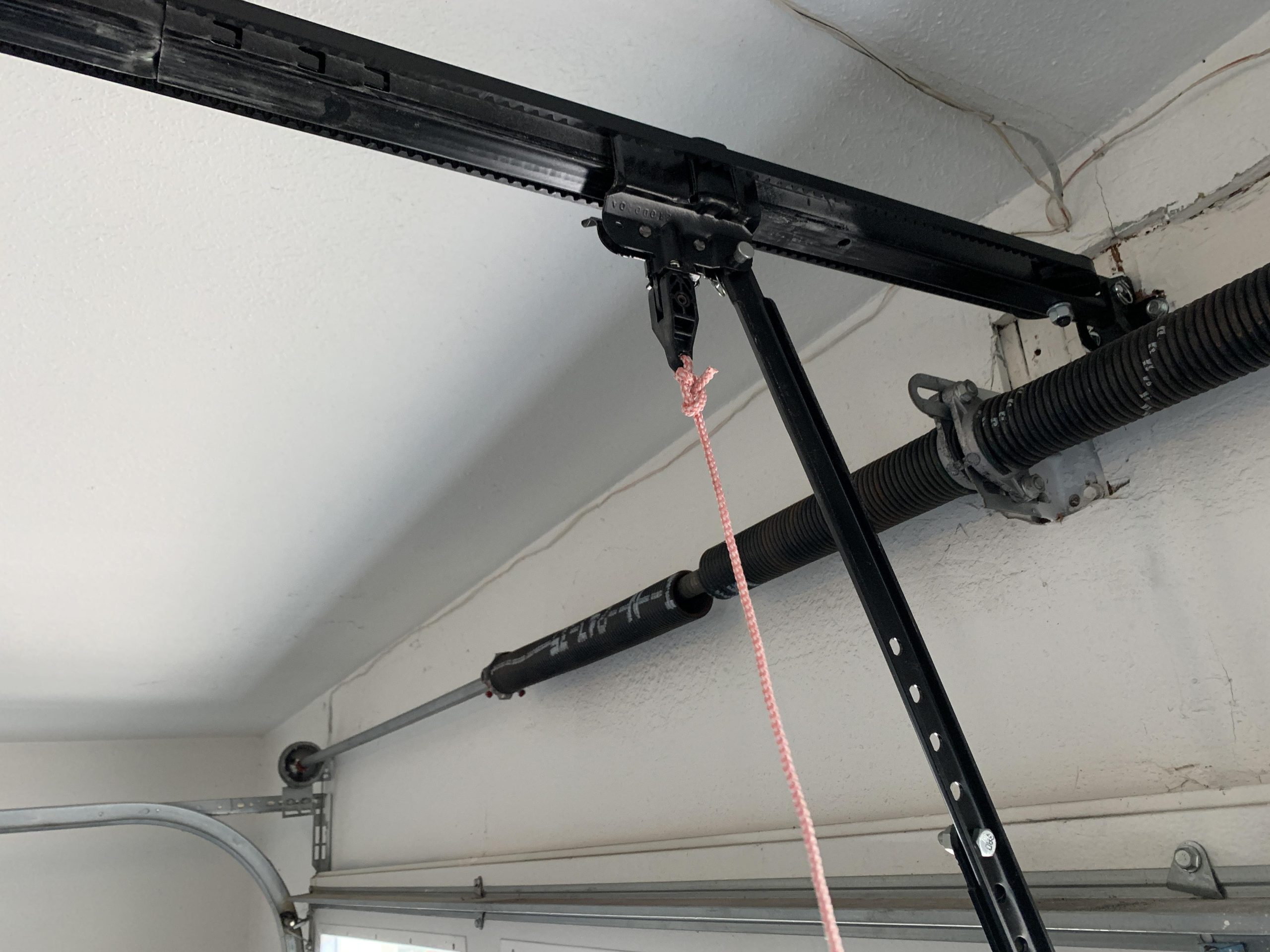
- Locate the Red Cord: Look for a red rope with a handle hanging from the center rail of your garage door opener. This is the emergency release cord.
- Pull Down Firmly: Pull the cord down and toward the door. You should hear a click, indicating that the trolley has disconnected from the opener carriage.
- Lift with Caution: Stand firmly with your feet shoulder-width apart. Bend your knees, not your back. Grip the bottom edge of the door or the handle if one is installed.
- Lift Slowly: Because the spring is broken, the door will feel extremely heavy. Lift it slowly and steadily. Do not jerk the door.
- Secure the Door: Once fully open, you must secure it. A broken spring means the door will not stay up on its own. Use C-clamps or locking pliers to clamp the track just below the bottom rollers on both sides. This prevents the door from crashing down.
Pro Tip: If the door feels impossibly heavy or starts to slip, stop immediately. Forcing it can damage the tracks, rollers, or the door panels themselves.
Method 2: Manual Lifting Without the Opener
If your emergency release is malfunctioning or you cannot access it, you may need to lift the door entirely manually. This is significantly more difficult with a broken spring.
- Get Help: Never attempt this alone. Have at least one other person assist you.
- Check for Obstructions: Ensure the tracks are clear of debris.
- Lift Evenly: Both people should lift from opposite corners to keep the door balanced. An unbalanced door can jump off its tracks.
- Use Support Beams: If you have wooden beams or sturdy props, use them to support the door once it is partially open. Do not rely on the door’s friction to stay in place.
Risks of Operating a Garage Door with a Broken Spring
While it is physically possible to open the door, doing so comes with significant risks. Here is a breakdown of the potential dangers:
| Risk Factor | Description | Severity |
|---|---|---|
| Door Collapse | Without spring tension, the door can fall suddenly if not properly secured. | High |
| Track Damage | The extra weight can bend the metal tracks or strip the rollers. | Medium |
| Opener Strain | If you re-engage the opener without fixing the spring, you can burn out the motor. | High |
| Personal Injury | Pinched fingers, back strain, or impact injuries from a falling door. | High |
Key Takeaway: Opening the door is a temporary solution for retrieving a vehicle or accessing items. It is not a long-term fix. Every time you lift the door manually, you risk damaging the entire system.
When to Call a Professional vs. DIY Fixes
Many homeowners wonder if they can save money by fixing the spring themselves. Let’s look at the facts.
Why DIY Spring Replacement is Not Recommended
- High Tension: Torsion springs are under extreme tension. Specialized winding bars are required to adjust them safely. Using improper tools like screwdrivers can lead to catastrophic failure.
- Complex Calibration: Springs must be calibrated to the exact weight of your door. An incorrect calibration can cause the door to slam shut or fail to open.
- Warranty Voidance: Most garage door manufacturers void the warranty if non-certified individuals perform spring repairs.
Signs You Need Immediate Professional Help
- Visible Gap: You see a visible gap in the torsion spring above the door.
- Loud Bang: You heard a loud noise resembling a gunshot or firecracker.
- Cable Slack: The lifting cables appear loose or detached from the bottom brackets.
- Door Crooked: The door hangs unevenly when closed.
If you experience any of these signs, do not attempt to open the door. Contact a licensed garage door technician immediately.
Preventive Maintenance: Avoiding Future Breaks
While springs eventually wear out due to metal fatigue, you can extend their lifespan with proper care.
- Regular Lubrication: Apply a silicone-based lubricant to the springs, rollers, and hinges every six months. Avoid WD-40 as it attracts dust and can gum up the mechanism.
- Visual Inspections: Check for rust, gaps, or wear on the springs monthly.
- Balance Test: Disconnect the opener and manually lift the door halfway. If it stays in place, it is balanced. If it falls or rises, the springs need adjustment.
- Climate Control: Extreme temperature fluctuations can accelerate spring fatigue. Keeping your garage insulated can help.
FAQ Section
1. Can I still use my garage door opener if the spring is broken?
No. You should never use the automatic opener if the spring is broken. The motor is not designed to lift the full weight of the door. Doing so can strip the gears, burn out the motor, or cause the door to detach from the opener, leading to severe damage.
2. How much does it cost to replace a broken garage door spring?
The cost typically ranges from $150 to $350 for parts and labor, depending on your location and the type of spring (torsion vs. extension). Torsion springs are generally more expensive but last longer. Always get multiple quotes from licensed professionals.
3. How long do garage door springs last?
Standard garage door springs are rated for approximately 10,000 cycles. One cycle is one open and one close. For an average family, this translates to 7–10 years of use. High-cycle springs can last up to 25,000 cycles but come at a higher initial cost.
4. Is it safe to sleep with a garage door that has a broken spring?
If the door is closed and secured, it is generally safe to sleep. However, ensure the door is fully down and locked. If the door is stuck open, you must secure it with clamps or braces to prevent it from falling during the night due to wind or vibration. Consider boarding up the opening if security is a concern.
5. Can a broken spring damage my car?
Yes. If the door falls unexpectedly, it can crush anything beneath it, including vehicles, bicycles, or storage items. This is why securing the door with clamps or avoiding manual operation unless necessary is critical.
6. What is the difference between torsion and extension springs?
Torsion springs are mounted horizontally above the door header and use torque to lift the door. They are safer, more durable, and smoother. Extension springs are mounted vertically along the horizontal tracks and stretch to lift the door. They are cheaper but more prone to sudden failure and require safety cables to prevent injury if they snap.
Conclusion
So, can you open garage door if spring is broken? Yes, you can, but it should be done with extreme caution and only as a temporary measure. Using the emergency release cord and securing the door with clamps is the safest approach. However, the risks of personal injury and further damage to your garage system are high.
We strongly recommend treating a broken spring as an urgent repair issue rather than a DIY project. The cost of professional repair is far less than the potential medical bills or replacement costs for a damaged door or vehicle.
Stay safe, prioritize professional help, and keep your garage functioning smoothly. If you found this guide helpful, please share it with your friends and neighbors on social media. You never know who might be facing this stressful situation right now!
Leave a Reply