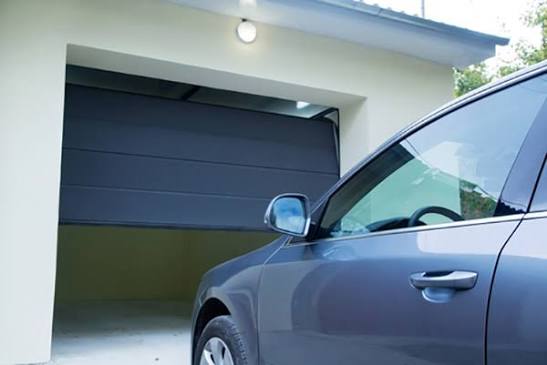
It’s a cold winter morning, your coffee is still brewing, and you’re wondering — can you leave car running in garage with door open while you finish getting ready? It seems harmless enough, especially with that big garage door wide open letting fresh air pour in. But here’s the thing: this everyday scenario carries hidden dangers that most homeowners never think about until it’s too late. In this article, we’ll break down exactly what happens when you idle your car in an attached or detached garage, what the experts say, and how to keep your family safe without sacrificing convenience.
Why People Ask This Question (And Why It Matters More Than You Think)
Every year, thousands of Americans are treated for accidental carbon monoxide (CO) poisoning, and a surprising number of those cases involve vehicles left running in garages. According to the Centers for Disease Control and Prevention (CDC), over 400 people die annually in the United States from unintentional CO poisoning not linked to fires, and vehicle exhaust is one of the leading culprits.
The logic feels sound on the surface: “If the garage door is open, the fumes will just drift outside, right?” Unfortunately, the reality is far more complicated. Carbon monoxide is odorless, colorless, and tasteless, which means you won’t get any warning signs until symptoms like dizziness, nausea, or confusion kick in — and by then, it may already be dangerously late.
How Carbon Monoxide Behaves in a Garage Environment
To understand why leaving your car running in a garage is risky even with the door open, you need to know a little about how CO moves through space.
Carbon monoxide is slightly lighter than air, but it doesn’t simply “float away” the moment it exits your tailpipe. Instead, it mixes with surrounding air and can linger in pockets, especially in enclosed or semi-enclosed spaces. Here’s what typically happens:
- Cold weather creates thermal inversions. When the air outside is colder than the air inside your garage, the warm exhaust gases can actually get trapped near the ceiling and slowly seep into your home through shared walls, attic spaces, or HVAC ducts.
- Wind direction matters enormously. If the wind is blowing toward your garage opening rather than away from it, exhaust fumes can be pushed back inside instead of dispersing outdoors.
- Attached garages share walls with living spaces. Even small cracks around doors, electrical outlets, or plumbing penetrations can allow CO to migrate into bedrooms and living rooms within minutes.
A study published by the National Institute of Standards and Technology (NIST) found that CO levels in an attached garage can reach dangerous concentrations (above 35 ppm) within just 2–5 minutes of starting a vehicle, even with the main garage door fully open.
The Short Answer: Is It Safe?
No, it is generally not safe to leave your car running in a garage with the door open, particularly if the garage is attached to your home. While an open door does provide some ventilation compared to a closed garage, it does not guarantee adequate airflow to prevent dangerous CO buildup.
Here’s a quick breakdown:
| Scenario | Risk Level | Recommendation |
|---|---|---|
| Detached garage, door fully open, no wind | Moderate | Limit to under 2 minutes |
| Attached garage, door fully open | High | Avoid entirely |
| Any garage, door partially open | Very High | Never do this |
| Any garage, door closed | Extremely High / Lethal | Absolutely never |
The bottom line? The only truly safe practice is to start your car and immediately drive it out of the garage before letting it idle or warm up.
What the Experts Say
Dr. Neil Hampson, a nationally recognized expert on carbon monoxide poisoning and professor at the University of Washington, has stated publicly that “even brief periods of idling in an attached garage can produce lethal concentrations of carbon monoxide inside the home.” His research underscores that modern homes are built to be energy-efficient and tightly sealed, which ironically makes them more vulnerable to CO infiltration from garages.
Additionally, the U.S. Fire Administration explicitly warns homeowners never to warm up vehicles inside garages, regardless of whether the door is open or closed. Their guidance is clear: move the vehicle outside first, then let it idle.
For a deeper understanding of how carbon monoxide works as a gas and its effects on the human body, you can refer to Wikipedia’s comprehensive overview of carbon monoxide.
Real-Life Dangers: Case Studies That Should Make You Rethink This Habit
Case Study 1: The Family in Minnesota (2019)
A family of four in suburban Minneapolis nearly lost their lives after the father started his SUV in the attached garage on a frigid January morning. The garage door was open about three feet to “let the fumes out.” Within 10 minutes, CO detectors inside the home began screaming. All four family members were hospitalized with severe CO poisoning. Investigators later determined that a light snowfall had created a partial barrier at the garage threshold, redirecting exhaust back indoors.
Case Study 2: The Retiree in Ohio (2021)
A 72-year-old man died after warming up his sedan in his attached garage. The overhead door was fully open, but the home’s furnace return vent was located in the shared wall between the garage and the basement. CO was pulled directly into the home’s heating system and circulated throughout every room. The man was found unconscious in his bedroom.
These aren’t isolated incidents. They represent a pattern that repeats across the country every single winter.
Common Myths About Idling Cars in Garages (Debunked)
Let’s tackle some of the most persistent misconceptions head-on:
Myth #1: “Newer cars produce less CO, so it’s fine.” Reality: While modern catalytic converters do reduce emissions, they still produce significant amounts of CO during cold starts — the exact time most people idle in the garage. A cold engine can emit up to 10 times more CO than a warmed-up engine.
Myth #2: “I’ll only run it for a minute or two.” Reality: As the NIST data shows, dangerous CO levels can accumulate in as little as 2 minutes. Your perception of time is unreliable when you’re rushing to get out the door.
Myth #3: “My CO detector will warn me in time.” Reality: Most residential CO alarms are designed to trigger at 70 ppm over 60–240 minutes. By the time the alarm sounds, you may have already been exposed to harmful levels. Detectors are a last line of defense, not a permission slip.
Myth #4: “Opening a window in the house helps.” Reality: Opening a single window provides negligible dilution compared to the volume of CO a running engine produces (roughly 30,000–100,000 ppm at the tailpipe).
Safer Alternatives to Warming Up Your Car in the Garage
You don’t have to suffer through a freezing steering wheel every morning. Here are practical, safe alternatives:
- Use a remote car starter. Start your vehicle from inside your home after you’ve opened the garage door and ensured the car can be driven out immediately. Better yet, install a system that allows you to start the car once it’s already outside.
- Invest in a block heater or battery warmer. These devices plug into a standard outlet overnight and keep your engine warm, reducing cold-start emissions and making the car comfortable faster once you’re driving.
- Install a heated seat cover or steering wheel warmer. For under $50, these accessories eliminate the discomfort that motivates most people to idle in the first place.
- Back the car out first, then let it warm up. Simply pull your vehicle onto the driveway, close the garage door behind you, and then let the engine idle for a minute or two while you scrape the windshield.
- Use a timer-based garage door opener. Some smart systems let you schedule the door to open a few minutes before you plan to leave, so there’s zero temptation to idle indoors.
Step-by-Step: The Safe Morning Routine (Winter Edition)
Follow this simple sequence every cold morning to stay warm and stay alive:
- Press your remote starter or walk to the garage and open the overhead door completely.
- Start the vehicle and immediately shift into reverse. Do not sit and idle.
- Back the car out onto the driveway within 30 seconds of starting the engine.
- Close the garage door using your remote or wall button.
- Let the car idle outside for 1–2 minutes while you load bags, buckle kids, or brush off snow.
- Drive normally. Modern engines warm up fastest under gentle driving conditions, not while sitting still.
Pro Tip: The EPA recommends limiting idle time to no more than 30 seconds for modern fuel-injected vehicles. Extended idling wastes fuel, increases wear, and contributes to unnecessary emissions.
FAQ Section
Q1: Can you leave car running in garage with door open for just one minute?
Even one minute poses a measurable risk, especially in attached garages. CO begins accumulating almost instantly after ignition, and cold-start emissions are at their peak during the first 60 seconds. The safest approach is to move the vehicle outside before allowing any idle time.
Q2: Is it safe to leave a car running in a detached garage with the door open?
A detached garage presents a lower risk than an attached one because there’s no shared wall with living spaces. However, CO can still pool inside the structure and pose a danger to anyone who walks in. Keep idle time under two minutes and ensure cross-ventilation whenever possible.
Q3: Will a carbon monoxide detector protect me if I idle my car in the garage?
A CO detector is an essential safety device, but it should never be relied upon as your primary protection. Most alarms take several minutes to trigger, and by that point, exposure may already be harmful. Think of your detector as a backup, not a green light to idle indoors.
Q4: Do electric vehicles have the same risk?
No. Battery-electric vehicles (EVs) produce zero tailpipe emissions, so there is no CO risk from idling an EV in a garage. However, plug-in hybrids still have gasoline engines that can emit CO during cold starts, so the same precautions apply when the gas engine is active.
Q5: How quickly can carbon monoxide become lethal in a garage?
In a closed garage, CO can reach lethal concentrations (above 800 ppm) in as little as 5–10 minutes. With the door open, the timeline extends somewhat, but dangerous levels (above 200 ppm) can still develop within 10–15 minutes depending on garage size, vehicle type, and weather conditions.
Q6: What are the early symptoms of carbon monoxide poisoning?
Early symptoms mimic the flu and include headache, dizziness, nausea, shortness of breath, and confusion. Unlike the flu, CO poisoning does not cause a fever. If multiple people in your household feel ill simultaneously, evacuate immediately and call 911.
Final Thoughts: Don’t Gamble With Invisible Danger
So, can you leave car running in garage with door open? Technically, you can — but you absolutely shouldn’t. The combination of odorless gas, unpredictable airflow, and tightly sealed modern homes creates a perfect storm for tragedy, even during brief warm-up sessions. The habit takes less effort to break than you think, and the alternatives are affordable, convenient, and genuinely effective.
Your family’s safety is worth far more than those extra 90 seconds of warmth. Make the switch today: back out first, idle outside, and breathe easy knowing you’ve eliminated a silent killer from your morning routine.
If you found this article helpful, please share it on Facebook, Twitter/X, or Instagram with friends and family who might be unknowingly putting themselves at risk every winter morning. A single share could literally save a life. Stay safe out there! 🚗💨
Leave a Reply